

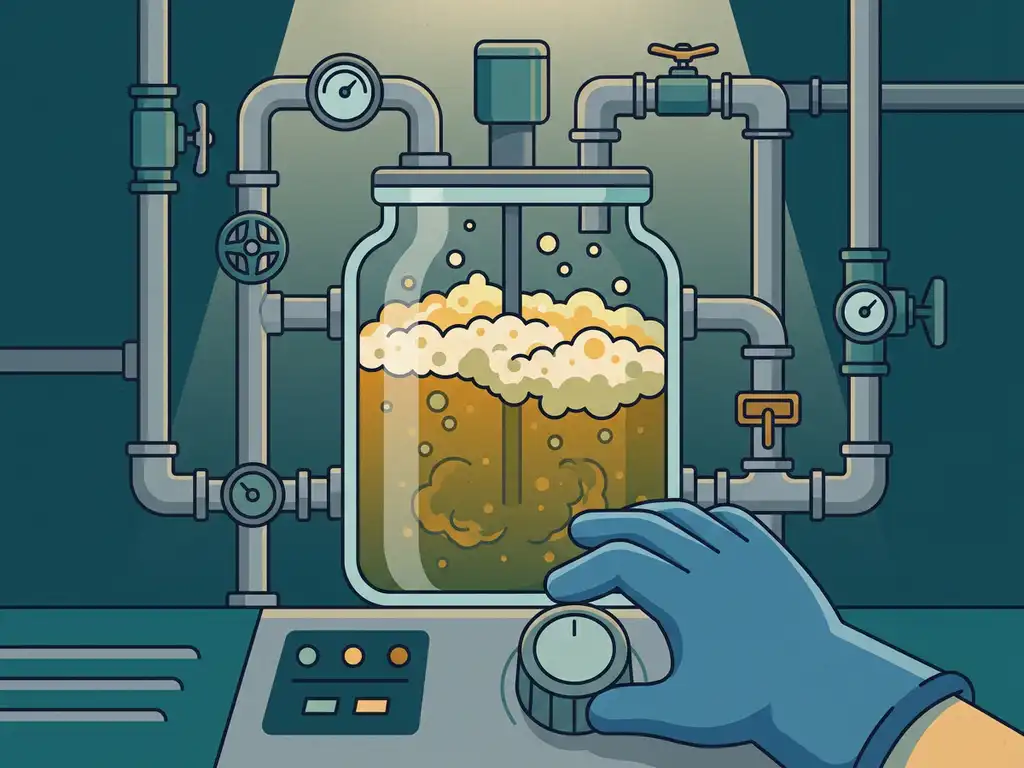
Biological wastewater treatment works beautifully in theory. A living community of microorganisms consumes organic matter, breaks down nitrogen compounds, and produces an effluent clean enough to discharge. In practice, however, the system that looked stable last month can suddenly produce sludge that won’t settle, nitrogen readings that spike past permit limits, and an operations team with no clear answer as to why. Wastewater treatment not working is one of the most frustrating problems an environmental or production manager can face, because the root cause is rarely obvious and the consequences, in the form of compliance failures and rising costs, arrive quickly. Understanding why biological systems are inherently difficult to manage is the first step toward controlling them.
The challenge is not a sign of poor engineering. It reflects something fundamental about living systems: they respond to their environment, and industrial environments are rarely stable. biological wastewater treatment requires managing a community of organisms that cannot be switched off, paused, or reset like a mechanical component. The sections below break down the specific factors that make these systems so demanding to operate reliably.
The variables that make microbial systems unpredictable
A biological treatment system is not a single process but a layered ecosystem of competing and cooperating microbial populations. Each population has its own optimal temperature range, pH tolerance, oxygen requirement, and substrate preference. When all conditions align, the system performs efficiently. When even one parameter drifts outside an acceptable window, the balance between populations shifts, and performance degrades in ways that are not always immediately visible in the effluent data.
Temperature fluctuations are a common culprit. Nitrifying bacteria, which convert ammonium to nitrate, are particularly sensitive to cold. A drop of just a few degrees in winter can slow nitrification significantly, causing ammonium to accumulate and breach discharge limits. pH swings driven by industrial inputs can inhibit specific microbial groups while allowing others to proliferate unchecked. Sudden changes in organic loading, the concentration and type of carbon compounds entering the system, can shift the microbial community toward organisms that produce excessive extracellular polymers, leading directly to sludge problems in wastewater treatment such as bulking or foaming. These are not rare edge cases. They are the normal operating reality of any plant receiving variable industrial effluent.
Get in Touch
Let’s Talk Microbial Solutions
Book a conversation with Stijn, our CEO, or send us your request.
| Book an Appointment | Request Information |
How seasonal production cycles disrupt biological balance
Seasonal production is one of the most underappreciated drivers of industrial wastewater compliance failure. Food processors, breweries, and agricultural producers often operate at peak capacity during specific months, then scale back or halt production entirely. The biological treatment system, which has adapted its microbial community to the steady-state conditions of peak season, suddenly receives a fraction of its normal load, or a completely different substrate mix.
Microbial communities respond to starvation by shifting composition. Slow-growing specialist organisms, often the ones responsible for nitrogen removal, die off or are outcompeted by faster-growing generalists. When production resumes and high loads return, the system lacks the functional capacity it had before. Nitrogen and phosphorus peaks that follow seasonal restarts are a predictable consequence of this biological reset, yet they consistently catch operators off guard. The effluent that passed compliance checks in October can produce violations in January not because anything broke, but because the living workforce inside the reactor changed.
Why operator knowledge gaps compound the problem
Most environmental and production managers overseeing wastewater systems have engineering backgrounds, not microbiology training. This is entirely reasonable, but it creates a structural vulnerability. The indicators that signal a system moving toward failure, changes in sludge volume index, shifts in floc morphology under a microscope, and early signs of filamentous bacteria overgrowth, require specialist interpretation. Without that interpretation, corrective action is delayed until the problem is already visible in discharge monitoring results.
The knowledge gap also affects day-to-day decision-making. Operators who are uncertain about the microbiology of their system tend to default to reactive measures: increasing aeration, adding chemicals, or adjusting return sludge rates without a clear diagnostic rationale. These interventions sometimes help, but they can also destabilize a system that was on the verge of self-correcting. Consistent, reliable performance requires not just good equipment but the ability to read what the microbial community is telling you through indirect process signals. This is precisely where Avecom’s expertise in microbial management becomes relevant, offering molecular monitoring and microbiological audits that translate biological data into operational decisions.
Common process interventions that backfire
When biological treatment underperforms, the instinct is to intervene decisively. Several common interventions, however, cause more harm than the problem they were meant to solve.
Overdosing aeration
Increasing aeration is a frequent response to rising BOD or ammonia readings. In some cases it helps, but excessive aeration shears the microbial flocs that give activated sludge its settling ability. Floc breakup releases fine particles into the effluent and worsens the very sludge problems the operator was trying to address. Energy costs also rise sharply, adding operational expense on top of a compliance risk.
Excessive sludge wasting
Removing sludge to reduce bulking or improve settleability can strip the system of slow-growing nitrifiers that took weeks or months to establish. Nitrification capacity, once lost, recovers slowly. A system wasted too aggressively can spend an entire season operating below its nitrogen removal potential, generating a persistent compliance problem rather than resolving a temporary one.
Chemical dosing as a substitute for biological function
Adding coagulants or chemical precipitants to compensate for a failing biological stage is expensive, generates additional sludge volumes, and does nothing to address the underlying microbial imbalance. It is a short-term fix that tends to become a permanent cost line, masking a problem that continues to grow beneath the surface.
What stable biological wastewater treatment actually requires
Stability in a biological system is not the absence of variation. It is the capacity to absorb variation without losing core function. Achieving that capacity requires several things working together.
First, the microbial community needs to be matched to the specific wastewater composition of the facility. Generic activated sludge inocula perform generically. A community selected and conditioned for the actual substrate, temperature range, and loading patterns of a specific plant will be more resilient to the fluctuations that plant experiences. This is why feasibility testing at lab and pilot scale, before committing to full-scale implementation, is not a luxury but a risk management tool.
Second, process monitoring needs to go beyond basic effluent parameters. Measuring only what comes out of the system tells you what already happened. Monitoring the microbial community itself, through molecular techniques that identify which organisms are present and in what proportions, gives operators leading indicators of change before performance deteriorates. Early warning enables early correction, which is almost always cheaper and less disruptive than emergency remediation.
Third, knowledge continuity matters. Biological systems accumulate institutional knowledge over time. When experienced operators leave or when management changes, that knowledge often leaves with them. Partnering with an external specialist who maintains continuity of microbiological oversight provides a buffer against this vulnerability.
For industrial producers in the food, chemical, and pharmaceutical sectors dealing with exactly these challenges, Avecom’s wastewater treatment services offer a structured path from diagnosis to stable operation. The combination of microbiological audit, pilot-scale validation, and ongoing process support addresses the full complexity of managing a living treatment system, not just its mechanical components. Where the effluent stream contains recoverable nitrogen, the ProMic platform adds a further dimension: turning a compliance burden into a recoverable resource. That shift in framing, from cost center to manageable and potentially valuable process, is what sustainable industrial water management looks like in practice.
Related Articles
- What is the biggest risk of ignoring sludge bulking in a wastewater plant?
- How does biological remediation differ from excavation?
- When is excavation not the right solution for contaminated soil?
- How do you seed a biological wastewater plant with the right bacteria?
- How does temperature affect sludge behavior in biological treatment?