

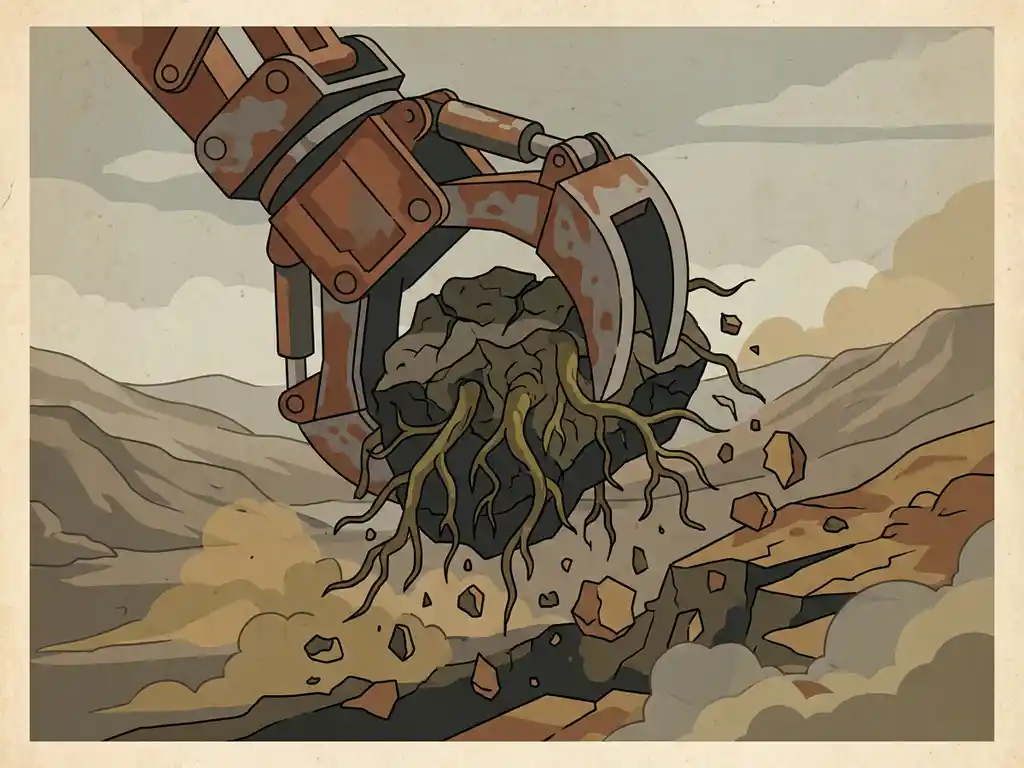
Traditional soil excavation fails when contamination is too deep, too widespread, or located beneath existing structures, making physical removal impractical or unaffordable. For many sites, especially those affected by chlorinated solvents or other persistent compounds, excavation either cannot reach the contaminated zone or creates more disruption than it resolves. The questions below address the most common limitations project managers encounter, and what the evidence-based alternatives look like in practice.
Why does excavation fail on deeply contaminated sites?
Excavation fails on deeply contaminated sites because it is fundamentally a surface-to-depth operation with hard physical limits. When contamination has migrated into the saturated zone, beneath building foundations, or into fractured bedrock, mechanical removal becomes technically impractical, prohibitively expensive, or both. The deeper the contamination, the less viable dig-and-dump becomes as a primary remediation strategy.
Chlorinated solvents such as perchloroethylene (PCE) and trichloroethylene (TCE) are a clear example. These dense non-aqueous phase liquids (DNAPLs) sink through the soil profile and accumulate well below the water table, sometimes at depths where excavation equipment cannot safely operate. Even when physical access is possible, removing saturated soil at depth destabilizes the surrounding ground and risks structural damage to adjacent infrastructure.
There is also the problem of residual contamination. Excavation removes bulk material, but dissolved-phase contamination in groundwater and sorbed contaminants on soil particles often remain. A site that appears remediated after excavation may still fail compliance testing because the underlying plume was never addressed.
Get in Touch
Let’s Talk Microbial Solutions
Book a conversation with Stijn, our CEO, or send us your request.
| Book an Appointment | Request Information |
How much does traditional soil excavation typically cost?
Traditional soil excavation for contaminated sites typically costs between several hundred and several thousand euros per tonne of material removed, once transport, disposal, backfill, and regulatory compliance are factored in. For large or deeply contaminated sites, total project costs can reach hundreds of thousands to millions of euros, making excavation one of the most capital-intensive remediation options available.
The cost drivers are numerous. Contaminated soil cannot be disposed of as ordinary fill, so it requires licensed hazardous waste processing facilities. Transport costs scale with volume and distance. If excavation disturbs groundwater, dewatering systems add further expense. Backfilling the excavated void with clean material is an additional line item that project budgets frequently underestimate.
For brownfield developers and municipal project managers working under OVAM reporting obligations, the financial exposure of full excavation often triggers a search for alternatives, particularly when the contaminated zone is extensive or the site has development plans that cannot wait for a multi-year dig-and-dispose operation.
What are the environmental drawbacks of digging up contaminated soil?
Digging up contaminated soil generates significant environmental impacts beyond the remediation itself. Excavation disrupts soil structure, destroys existing microbial communities, releases volatile compounds during open-air handling, and produces large volumes of contaminated material that must be transported and processed elsewhere. The remediation process itself becomes a source of pollution and carbon emissions.
Volatile organic compounds, including chlorinated solvents, can off-gas during excavation and create air quality problems on and around the site. Workers and neighboring communities may be exposed to elevated concentrations of contaminants that were previously contained below ground. Dust suppression and vapor control measures add cost and complexity without eliminating the risk.
Transportation of hazardous material across road networks introduces additional risk of spills and accidents. At the receiving end, contaminated soil processed at thermal treatment or landfill facilities consumes energy and generates secondary waste streams. From a lifecycle perspective, excavation often trades one environmental problem for several smaller ones distributed across a wider geography.
When is excavation not technically feasible?
Excavation is not technically feasible when contamination lies beneath existing structures, at depths exceeding safe operational limits, in areas with high groundwater tables that prevent stable excavation, or where the contaminated volume is so large that removal would be structurally or logistically impossible. These conditions are common on legacy industrial sites and urban brownfields.
Several specific scenarios make excavation a non-starter:
- Contamination beneath buildings or infrastructure: Roads, foundations, utility networks, and active industrial facilities cannot be demolished simply to access the soil beneath them.
- High water table conditions: Saturated soils require continuous dewatering during excavation, which is expensive, technically demanding, and can mobilize the contamination further.
- Deep plume migration: Contamination that has reached depths of 10 to 20 metres or more is beyond the practical reach of standard excavation equipment.
- Large lateral extent: When a contamination plume spreads across thousands of square metres, the sheer volume of material to be removed makes full excavation economically and logistically untenable.
- Sensitive surrounding land use: Excavation adjacent to residential areas, water extraction points, or ecologically sensitive zones may be restricted or prohibited by regulators.
In these cases, project managers are not choosing between excavation and a biological approach for reasons of preference. Excavation is simply not on the table as a workable option.
What are the alternatives to traditional soil excavation?
The main alternatives to traditional soil excavation are in-situ treatment technologies that address contamination where it sits, without removing the soil. These include in-situ chemical oxidation or reduction, permeable reactive barriers, monitored natural attenuation, and in-situ bioremediation. Each approach is suited to different contaminant types, site conditions, and regulatory requirements.
In-situ bioremediation is increasingly recognized as a technically sound and cost-efficient option for sites contaminated with chlorinated solvents. The approach uses naturally occurring or introduced microorganisms to break down contaminants within the soil and groundwater matrix. For volatile organochlorine compounds (VOCl), specialized microbial consortia capable of reductive dechlorination can degrade compounds like PCE and TCE down to non-toxic end products under the right conditions.
Biological soil remediation works in place, meaning there is no need to excavate, transport, or dispose of contaminated material. The process can be applied beneath existing structures, in saturated zones, and at depths that would be inaccessible to mechanical equipment. Monitoring can be conducted through existing or newly installed groundwater wells, keeping surface disruption to a minimum.
Not every site is a candidate for biological treatment, which is why feasibility testing before committing to a full remediation program is essential. The technology works best when site conditions, contaminant profiles, and microbial community composition are assessed in advance.
How do you know if a biological remediation approach will work on your site?
You determine whether biological remediation will work on your site through a microcosm test, which is a controlled laboratory experiment using actual soil and groundwater samples from your site. This test evaluates whether the indigenous microbial community can degrade the target contaminants under simulated site conditions, and whether augmentation with specialist organisms would improve outcomes. Results are typically available within weeks.
A microcosm test answers several critical questions at once: Are the right degrading organisms already present? Is the redox chemistry of the site conducive to the required biological processes? What electron donors or nutrients, if any, need to be added? What degradation rate can realistically be expected? These answers allow remediation specialists to design a site-specific intervention rather than applying a generic protocol.
Alongside the microcosm test, molecular monitoring tools provide ongoing insight once a biological program is underway. Quantitative PCR (qPCR) and amplicon sequencing can detect and quantify the specific microbial populations responsible for contaminant breakdown directly in soil and groundwater samples. This gives project managers concrete, data-driven progress indicators rather than waiting for chemical concentration measurements alone.
Avecom, a Belgian environmental biotechnology company with over 30 years of experience in microbial soil remediation, uses exactly this combination of microcosm feasibility testing and molecular monitoring to assess and manage biological remediation programs. Their approach is particularly focused on VOCl contamination, one of the most persistent and widespread contaminant classes on European industrial and brownfield sites.
For project managers facing contaminated soil that classical techniques have not resolved, the starting point is not a full remediation commitment. It is a targeted feasibility assessment that answers the question of whether a biological approach is viable for the specific site conditions at hand. Avecom’s team can conduct that screening and translate the results into a remediation design aligned with OVAM and VLAREBO reporting requirements, providing both technical and regulatory clarity before significant investment is made.
If you are responsible for a contaminated site where excavation is not feasible or has already proven insufficient, a microcosm-based feasibility screen is a proportionate and low-risk first step toward understanding what a biological alternative could deliver.
Related Articles
- Can a small biotech company access pilot-scale fermentation without building it?
- How long does it take to remediate contaminated soil?
- How has soil remediation technology changed in recent years?
- What happens when industrial wastewater treatment stops working?
- Why is VOCl contamination so difficult to clean up?