

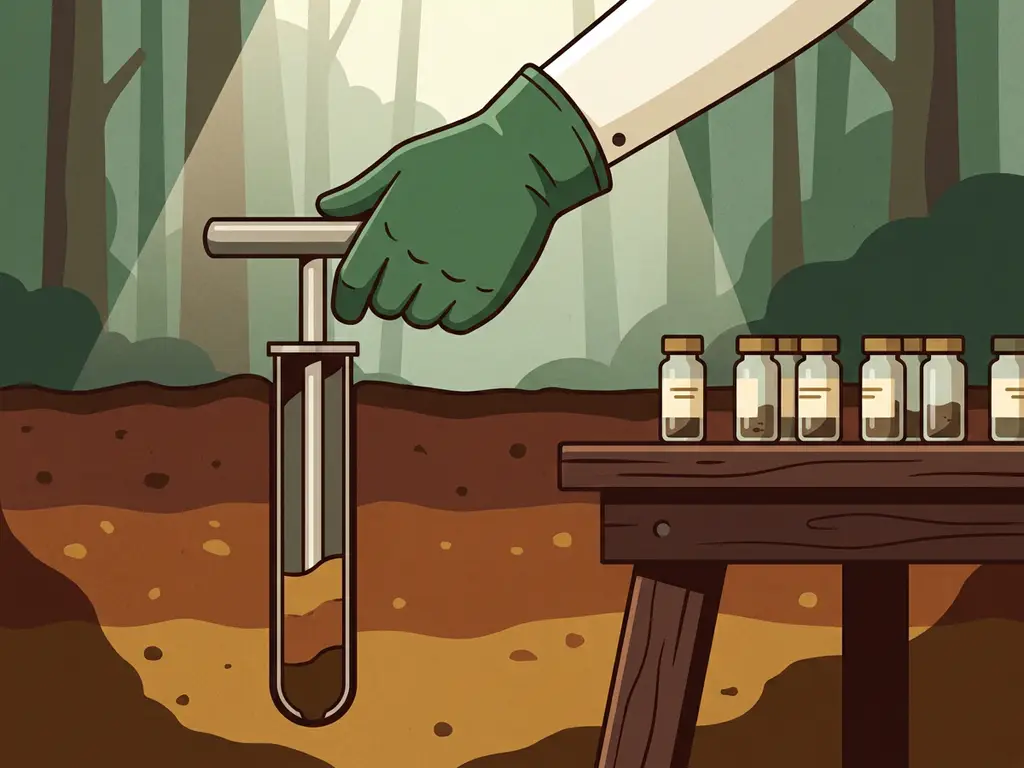
Soil contamination assessment uses a combination of site investigation phases, field detection methods, laboratory chemical analysis, and biological testing to characterize the nature, extent, and risk of contamination. The right combination depends on the type of contaminant, the site history, and the decisions the results need to support. This article walks through each stage of the assessment process, from the initial desk study to biological feasibility testing.
How do site investigation phases shape the assessment approach?
Site investigation typically follows a phased structure, where each stage determines whether further investigation is needed and what form it should take. The first phase is a desk-based study: reviewing historical land use records, permits, and available environmental data to identify potential contamination sources and receptors. This shapes everything that follows, including where to sample and what to test for.
The second phase moves to the field. Boreholes, trial pits, and monitoring wells are installed to collect soil and groundwater samples from targeted locations. The findings from this phase determine whether contamination is confirmed, how far it has spread, and whether it poses a risk to groundwater or human health.
A third, more detailed phase may follow if the initial results are inconclusive or if a specific remediation approach is being evaluated. At this stage, assessments may include biological testing or treatability studies to determine whether in-situ treatment is viable. Understanding which phase you are in helps align the assessment scope with the decisions that need to be made, whether that is regulatory reporting, risk assessment, or selecting a remediation strategy.
Get in Touch
Let’s Talk Microbial Solutions
Book a conversation with Stijn, our CEO, or send us your request.
| Book an Appointment | Request Information |
What are the main field methods for detecting soil contamination?
The main field methods for detecting soil contamination are direct sampling through boreholes and trial pits, groundwater monitoring via piezometers, and screening tools such as photoionization detectors (PIDs) and X-ray fluorescence (XRF) analyzers. These methods are used to locate contamination, estimate its extent, and identify priority zones for laboratory analysis.
Boreholes and trial pits allow physical access to soil at depth. Soil cores can be logged visually for discoloration, odor, or unusual texture, which are often the first indicators of contamination. PID devices detect volatile organic compounds in real time directly in the field, making them particularly useful when screening for chlorinated solvents or petroleum hydrocarbons.
Groundwater monitoring is equally important, especially when contamination has migrated below the water table. Piezometers installed at different depths and distances from the suspected source allow you to track the direction and concentration of a contaminant plume. Knowing whether groundwater is affected by soil contamination is critical for risk assessment and for determining the scope of any required remediation.
For sites with suspected heavy metal contamination, portable XRF analyzers provide rapid in-field elemental analysis without the need to send every sample to a laboratory. This speeds up decision-making during the field campaign and helps optimize the number of samples sent for full laboratory characterization.
What laboratory analyses are used to characterize contaminated soil?
Laboratory analyses used to characterize contaminated soil include chemical extraction and chromatographic analysis for organic contaminants, acid digestion with mass spectrometry for heavy metals, and physical tests for soil properties such as grain size and organic matter content. The choice of analysis is driven by the suspected contaminant profile identified during field investigation.
For volatile organic compounds, including chlorinated solvents such as trichloroethylene (TCE) and perchloroethylene (PCE), gas chromatography combined with mass spectrometry (GC-MS) is the standard method. These compounds are among the most persistent soil contaminants and require sensitive detection methods because they can be hazardous at low concentrations.
Heavy metal analysis typically uses inductively coupled plasma mass spectrometry (ICP-MS) or atomic absorption spectrometry (AAS), both of which can detect trace concentrations across a wide range of elements, including lead, cadmium, arsenic, and chromium.
Beyond identifying what is present and at what concentration, laboratory results are compared against regulatory threshold values, in Belgium defined under VLAREBO, to determine whether soil quality standards are exceeded and what remediation obligations follow. Accurate laboratory characterization is the foundation of any compliant assessment report submitted to OVAM.
How does biological testing assess the potential for natural attenuation?
Biological testing assesses the potential for natural attenuation by determining whether indigenous soil microorganisms are capable of degrading the target contaminants under site conditions. The most widely used tool is the microcosm test, which replicates site conditions in a controlled laboratory setting to observe whether biodegradation occurs, at what rate, and under what conditions.
For chlorinated solvents such as VOCl compounds, reductive dechlorination by specialized anaerobic bacteria is the key degradation pathway. A microcosm test using soil and groundwater from the contaminated site can confirm whether the necessary microbial community is present, whether it is active, and whether it needs supplementation through bioaugmentation to achieve meaningful degradation rates.
Molecular monitoring tools add another layer of precision. Quantitative PCR (qPCR) analysis can detect and quantify specific functional genes associated with contaminant degradation, providing direct evidence of biological activity rather than relying solely on chemical concentration changes. Amplicon sequencing maps the broader microbial community structure, helping to understand which organisms are driving or limiting the process.
This type of biological assessment is particularly valuable when excavation is not technically feasible or cost-effective, for example on built-up sites or where contamination is deep and widespread. Avecom’s soil remediation services are built around this approach: microcosm testing is used as a cost-efficient feasibility screen before committing to a full in-situ biological treatment strategy, giving site owners concrete data to support decision-making and regulatory reporting.
Which assessment method is right for your contamination type?
The right assessment method depends on the contaminant class, its mobility, the site conditions, and the regulatory context. There is no single method that suits every situation. A structured approach, starting with a desk study and field screening, then moving to targeted laboratory analysis and biological testing where relevant, gives the most complete and decision-ready picture.
- Chlorinated solvents (VOCl): GC-MS for chemical characterization, combined with microcosm testing and qPCR to assess biodegradation potential. These compounds are persistent in groundwater and often require biological intervention rather than excavation.
- Petroleum hydrocarbons: PID screening in the field followed by GC-MS in the laboratory. Natural attenuation is often active, but biological testing can confirm whether it is sufficient or whether stimulation is needed.
- Heavy metals: XRF for rapid field screening, ICP-MS for definitive laboratory quantification. Biological remediation is less applicable here; risk management or stabilization approaches are more common.
- Mixed contamination: A phased approach is essential. Characterize the dominant contaminants first, then assess each fraction with the appropriate method. Biological testing may apply to the organic fraction even when metals are also present.
When contamination is found on an industrial site and the path forward is unclear, the assessment approach itself becomes a planning tool. A well-designed investigation reduces uncertainty, supports OVAM compliance, and provides the evidence base needed to select a remediation method that is both technically sound and financially realistic.
Avecom specializes in the biological assessment and remediation of complex soil contamination, particularly chlorinated solvents that have resisted conventional treatment. For sites where standard approaches have not delivered results, biological feasibility testing offers a structured way to evaluate whether an in-situ microbial approach is viable before significant investment is committed. Learn more about Avecom’s expertise or contact the team for a preliminary screening of your site.
Related Articles
- How do you turn a food processing waste stream into a valuable product?
- What are the legal obligations when contamination is found on a site?
- How does sludge bulking affect treatment performance?
- What data do regulators expect during soil remediation?
- Is biological soil remediation cheaper than excavation?