

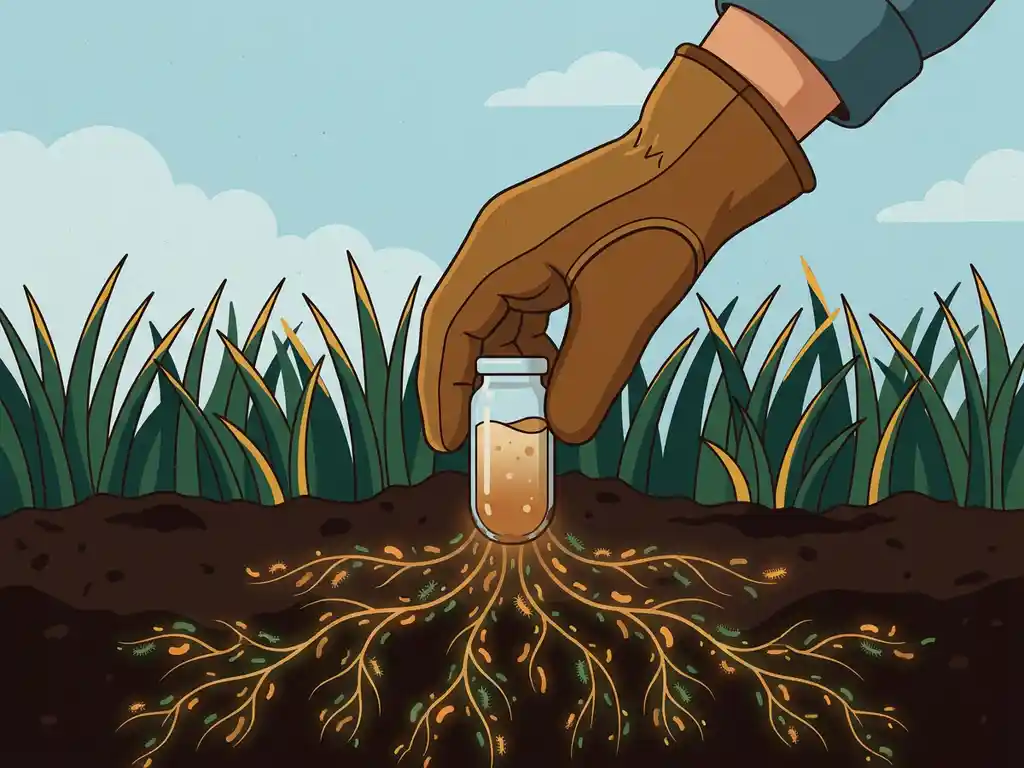
Bioaugmentation is a soil remediation technique in which specialized microorganisms are deliberately introduced into contaminated ground to break down pollutants that native microbial communities cannot fully degrade. It is particularly effective for persistent organic contaminants such as chlorinated solvents, where natural biodegradation is absent or too slow to meet cleanup targets. The sections below answer the most common questions project managers and site owners face when evaluating whether a biological approach is right for their situation.
How do microbes actually break down soil contaminants?
Microorganisms break down soil contaminants by using them as an energy or carbon source through enzymatic reactions. Specific bacterial species produce enzymes that attack the chemical bonds in pollutant molecules, converting them into simpler, less harmful compounds. For chlorinated solvents, this process is called reductive dechlorination, where chlorine atoms are stripped away step by step until harmless end products remain.
The efficiency of this process depends heavily on the conditions in the soil. Factors such as pH, temperature, the presence of electron donors, and oxygen levels all influence whether the right microbial pathways are active. In anaerobic conditions, for example, certain bacteria can use chlorinated compounds as a terminal electron acceptor, effectively breathing the contaminant. This makes the subsurface chemistry of a site just as important as the biology when designing a remediation approach.
What makes microbial degradation powerful is that it works in place. Rather than moving contaminated material, the process transforms the pollutant where it sits, including in zones that are physically inaccessible to excavation equipment. This in-situ characteristic is one of the main reasons biological remediation is increasingly considered for complex or deep-seated contamination.
Get in Touch
Let’s Talk Microbial Solutions
Book a conversation with Stijn, our CEO, or send us your request.
| Book an Appointment | Request Information |
What is the difference between biostimulation and bioaugmentation?
Biostimulation means enhancing the activity of microorganisms already present in the soil by adjusting conditions, typically by adding nutrients, electron donors, or oxygen. Bioaugmentation goes a step further by introducing external microbial cultures into the subsurface when the native population lacks the functional capacity to degrade the target contaminant. The two approaches are not mutually exclusive and are often combined.
Biostimulation is the first option to consider when the right microbial species are present but inactive due to limiting conditions. If a site lacks a sufficient population of the required degraders, no amount of nutrient amendment will produce adequate results. That is when bioaugmentation becomes necessary. The introduced cultures are typically highly specialized consortia that have been selected and cultivated specifically for their degradation capabilities.
For volatile organochlorine compounds (VOCl) such as perchloroethylene (PCE) and trichloroethylene (TCE), the bacteria capable of complete dechlorination are not universally distributed in soils. Many contaminated sites simply do not harbor them in sufficient numbers. Bioaugmentation with targeted dechlorinating consortia has become the standard biological intervention for these compounds precisely because biostimulation alone is often insufficient.
What types of contamination are best suited for bioaugmentation?
Bioaugmentation is best suited for contamination involving organic compounds that specific microbial species can metabolize, particularly chlorinated solvents such as PCE, TCE, and their degradation products. These volatile organochlorine compounds are among the most common and persistent groundwater and soil contaminants found at former dry-cleaning facilities, industrial sites, and chemical plants.
Beyond chlorinated solvents, bioaugmentation has demonstrated effectiveness for a range of other organic pollutants, including certain petroleum hydrocarbons, chlorinated benzenes, and some pesticide residues. The critical factor is whether a microbial pathway exists for the target compound and whether that pathway can be made active under site conditions.
Bioaugmentation is generally less applicable to inorganic contaminants such as heavy metals, though microbial processes can sometimes immobilize metals or change their speciation. For mixed contamination sites, a careful assessment is needed to determine which fraction of the contamination is biologically treatable and which requires a different approach.
How do you know if bioaugmentation will work on a specific site?
The most reliable way to determine whether bioaugmentation will work on a specific site is through a microcosm test. This laboratory test uses actual soil and groundwater samples from the site, exposes them to target microbial cultures under controlled conditions, and measures whether degradation occurs and at what rate. It provides site-specific evidence before any field investment is made.
A microcosm test answers several critical questions at once: Are the site conditions compatible with the introduced organisms? Is the contamination accessible to microbial attack? Are there inhibiting factors such as competing electron acceptors or toxic co-contaminants? The results provide a scientifically grounded basis for deciding whether to proceed, and they inform the design of the full-scale intervention.
At Avecom’s soil remediation service, microcosm testing is the first step in every biological remediation assessment. It is a cost-efficient screening tool that avoids the risk of deploying a full bioaugmentation strategy on a site where conditions are fundamentally unfavorable. For project managers working under budget constraints and regulatory deadlines, this kind of early-stage evidence is essential for decision-making.
How is bioaugmentation progress monitored in the field?
Bioaugmentation progress is monitored through a combination of chemical analysis and molecular biological tools. Chemical monitoring tracks the reduction in contaminant concentrations and the appearance of intermediate degradation products over time. Molecular monitoring, particularly quantitative PCR (qPCR), directly measures the abundance and activity of the specific microbial populations responsible for degradation in soil and groundwater samples.
qPCR allows site managers to confirm that the introduced organisms have established themselves in the subsurface and are actively functioning. This is a significant advantage over chemical monitoring alone, which can show concentration changes but cannot distinguish between biological degradation, dilution, or physical migration of the plume.
Amplicon sequencing provides an even broader picture of the microbial community structure, showing how the overall soil microbiome shifts over the course of remediation. Together, these molecular tools transform monitoring from a compliance exercise into an active management instrument. They allow remediation strategies to be adjusted based on what is actually happening in the subsurface, rather than waiting for chemical data that may lag weeks or months behind biological reality.
This level of diagnostic precision also supports regulatory reporting. Data generated through molecular monitoring can be structured to align with OVAM documentation requirements, providing measurable evidence of progress at defined intervals throughout the project.
When should bioaugmentation be chosen over excavation?
Bioaugmentation should be considered over excavation when the contamination is too deep, too widespread, or located beneath structures that make physical removal impractical or disproportionately expensive. It is also the preferred approach when contamination has migrated into the saturated zone and groundwater treatment is required alongside soil cleanup.
Excavation remains a valid and well-understood technique for shallow, localized contamination where the full extent of the pollutant mass can be removed cleanly. However, for chlorinated solvent plumes that have spread through the unsaturated and saturated zones over decades, excavation often cannot reach the source zones or the dissolved phase in groundwater. In these cases, biological in-situ treatment is not simply an alternative but often the only technically feasible option.
Cost is also a significant driver. Excavation at depth, particularly in urban or built environments, involves substantial civil works, waste transport, and disposal costs. A well-designed bioaugmentation program, supported by feasibility testing and targeted monitoring, can achieve equivalent or superior long-term outcomes at a fraction of the cost, particularly when the contamination requires treatment over a large area.
The decision should always be grounded in site-specific data. A project where classical techniques have already failed to reduce contamination to target levels is a strong candidate for biological intervention. Avecom works specifically with these difficult cases, where standard approaches have reached their limits and a more targeted microbial strategy is needed. Their team of environmental engineers and microbiologists supports the full trajectory from initial feasibility assessment through to field implementation and regulatory reporting, ensuring that every intervention is built on a defensible scientific foundation.
Related Articles
- What is the difference between batch and continuous fermentation?
- What are the first steps after finding soil contamination?
- What happens if you ignore soil contamination on your property?
- Who is responsible when soil contamination is found?
- Can contaminated groundwater be treated at the same time as soil?