

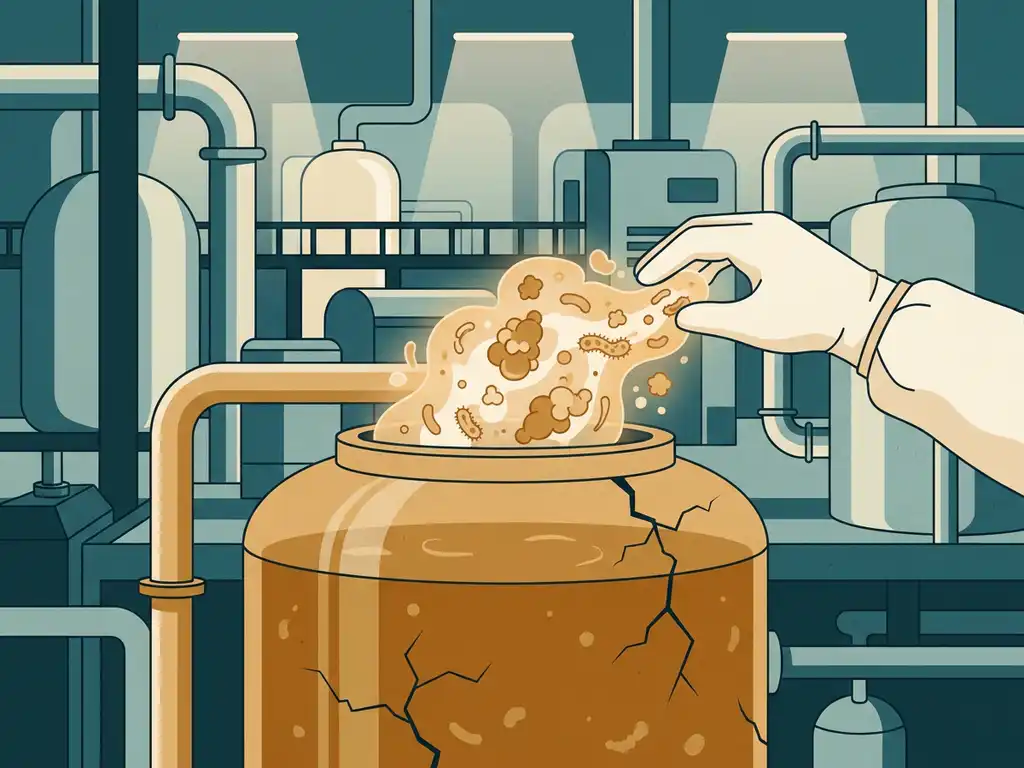
A biological wastewater treatment system that suddenly stops meeting discharge standards is not just a technical headache. It is a compliance risk, a potential source of regulatory fines, and a signal that something has shifted inside the process that demands attention. Whether the problem appears as rising effluent concentrations, sludge that refuses to settle, or nutrient peaks that breach permit limits, the root cause is almost never a single failure point. Understanding what is actually happening inside the biology is the first step toward a lasting fix.
Industrial wastewater compliance failure is one of the most common operational pressures facing production managers in the food, chemical, and pharmaceutical sectors. Discharge standards under frameworks like the EU Water Framework Directive are tightening, and the margin for underperformance is shrinking. This article walks through the key warning signs, the underlying causes, and the practical interventions that restore biological treatment performance without necessarily taking the entire system offline.
Signs your biological wastewater system is failing
Biological treatment failure rarely announces itself all at once. It tends to surface gradually through a pattern of small deviations that, taken individually, might seem manageable but together point to a system under stress. Recognising these early warning signs is essential for preventing a minor imbalance from becoming a full compliance breach.
The most visible indicator is effluent quality that no longer meets permit thresholds. Elevated COD or BOD readings in the final discharge, rising ammonia or nitrate concentrations, and phosphorus levels that swing unpredictably after seasonal production peaks are all clear signals that the wastewater treatment system is not working as designed. Alongside these chemical indicators, physical changes in the sludge are equally telling. Bulking sludge that fails to settle, foaming in the aeration tank, or a sudden drop in the sludge volume index all suggest that the microbial community driving the process has been disrupted.
Operational anomalies matter too. Unusually high oxygen demand, inconsistent biogas production in anaerobic systems, or a process that responds poorly to load changes are signs worth investigating before they escalate into discharge violations.
Get in Touch
Let’s Talk Microbial Solutions
Book a conversation with Stijn, our CEO, or send us your request.
| Book an Appointment | Request Information |
Root causes behind biological treatment failures
Sludge problems in wastewater treatment and effluent quality failures typically trace back to a disruption in the microbial community that does the actual work. Identifying the root cause requires looking at both the incoming load and the conditions inside the reactor.
Shifts in influent composition
Industrial wastewater streams are rarely constant. Seasonal production cycles, product changeovers, or the introduction of new raw materials can alter the chemical composition of the influent significantly. Microorganisms that were well-adapted to one substrate may be poorly equipped to handle a new one, leading to a gradual decline in treatment efficiency. High concentrations of inhibitory compounds such as solvents, disinfectants, or certain food additives can suppress key microbial populations within hours.
Process parameter imbalances
Temperature, pH, dissolved oxygen, and nutrient ratios all govern microbial activity. A drop in reactor temperature during winter, a pH excursion from a batch discharge, or an imbalanced carbon-to-nitrogen ratio can each destabilise the biology in ways that take weeks to correct if left unmanaged. In anaerobic systems, even modest fluctuations in volatile fatty acid concentrations can inhibit methanogenesis and cause a cascade of performance problems.
Hydraulic and organic overloading is another frequent culprit. When the incoming load exceeds the system’s design capacity, whether in terms of volume or concentration, the biology simply cannot keep pace. This is particularly common in food processing facilities where production peaks generate concentrated wastewater streams that the treatment system was not dimensioned to absorb.
How microbial community analysis guides the fix
Effective troubleshooting of a failing biological system starts with understanding what is actually living inside it. Modern molecular monitoring techniques make it possible to characterise the microbial community in detail, identifying which populations are present, which are absent, and whether the community structure aligns with the treatment goals.
Molecular tools such as 16S rRNA gene sequencing can reveal whether nitrifying bacteria have been washed out, whether filamentous organisms responsible for sludge bulking have taken over, or whether the anaerobic community has shifted toward less efficient fermentation pathways. This level of insight is far more actionable than conventional chemical monitoring alone, because it pinpoints the biological mechanism behind the performance problem rather than just describing its symptoms.
Avecom’s team of environmental engineers and microbiologists applies exactly this kind of molecular analysis as part of its microbiological audit service. By combining community profiling with process data, it becomes possible to distinguish between a system that needs a targeted biological intervention and one that requires a fundamental redesign of operating conditions. That distinction matters enormously for both timeline and cost.
Targeted interventions that restore system performance
Once the root cause is understood, the intervention can be matched precisely to the problem. Generic solutions applied without diagnosis tend to produce temporary improvements at best and can make the underlying issue worse.
Bioaugmentation and inoculation
When specific microbial populations have been lost or suppressed, reintroducing them in concentrated form can accelerate recovery significantly. Bioaugmentation with well-characterised microbial consortia adapted to the specific wastewater matrix is more effective than relying on spontaneous recolonisation from the remaining sludge. This approach is particularly valuable after a toxic shock event or when starting up a system that has been idle.
Avecom’s ABIL technology supports exactly this type of targeted restart. Rather than requiring a complete system shutdown and restart, ABIL allows existing biofilters to be reactivated or rebalanced with minimal disruption to operations. For production managers concerned about downtime during corrective action, this is a meaningful operational advantage. More detail on the underlying approach is available on the biological water treatment service page.
Process optimisation and load management
In cases where overloading or parameter imbalance is the primary driver, the intervention focuses on restoring stable operating conditions. This may involve adjusting hydraulic retention times, modifying aeration strategies, correcting nutrient dosing, or implementing equalisation measures to buffer peak loads. Lab-scale and pilot-scale feasibility testing can validate the right operating window before changes are applied at full scale, reducing the risk of further disruption.
Turning wastewater problems into a resource opportunity
Fixing a failing biological treatment system is a necessary operational task, but it does not have to be purely a cost centre. Once the biology is stable and performing reliably, the same wastewater stream that was causing compliance headaches can be reconsidered as a potential source of recoverable value.
Nitrogen-rich reject streams, for example, are increasingly being valorised through microbial protein production rather than simply being stripped and discharged. Through the ProMic platform, nutrients present in industrial wastewater can be converted into high-quality single cell protein suitable for use in animal feed. This shifts the economics of wastewater management from pure cost reduction toward partial revenue recovery, strengthening the business case for investing in biological treatment infrastructure in the first place.
This kind of integrated approach, where compliance and valorisation are addressed together rather than sequentially, reflects a broader shift in how forward-thinking industrial operators think about their water streams. A wastewater treatment system that is not working as it should is a problem that demands a fix. But the fix itself can open the door to something more valuable than simple compliance. Avecom’s integrated approach to biological wastewater management is designed precisely to support that transition, from troubleshooting and stabilisation through to long-term process optimisation and resource recovery.
If an industrial wastewater system is underperforming, the starting point is always a clear-eyed assessment of what the biology is actually doing and why. From there, targeted, evidence-based interventions consistently outperform broad-spectrum fixes. A microbiological audit of your existing installation is often the fastest route to understanding the problem and designing a solution that holds.