

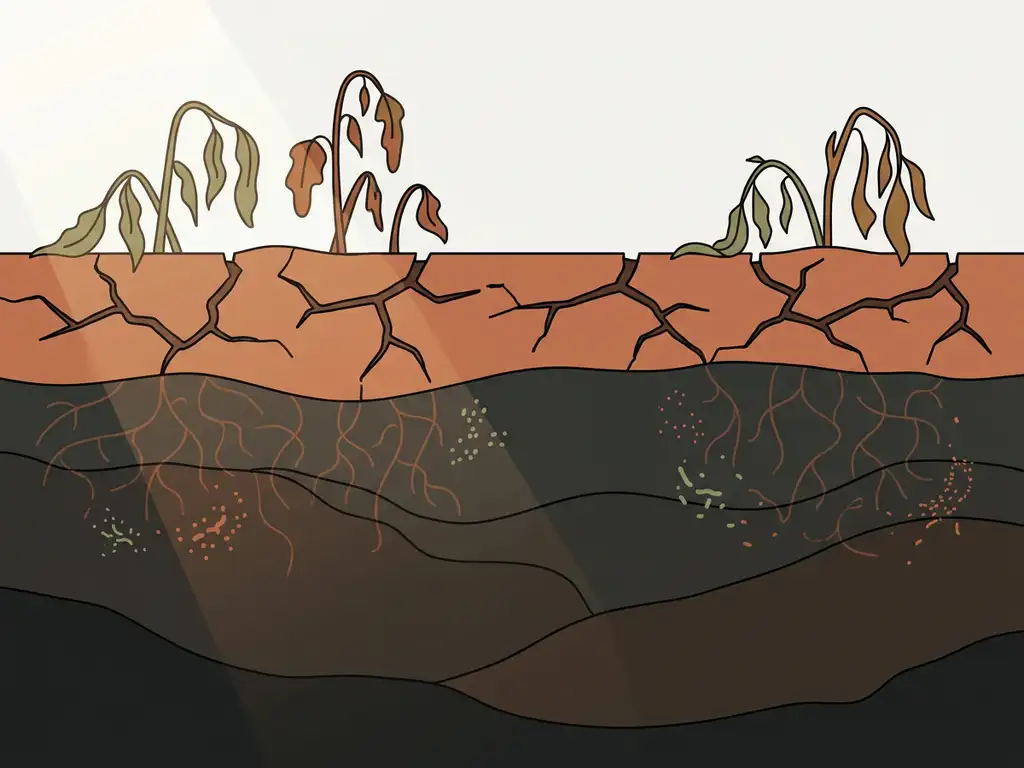
Yes, soil contamination can directly affect human health. Pollutants in the ground do not stay there — they migrate into air, water, and food chains, creating multiple exposure pathways that can cause serious harm. The severity depends on the type of contaminant, the concentration, and how long a person is exposed. The questions below unpack each of those pathways and what they mean in practice.
How does contaminated soil enter the human body?
Contaminated soil enters the human body through three main routes: ingestion, inhalation, and skin contact. Ingestion happens when soil particles are swallowed directly or when groundwater and food crops absorb pollutants from the ground. Inhalation occurs when volatile compounds evaporate from the soil and enter indoor or outdoor air. Dermal absorption is a third route, particularly relevant for certain organic compounds and heavy metals.
Each pathway carries a different level of risk depending on the contaminant. Volatile organic compounds (VOCs) primarily enter the body through breathing, especially in enclosed spaces above contaminated ground. Heavy metals like lead and arsenic are more likely to cause harm through ingestion — either via contaminated drinking water drawn from affected aquifers or through vegetables grown in polluted soil. Children are particularly vulnerable to direct ingestion because they spend more time on the ground and frequently put their hands in their mouths.
Understanding these pathways is the starting point for any serious soil contamination assessment. The route of exposure shapes both the health risk and the remediation priority.
Get in Touch
Let’s Talk Microbial Solutions
Book a conversation with Stijn, our CEO, or send us your request.
| Book an Appointment | Request Information |
What health effects are linked to heavy metals in soil?
Heavy metals in contaminated soil — including lead, cadmium, arsenic, and mercury — are linked to a wide range of serious health effects. These include neurological damage, kidney dysfunction, developmental disorders in children, and increased cancer risk. The specific outcome depends on the metal involved, the dose, and the duration of exposure.
Lead is one of the most well-documented soil contaminants in terms of health impact. Even low-level exposure in children can impair cognitive development and reduce IQ. Arsenic, which often leaches into groundwater from contaminated industrial sites, is classified as a human carcinogen and is associated with bladder, lung, and skin cancers. Cadmium accumulates in the kidneys over time and can cause progressive renal damage with no early symptoms, making it especially insidious.
Industrial and brownfield sites are common sources of heavy metal contamination. Former metalworking facilities, tanneries, and chemical plants frequently leave behind elevated concentrations in both soil and groundwater. If you have found contamination on an industrial site, identifying which metals are present and at what concentrations is an essential first step before any health or remediation decisions can be made.
Are volatile organic compounds in soil dangerous to breathe?
Yes, volatile organic compounds (VOCs) in contaminated soil are dangerous to breathe. These chemicals evaporate from soil and groundwater and can migrate upward through building foundations into indoor air — a process called vapor intrusion. Chlorinated solvents such as trichloroethylene (TCE) and perchloroethylene (PCE) are among the most hazardous, and both are classified as probable or known human carcinogens.
Vapor intrusion is a particularly serious concern for buildings constructed on or near former dry-cleaning facilities, industrial laundries, and chemical manufacturing sites. Occupants may be exposed to harmful concentrations of chlorinated VOCs without any visible sign of contamination at ground level. Chronic inhalation of these compounds is associated with liver and kidney damage, central nervous system effects, and elevated cancer risk.
Chlorinated solvents — collectively referred to as VOCl (volatile organochlorine compounds) — are among the most persistent and difficult-to-remediate contaminants found in European soils. Their density causes them to sink deep into the soil profile and dissolve slowly into groundwater, making conventional excavation impractical in many cases. Specialized approaches, including biological soil remediation targeting the specific microbial degradation pathways of these compounds, are often the most viable option for deep or complex contamination.
Who is most at risk from soil contamination?
Children, pregnant women, and people who live or work directly on or near contaminated land are most at risk from soil contamination. Children face the highest exposure because of hand-to-mouth behavior, time spent playing on the ground, and the greater sensitivity of developing nervous and immune systems to toxic substances. Pregnant women are at elevated risk because certain contaminants cross the placental barrier and affect fetal development.
Beyond these biological vulnerabilities, risk is also shaped by proximity and activity. Residents of housing built on former industrial land, workers at active industrial sites, and people who consume homegrown produce from contaminated gardens all face higher-than-average exposure. Agricultural communities relying on groundwater irrigation in affected areas represent another at-risk group, particularly where heavy metals or nitrates have migrated into the water table.
It is also worth noting that risk is not always obvious. People living above a deep chlorinated solvent plume may never see or smell anything unusual, yet be chronically exposed through vapor intrusion. This is why the question of how to test if soil is contaminated matters even when there are no visible signs of a problem.
How can you tell if soil contamination is causing health problems?
Determining whether soil contamination is causing health problems requires both environmental testing and medical evaluation. On the environmental side, soil and groundwater sampling can identify which contaminants are present and at what concentrations. On the health side, biomonitoring — measuring contaminant levels in blood, urine, or hair — can reveal whether exposure has already occurred. Neither approach alone is sufficient; both are needed to establish a credible link.
Health symptoms are rarely specific enough to point directly to soil contamination. Fatigue, headaches, and respiratory irritation can have many causes. A pattern of unexplained illness within a defined geographic area, particularly near a known or suspected contaminated site, is more meaningful. In such cases, the appropriate response is a formal site investigation combined with medical assessment of affected individuals.
From a regulatory standpoint, soil contamination assessment methods in Belgium are governed by VLAREBO and overseen by OVAM. A properly conducted soil investigation will identify the nature and extent of contamination, assess risk to human health and groundwater, and determine whether remediation is required. Knowing how to tell if groundwater is affected by soil contamination is part of this process — groundwater sampling at multiple depths and locations is standard practice in any thorough investigation.
What can be done to eliminate the health risks from contaminated soil?
Eliminating health risks from contaminated soil requires a combination of exposure control and source removal or treatment. In the short term, restricting access to the site, preventing the use of contaminated groundwater, and addressing vapor intrusion pathways in buildings can reduce immediate risk. Long-term risk elimination requires treating or containing the contamination itself through a remediation strategy suited to the specific contaminants and site conditions.
Excavation and disposal is the most familiar approach, but it is not always feasible. Deep contamination, the presence of buildings, or sheer volume can make it technically impractical or prohibitively expensive. In those cases, in situ treatment methods become relevant. For chlorinated solvents in particular, biological remediation using specialized microbial consortia has become an established and evidence-based alternative.
Avecom, a Belgian environmental biotechnology company with over 30 years of experience in microbial process management, specializes in the biological decontamination of VOCl-contaminated soils. The process begins with a microcosm test — a rapid, cost-efficient laboratory analysis that determines whether biological degradation is feasible for a specific soil matrix and contaminant profile before a full remediation program is committed to. Where feasible, in situ bioaugmentation introduces targeted microbial consortia into the subsurface to break down chlorinated solvents under controlled conditions.
Alongside the remediation itself, molecular monitoring tools allow continuous tracking of microbial activity and contaminant reduction throughout the process. This provides the concrete data points that project managers, site owners, and regulators need — both for internal reporting and for compliance with OVAM requirements. If you are dealing with contamination on an industrial or brownfield site and conventional approaches have not delivered results, a biological remediation screening is a logical next step before committing to more disruptive or costly interventions.
The steps after soil contamination is found follow a clear sequence: confirm the extent and nature of the contamination, assess the risk to human health and the environment, evaluate remediation options against site-specific constraints, and implement the approach best suited to achieving long-term risk elimination. Getting that sequence right — and having the right technical partner for the harder cases — makes the difference between a site that remains a liability and one that can be safely redeveloped.
Related Articles
- What contaminants are most commonly found on industrial sites?
- What causes poor sludge settling in a food industry wastewater plant?
- What happens if excess sludge is not removed from a wastewater plant?
- How do you fix a biological wastewater system that underperforms?
- Why is my wastewater treatment plant not working properly?