

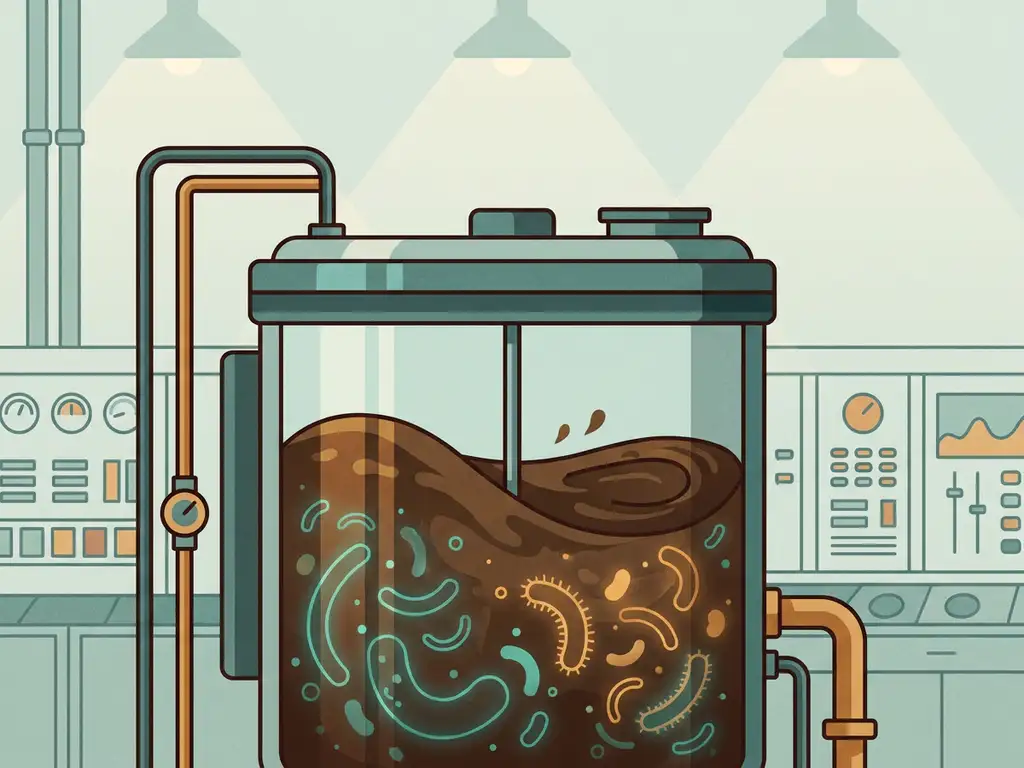
Sludge management is important in industrial wastewater treatment because poorly handled sludge drives up operating costs, creates compliance risks, and can destabilize the biological processes that make treatment work in the first place. For industrial facilities, sludge is not a secondary concern — it is often where operational problems originate and where the most significant cost savings can be found. The sections below address the most common questions facility managers raise when auditing or redesigning their sludge handling strategy.
What happens to sludge if it is not properly managed?
Unmanaged sludge in an industrial wastewater plant leads to system overload, process failure, and regulatory non-compliance. When sludge accumulates beyond the system’s design capacity, it reduces hydraulic retention time, impairs settling, and can cause the biological treatment stage to collapse entirely — releasing untreated effluent that violates discharge limits.
In practical terms, excess sludge in a wastewater plant creates a cascade of problems. Solids that are not withdrawn at the right rate accumulate in secondary clarifiers, leading to sludge blanket rise and carryover into the effluent. This raises suspended solids concentrations in the discharge stream, which is one of the most common causes of permit exceedances in food, chemical, and pharmaceutical production facilities.
Beyond the effluent quality issue, poorly managed sludge generates odour, increases the risk of septic conditions in storage, and creates significant handling and disposal costs downstream. Facilities that delay sludge withdrawal to reduce hauling frequency often pay more in the long run through higher polymer consumption, increased aeration demand, and emergency interventions when the system tips out of balance.
Get in Touch
Let’s Talk Microbial Solutions
Book a conversation with Stijn, our CEO, or send us your request.
| Book an Appointment | Request Information |
What are the main types of sludge in industrial wastewater treatment?
Industrial wastewater treatment generates two primary sludge types: primary sludge, which consists of settleable solids removed before biological treatment, and secondary sludge (also called biological or activated sludge), which is the microbial biomass produced during the biological treatment stage. Some processes also generate chemical sludge from precipitation steps used for phosphorus or heavy metal removal.
The composition of each type matters because it determines how the sludge behaves, how much of it is produced, and what disposal or valorisation routes are available.
- Primary sludge tends to be denser and higher in organic content. It is easier to dewater but can be highly variable depending on the upstream industrial process.
- Secondary sludge is largely microbial biomass. It is more voluminous, harder to dewater, and its production rate is directly linked to how the biological system is operated.
- Chemical sludge arises when coagulants or precipitants are dosed to remove nutrients or metals. It adds disposal cost without contributing to biological treatment performance.
For most industrial facilities, secondary sludge represents the largest volume and the most complex management challenge. Its characteristics depend heavily on the microbial community structure and the operating conditions of the biological reactor — which is why microbiological monitoring is a meaningful tool for facilities looking to reduce sludge output.
How does sludge management affect treatment costs?
Sludge management typically accounts for 30 to 60 percent of the total operating cost of a biological wastewater treatment plant, making it the single largest cost driver in most industrial systems. These costs include thickening, dewatering, transport, and final disposal — all of which scale directly with the volume of sludge produced.
The cost impact runs in both directions. Producing too much sludge increases dewatering and disposal costs. Retaining too much sludge in the system degrades treatment performance and can trigger compliance failures that carry their own financial consequences, including fines and required upgrades.
Energy consumption is also closely tied to sludge management decisions. Over-aeration, which is common in facilities that are not actively monitoring their biological process, drives up both sludge production and electricity costs simultaneously. Optimizing the sludge retention time (SRT) in the biological reactor is one of the most effective levers for reducing both.
Facilities operating under tightening discharge standards — such as those set under VLAREM or the EU Water Framework Directive — face additional pressure because the margin for error is narrowing. A sludge management strategy that was adequate five years ago may no longer be sufficient to maintain compliance without process adjustments.
How can biological treatment reduce sludge production?
Biological treatment can significantly reduce sludge production by optimizing operating conditions so that the microbial community converts more organic load into energy and less into new biomass. The key parameters are sludge retention time, organic loading rate, and the composition of the active microbial community — all of which can be tuned without replacing existing infrastructure.
One of the most effective approaches is extending the SRT in the biological reactor. Longer retention times allow slower-growing microorganisms to become established, and these organisms tend to produce less excess biomass per unit of substrate consumed. This is particularly relevant for industrial effluents with high organic strength, where biomass yield can otherwise be substantial.
Sludge bulking is a related problem that directly affects sludge management costs. When filamentous bacteria dominate the microbial community, the sludge settles poorly, clarifiers become overloaded, and more sludge must be wasted to maintain system stability. Fixing sludge bulking in biological treatment requires identifying the root cause — whether that is a nutrient imbalance, a dissolved oxygen deficit, or a substrate composition issue — rather than simply increasing chemical dosing.
This is where specialized microbiological expertise adds practical value. biological wastewater treatment approaches that incorporate molecular monitoring of microbial communities allow operators to detect imbalances early, before they manifest as bulking events or effluent exceedances. Avecom applies this kind of community-level analysis as part of its process optimization work for industrial clients.
What are the options for sludge disposal or valorisation?
The main options for industrial sludge disposal or valorisation are landfill, incineration, agricultural land application, anaerobic digestion for biogas production, and — increasingly — nutrient recovery for use as a secondary raw material. The right option depends on the sludge’s composition, contaminant load, and the regulatory framework governing its end use.
Landfill and incineration remain common but are under increasing regulatory and cost pressure. Landfill diversion targets across the EU are tightening, and incineration costs have risen as capacity constraints increase. Facilities that rely on these routes as a default are likely to face higher costs over the coming years.
Anaerobic digestion offers a route to recover energy from organic sludge, reducing both disposal volume and net energy consumption. For food industry effluents with high organic content, this can meaningfully improve the economics of the overall treatment system.
Nutrient recovery is a more recent development with strong potential for nitrogen-rich reject streams. Rather than treating nitrogen as a waste product to be removed and disposed of, it can be captured as a feedstock for microbial protein production. This is the logic behind Avecom’s ProMic platform, which recovers nutrients from wastewater streams and converts them into high-value ingredients for animal feed — shifting the economics from disposal cost to resource value. More information on this approach is available through Avecom’s broader service offering.
When should an industrial facility reassess its sludge management strategy?
An industrial facility should reassess its sludge management strategy when discharge limits change, when production volumes or product mix shift significantly, when sludge disposal costs increase substantially, or when the biological treatment system shows signs of instability such as bulking, foaming, or inconsistent effluent quality. Any one of these triggers is sufficient to warrant a structured review.
In practice, many facilities operate with sludge management strategies that were designed for different conditions. Seasonal production peaks in food processing, for example, can create nitrogen and phosphorus loads that exceed the capacity of a system calibrated for average conditions. These peaks are a common cause of discharge exceedances and are often addressable through process adjustment rather than capital investment.
A microbiological audit of an existing installation is often the most efficient starting point. It identifies which parts of the biological process are performing well, which are limiting performance, and what adjustments are likely to have the greatest impact on both treatment quality and sludge production. Avecom’s team of environmental engineers and microbiologists conducts this type of audit as a precursor to any process optimization or technology implementation — ensuring that recommendations are grounded in the actual state of the system rather than generic assumptions.
Facilities that have not reviewed their sludge management approach in the past three to five years, or that are operating under compliance pressure, are likely to find that a structured reassessment identifies meaningful improvements in both cost and reliability. The starting point is usually a clear picture of what the current system is actually doing — and where the gaps are. For facilities looking for that kind of independent analysis, wastewater process expertise grounded in applied microbiology offers a more targeted path than generic engineering consultancy.
Related Articles
- What is a soil remediation feasibility study?
- Can high nitrogen loads cause sludge problems in wastewater treatment?
- How do you optimize sludge age in a biological wastewater system?
- What are the signs of sludge bulking in a biological reactor?
- How do nitrogen spikes cause wastewater compliance failures?