

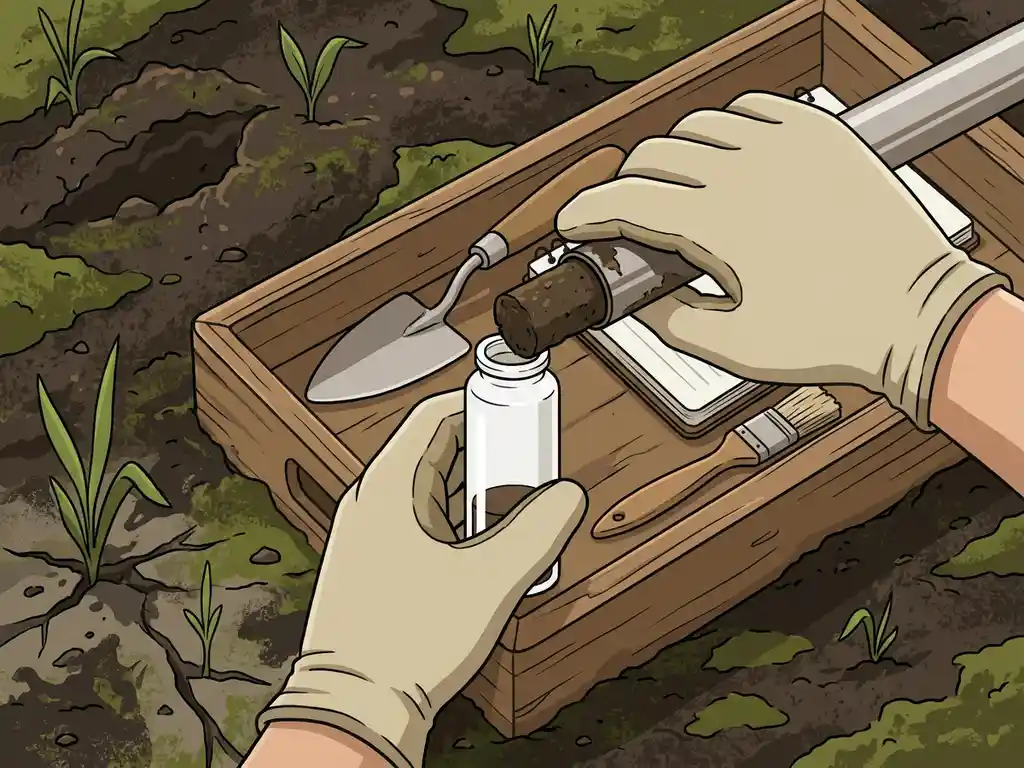
A soil remediation feasibility study is a structured technical assessment that determines whether a proposed remediation approach can effectively treat a specific contamination problem under the site’s actual conditions. It evaluates the physical, chemical, and biological characteristics of the contaminated soil and groundwater to predict whether a given technology will work before full-scale implementation begins. For site owners, project managers, and environmental coordinators dealing with discovered contamination, a feasibility study is the critical decision-making tool that sits between the initial site investigation and committing to a remediation strategy.
The sections below answer the most common questions about what a feasibility study involves, how long it takes, and when it should be commissioned.
What does a soil remediation feasibility study actually assess?
A soil remediation feasibility study assesses whether a specific remediation technology or combination of technologies is technically viable, cost-effective, and appropriate for the contamination type and site conditions found at a particular location. It does not simply confirm that contamination exists — that is the role of the initial site investigation. Instead, it evaluates the realistic performance of treatment options before resources are committed.
In practice, a feasibility study looks at several interconnected factors. The nature and concentration of contaminants determine which treatment mechanisms are applicable. Soil texture, permeability, and groundwater depth affect how well any technology can reach and treat the contaminated zone. The presence of existing infrastructure, buried utilities, or buildings may rule out physically disruptive approaches entirely.
The study also considers regulatory requirements. In Flanders, for instance, any remediation approach must be defensible under VLAREBO and reportable to OVAM. A feasibility study generates the technical documentation that supports that compliance pathway, giving project managers concrete data rather than assumptions when they present a remediation plan to regulators or investors.
What types of contamination require a feasibility study?
Get in Touch
Let’s Talk Microbial Solutions
Book a conversation with Stijn, our CEO, or send us your request.
| Book an Appointment | Request Information |
Virtually any significant soil or groundwater contamination warrants a feasibility study before remediation begins, but the need is especially critical for complex or persistent contaminants where no single standard solution exists. These include chlorinated solvents, heavy metals, petroleum hydrocarbons, polycyclic aromatic hydrocarbons (PAHs), and mixed contamination plumes that have migrated beyond the original source zone.
Chlorinated solvents — particularly volatile organochlorine compounds (VOCl) such as perchloroethylene (PCE) and trichloroethylene (TCE) — are among the most challenging categories. These compounds persist in soil and groundwater for decades, partition into multiple phases, and often require site-specific biological or chemical treatment rather than straightforward excavation. For this type of contamination, a feasibility study is not optional; it is the only responsible way to determine whether biological degradation pathways are active or can be stimulated at the specific site.
Sites where excavation is technically impossible or financially prohibitive — due to depth, groundwater conditions, or overlying structures — also require a feasibility study to identify viable in-situ alternatives. Without this assessment, project managers risk committing to a technology that performs poorly under their specific site conditions.
How does a feasibility study compare remediation technologies?
A feasibility study compares remediation technologies by evaluating each option against the same set of site-specific criteria: technical effectiveness for the contaminant type, compatibility with site conditions, estimated timeframe, cost, regulatory acceptability, and residual risk after treatment. The goal is not to find the cheapest option, but to identify the most appropriate one given all constraints.
Common technologies evaluated in a feasibility study include excavation and off-site disposal, soil vapor extraction, pump-and-treat systems, chemical oxidation or reduction, and biological approaches such as biostimulation and bioaugmentation. Each has a different applicability window. Excavation, for example, is straightforward for shallow, accessible contamination but becomes impractical when contamination extends below the water table or beneath a building. Biological in-situ treatment may be highly effective for certain organic contaminants but requires confirmation that the right microbial conditions can be established.
The comparison is typically presented as a technology screening matrix, where each option is scored or ranked across the evaluation criteria. This structured comparison gives project managers a defensible basis for their chosen approach and helps communicate the rationale to regulators, landowners, or financing parties.
What is a microcosm test and how does it fit into feasibility?
A microcosm test is a small-scale laboratory experiment that uses actual soil and groundwater samples from a contaminated site to simulate and measure the potential for biological degradation under controlled conditions. It is one of the most reliable tools available for determining whether biological remediation is feasible for a specific site before any field-scale intervention is attempted.
In a microcosm test, site material is placed in sealed vessels under conditions that replicate the subsurface environment. Different treatment scenarios are tested in parallel — for example, natural attenuation alone, biostimulation with added nutrients, or bioaugmentation with introduced microbial cultures. By measuring contaminant breakdown over time and tracking the activity of relevant microorganisms, the test reveals whether the biological degradation pathway is active, dormant, or absent.
For VOCl contamination in particular, microcosm testing is a standard component of biological feasibility assessment. Avecom’s soil remediation services include microcosm-based feasibility screening as a cost-efficient first step, using molecular tools such as qPCR to quantify the presence and activity of key degrading organisms in the site samples. This approach generates actionable data quickly, allowing project managers to make informed decisions without committing to full-scale remediation costs upfront.
The microcosm test fits into the broader feasibility study as the biological screening component. Its results either confirm that biological treatment is viable and can be designed with confidence, or they indicate that abiotic approaches should be prioritized instead.
How long does a soil remediation feasibility study take?
A soil remediation feasibility study typically takes between four weeks and six months to complete, depending on the complexity of the contamination, the number of technologies being evaluated, and whether laboratory testing such as microcosm experiments is required. Desk-based technology screening for a well-characterized site can be completed relatively quickly, while sites with mixed contamination or limited existing data require more extensive investigation before meaningful conclusions can be drawn.
The timeline is largely driven by the laboratory component. Microcosm tests, for instance, run over several weeks to months to capture meaningful degradation data across multiple treatment scenarios. Waiting for these results is not wasted time — it is the period during which the most critical technical questions are being answered. Rushing this phase to save time often leads to poorly designed field interventions that underperform and require costly correction.
For project managers working under regulatory deadlines or investor pressure, it is worth noting that a well-executed feasibility study compresses the overall remediation timeline by preventing failed first attempts. The weeks spent on feasibility are consistently recovered through more efficient, targeted field implementation.
When should a feasibility study be done before remediation starts?
A feasibility study should be commissioned as soon as a site investigation confirms the presence of significant contamination and before any remediation technology is selected or contracted. This is the correct sequence regardless of whether the project is driven by a property transaction, a regulatory obligation, a building permit application, or a voluntary cleanup. Selecting a technology before completing a feasibility study is one of the most common and costly mistakes in contaminated land management.
In practical terms, the feasibility study follows the preliminary site investigation (which establishes that contamination is present and characterizes its extent) and precedes the detailed remediation design (which specifies exactly how the chosen technology will be implemented). Skipping or abbreviating the feasibility step is particularly risky when the site has characteristics that could undermine standard approaches — complex geology, deep contamination, proximity to sensitive receptors, or a contaminant type with variable treatability.
There are also regulatory triggers that make a feasibility study effectively mandatory. Under Flemish soil legislation, project owners must demonstrate to OVAM that their chosen remediation approach is technically justified. A feasibility study provides that justification in a format that regulators recognize and expect.
For sites where excavation has already been attempted or where previous remediation has stalled, a targeted feasibility study focused on biological or combined approaches can reopen the path to closure. Avecom’s biological remediation expertise is specifically oriented toward these difficult cases — sites where standard techniques have reached their limits and a more scientifically grounded assessment is needed to move forward. As an environmental biotechnology specialist with over 30 years of experience in microbial process optimization, Avecom brings the diagnostic tools and applied knowledge to determine what is biologically possible at a given site, and to design a remediation approach that holds up under regulatory scrutiny.
If you are at the stage where contamination has been confirmed and you need to determine your next step, a feasibility screening is the most cost-effective place to start.