

When soil contamination is discovered, the immediate priority is to determine the extent of the problem, establish legal responsibility, and commission a formal soil investigation before any remediation decisions are made. In Belgium, this process is governed by VLAREBO legislation and overseen by OVAM, which sets the procedural framework every landowner, developer, or project manager must follow. The sections below walk through the most critical questions that arise once contamination is confirmed.
Who is responsible for cleaning up contaminated soil?
Responsibility for cleaning up contaminated soil depends on who caused the contamination, who owns the land, and when the contamination occurred. Under Belgian law (VLAREBO), the polluter is primarily responsible. When the polluter cannot be identified or held liable, responsibility generally falls to the current landowner or the party seeking to develop or transfer the site.
In practice, this means that real estate developers, municipalities, and industrial companies acquiring brownfield sites often inherit cleanup obligations even if they did not cause the original contamination. OVAM maintains a register of contaminated sites and can impose remediation obligations on landowners as part of a permit application, land transfer, or land use change. Before purchasing any industrial or brownfield property, a soil certificate from OVAM is legally required in Flanders, and that document will explicitly state whether a remediation obligation exists.
When multiple parties are involved, such as a former industrial tenant and a current landowner, liability can be shared or contested. Legal and environmental advisors are typically brought in early to clarify who bears which portion of the financial and procedural responsibility.
Get in Touch
Let’s Talk Microbial Solutions
Book a conversation with Stijn, our CEO, or send us your request.
| Book an Appointment | Request Information |
What does a soil investigation actually involve?
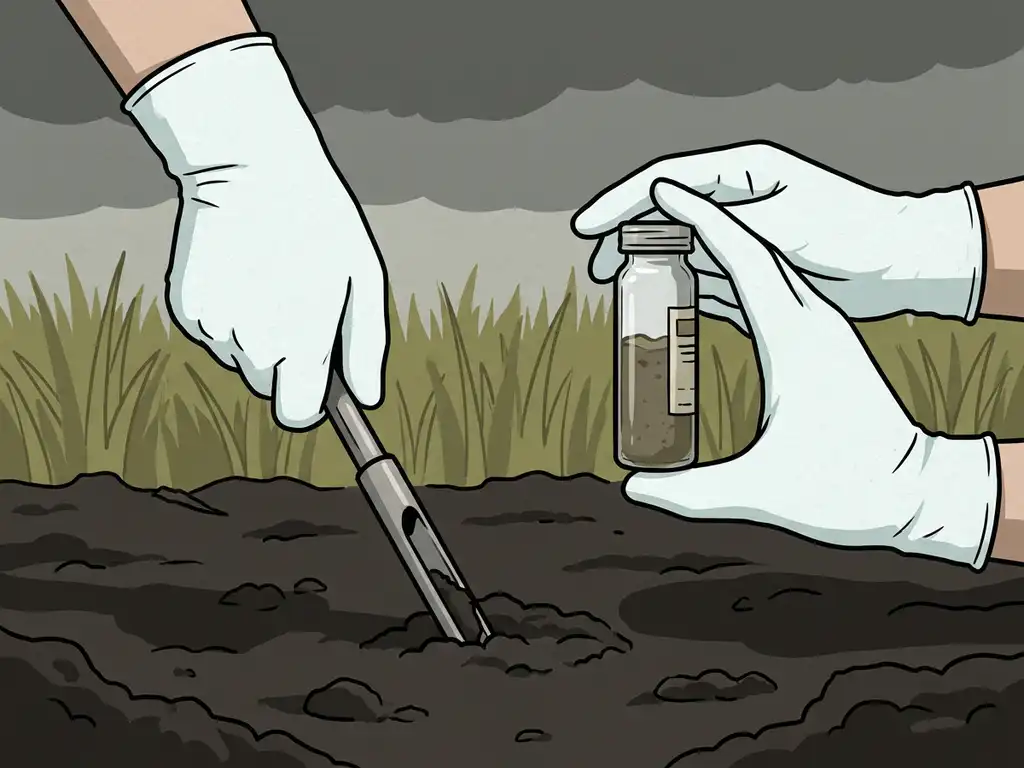
A soil investigation is a structured technical assessment that determines whether contamination is present, which substances are involved, how far they have spread, and whether they pose a risk to human health or the environment. In Belgium, it follows a two-phase process defined by VLAREBO: a preliminary orientation study followed by a descriptive soil investigation if contamination is confirmed.
The orientation study (verkennend bodemonderzoek) reviews historical land use, identifies potential contamination sources, and takes initial soil and groundwater samples. If results exceed threshold values, a descriptive investigation (beschrijvend bodemonderzoek) is required. This phase maps the full extent of contamination in three dimensions, assesses risk to receptors such as residents or groundwater users, and forms the basis for any remediation decision.
Sampling methods vary depending on the suspected contaminants and site conditions. Soil borings, groundwater monitoring wells, and soil gas measurements are all standard tools. Laboratory analysis then identifies the specific compounds present and their concentrations. The final report is submitted to OVAM, which evaluates whether remediation is required and under what conditions.
What are the most common types of soil contamination found on brownfields?
The most common types of soil contamination on brownfield sites include chlorinated solvents (VOCl), petroleum hydrocarbons, heavy metals, polycyclic aromatic hydrocarbons (PAHs), and asbestos. The specific mix depends heavily on the industrial history of the site.
Chlorinated solvents such as trichloroethylene (TCE) and perchloroethylene (PCE) are particularly widespread on former dry cleaning, metal degreasing, and chemical manufacturing sites. These volatile organochlorine compounds (VOCl) are especially problematic because they are dense, migrate deep into the saturated zone, and persist in the environment for decades without intervention. They are among the most technically challenging contaminants to address.
Petroleum hydrocarbons, including mineral oils and BTEX compounds (benzene, toluene, ethylbenzene, xylene), are common on former fuel storage, garage, and refinery sites. Heavy metals such as lead, cadmium, and arsenic are frequently found on sites with historical metallurgical or paint manufacturing activity. PAHs are associated with coal gas production, wood treatment, and combustion processes.
Understanding which contaminants are present is not just a regulatory requirement. It directly determines which remediation approaches are technically feasible and cost-effective, which is why accurate characterization during the soil investigation phase is so important.
What’s the difference between excavation and biological soil remediation?
Excavation physically removes contaminated soil from the ground and transports it to a licensed processing facility. Biological soil remediation, by contrast, treats contamination in place by stimulating or introducing microorganisms that break down pollutants into harmless end products. The two approaches differ fundamentally in cost, disruption, applicability, and timeframe.
Excavation: fast but limited
Excavation is the most familiar approach and can deliver rapid results when contamination is shallow, clearly defined, and accessible. It is well understood by regulators and relatively straightforward to plan. However, costs escalate quickly when contamination is deep, present beneath existing structures, or spread across a large area. Dewatering requirements, logistics, and disposal costs can make excavation economically impractical on complex brownfields.
Biological remediation: targeted and cost-efficient for the right contaminants
Biological remediation, particularly in-situ bioremediation, works by enhancing the natural degradation capacity of the soil. For chlorinated solvents, a process called reductive dechlorination is central: specific anaerobic bacteria break down VOCl compounds step by step into non-toxic end products. When the right microbial populations are present but insufficiently active, bioaugmentation introduces specialized microbial consortia directly into the contaminated zone.
This approach is especially relevant where excavation is not feasible, where contamination has reached the groundwater, or where the site remains in active use. It is not universally applicable, but for the right contaminant profiles and site conditions, it offers a scientifically sound and often more cost-effective path to compliance. Avecom’s biological soil remediation services are specifically designed for these complex, persistent contamination scenarios where conventional methods have fallen short.
How do you know if biological remediation will work on your site?
The most reliable way to determine whether biological remediation will work on a specific site is through a microcosm test. This laboratory-scale feasibility study uses actual soil and groundwater samples from the contaminated site to assess whether the right microbial communities are present, whether they are active, and whether degradation can be stimulated under controlled conditions.
A microcosm test provides site-specific data rather than general assumptions. It can reveal whether natural attenuation is already occurring, whether bioaugmentation with specialized bacteria would accelerate degradation, and what amendments such as electron donors or nutrients might be needed. This information is gathered relatively quickly and at a fraction of the cost of a full-scale remediation trial.
Beyond the microcosm, molecular soil analysis using techniques such as quantitative PCR (qPCR) and amplicon sequencing can quantify the presence and activity of key degrading organisms directly in the field. Together, these tools give project managers and environmental coordinators a concrete, evidence-based answer to the feasibility question before committing to a full remediation program. Avecom’s team of environmental engineers and microbiologists has developed this diagnostic approach specifically to reduce uncertainty at the earliest stage of the decision-making process.
How is remediation progress monitored and reported to regulators?
Remediation progress is monitored through periodic sampling of soil and groundwater, combined with analysis of contaminant concentrations over time. Results are compiled into progress reports that are submitted to OVAM at intervals defined in the approved remediation plan. Monitoring must demonstrate that contaminant levels are declining toward the agreed target values.
For biological remediation specifically, chemical monitoring alone is not always sufficient to understand what is happening in the subsurface. Molecular monitoring tools add a critical layer of insight by tracking the microbial communities responsible for degradation. Quantitative PCR analysis can detect and quantify specific degrader organisms, confirming that the biological process is active and progressing as expected. This kind of data is increasingly accepted by regulators as evidence of active remediation rather than simple natural variation.
Effective monitoring serves two purposes simultaneously. It protects the project manager by providing documented evidence of progress, and it can reduce the total number of monitoring rounds required if results clearly demonstrate a consistent downward trend. Poorly designed monitoring programs, on the other hand, generate data that is difficult to interpret and expensive to maintain over the long duration of a typical remediation project.
If you are managing a site where classical remediation techniques have not delivered results, or where excavation is not a realistic option, a structured feasibility assessment is the logical starting point. Avecom offers microcosm screening and molecular soil diagnostics to give you the data you need before committing to a full remediation approach.