

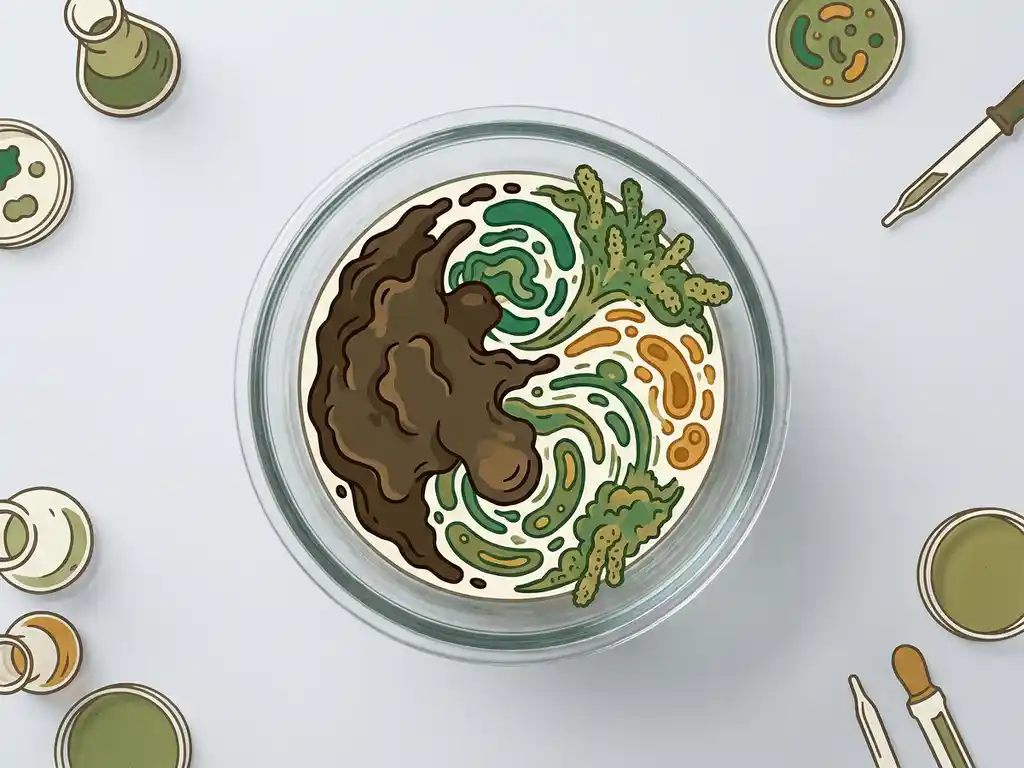
Yes, excess sludge can be turned into a valuable resource. Biological and physical processing techniques can extract proteins, biogas, nutrients, and organic compounds from sludge that would otherwise be hauled away as waste. The shift from disposal to valorisation is not theoretical: it is already happening in food processing, brewing, and municipal water treatment, and the business case is becoming stronger as disposal costs rise and regulations tighten. The sections below address the most common questions managers ask before deciding whether valorisation is worth pursuing.
What makes excess sludge so difficult and costly to manage?
Excess sludge is difficult to manage because it is produced continuously, has a high water content, and carries a regulatory burden at every stage of disposal. In biological wastewater treatment, microbial growth is the mechanism that removes pollutants, but that same growth generates biomass that must be removed, stabilised, and disposed of. The volume, composition, and handling requirements of that biomass are what drive costs upward.
The water content of fresh sludge typically sits between 95% and 99%, which means dewatering is necessary before transport or further treatment. Even after mechanical dewatering, the resulting cake still contains substantial moisture, adding weight and volume to every load sent offsite. Disposal routes, whether to landfill, incineration, or agricultural spreading, each carry their own compliance requirements and tipping fees, both of which have increased in recent years.
For industrial producers, sludge problems in wastewater treatment are compounded by variability. Seasonal production peaks, ingredient changes, or upstream process adjustments can shift sludge characteristics significantly, making it harder to maintain stable biological treatment and consistent sludge quality. When sludge bulking occurs in biological treatment, settling deteriorates, effluent quality drops, and the risk of a discharge violation rises. Fixing sludge bulking in biological treatment often requires a microbiological diagnosis before any corrective action can be effective.
Get in Touch
Let’s Talk Microbial Solutions
Book a conversation with Stijn, our CEO, or send us your request.
| Book an Appointment | Request Information |
What valuable components are found in excess sludge?
Excess sludge from biological wastewater treatment contains microbial biomass rich in proteins, lipids, phosphorus, nitrogen, and trace minerals. The exact composition depends on the origin of the wastewater, but sludge from food and beverage processing is often particularly nutrient-dense because the feedstock itself is organic and protein-rich.
The most commercially relevant components are:
- Microbial protein: The dry matter of bacterial biomass is typically 50 to 70% crude protein, making it a candidate for animal feed or fertiliser applications.
- Phosphorus: Biological phosphorus removal concentrates this nutrient in the sludge, which can be recovered as struvite or other forms for use in agriculture.
- Nitrogen compounds: Ammonium-rich reject water from sludge dewatering can be processed for nutrient recovery rather than discharged.
- Biogas precursors: The organic fraction of sludge is a substrate for anaerobic digestion, producing methane that can offset energy costs.
- Biopolymers: Some microbial communities accumulate polyhydroxyalkanoates (PHAs) or extracellular polymeric substances under specific conditions, which have industrial applications.
The challenge is that these components are mixed together in a dilute matrix, so separation and concentration require targeted processing steps. Not all sludge streams justify the investment, which is why composition analysis is the necessary starting point.
How can biological processes convert sludge into usable products?
Biological processes convert sludge into usable products by directing microbial activity toward synthesis rather than simply decomposition. The two main routes are anaerobic digestion, which produces biogas and digestate, and aerobic fermentation, which can produce single cell protein or support nutrient recovery from liquid fractions.
In anaerobic digestion, mixed microbial communities break down organic matter in the absence of oxygen, releasing methane-rich biogas that can be captured for heat or electricity. The solid digestate that remains is stabilised and can be applied to land, while the liquid fraction, called reject water or centrate, is typically high in ammonium and requires further treatment.
Aerobic fermentation takes a different approach. By cultivating specific microbial consortia on nutrient-rich wastewater or sludge-derived streams, it is possible to produce biomass with a high protein content. This is the principle behind microbial protein production from wastewater, an area where mixed cultures have shown particular promise because they are more resilient to feedstock variation than pure culture systems.
Nutrient recovery from reject water is a third biological route. Processes that selectively remove and concentrate ammonium or phosphorus from sludge liquors can produce fertiliser-grade products, reducing the nitrogen load returning to the main treatment line and improving overall plant performance.
What is the difference between sludge reduction and sludge valorisation?
Sludge reduction means producing less sludge during the treatment process, while sludge valorisation means extracting value from the sludge that is produced. Both strategies address the cost and compliance burden of excess sludge in wastewater plants, but they operate at different points in the process and serve different objectives.
Reduction strategies include extended sludge retention times, thermal or mechanical sludge disintegration, and ozonation, all of which aim to minimise net biomass growth. Less sludge leaving the system means lower dewatering, transport, and disposal costs. However, reduction does not eliminate sludge entirely, and it does not generate any revenue or resource recovery benefit.
Valorisation accepts that sludge will be produced and focuses on what can be extracted from it. The business case shifts from minimising a cost to partially offsetting it, or in some cases generating a new revenue stream. For industrial producers whose wastewater carries a high organic or nutrient load, valorisation can be the more compelling option, particularly when the sludge composition aligns with a downstream application such as animal feed or fertiliser production.
In practice, the two approaches are not mutually exclusive. A well-designed system can reduce sludge production while also recovering value from the fraction that remains.
Which industries produce sludge with the highest valorisation potential?
Industries that produce sludge with the highest valorisation potential are those whose wastewater contains high concentrations of organic matter, protein, or specific nutrients. Food and beverage processing, dairy, brewing, and starch production consistently generate sludge streams that are nutrient-rich and relatively free of toxic contaminants, making downstream use in feed or fertiliser applications more feasible.
Slaughterhouses and meat processing facilities produce sludge with exceptionally high protein content, though regulatory requirements around pathogen control add complexity to any valorisation pathway. Potato and vegetable processing effluents are rich in starch and nitrogen, supporting both anaerobic digestion and microbial protein production. Breweries generate yeast-heavy sludge that has historically been used in feed applications and is well-suited to fermentation-based valorisation.
By contrast, sludge from chemical or pharmaceutical production often contains residual compounds that restrict end-use options. Valorisation is still possible through energy recovery routes like incineration or gasification, but the higher-value biological pathways are generally not available without extensive pre-treatment.
The Avecom team works primarily with food, chemical, and pharmaceutical producers in the Benelux region, where wastewater composition and local discharge regulations together determine which valorisation routes are technically and economically viable.
What does it take to start valorising excess sludge in practice?
Starting sludge valorisation in practice requires three things: a clear characterisation of the sludge stream, an assessment of which valorisation route fits the composition and local regulations, and a phased validation process before committing to full-scale investment. Skipping the characterisation step is the most common reason valorisation projects stall or fail to deliver expected returns.
A practical starting sequence typically looks like this:
- Sludge characterisation: Measure dry matter content, organic fraction, protein, nitrogen, phosphorus, heavy metals, and any process-specific contaminants. This determines which valorisation pathways are open.
- Regulatory review: Identify which end-use categories apply under current legislation (feed, fertiliser, energy recovery) and what quality standards the processed sludge must meet.
- Lab-scale feasibility: Test the chosen biological process at laboratory scale using actual sludge samples. This confirms whether the microbial process performs as expected with your specific feedstock.
- Pilot-scale validation: Scale up under controlled conditions to generate performance data that supports an investment decision and satisfies regulatory requirements.
- Implementation and monitoring: Move to operational scale with continuous microbiological monitoring to maintain process stability and product quality.
For most industrial producers, the internal expertise to run this sequence does not exist in-house. The biology, the regulatory landscape, and the downstream market requirements each require specialist knowledge. Biological wastewater treatment partners who can carry the process from feasibility through to operational implementation reduce both the technical risk and the time to a working solution.
Avecom offers this full trajectory, from microbiological audit and lab-scale testing through to pilot validation and process optimisation, including the potential to link sludge-derived nutrient streams to microbial protein production via the ProMic platform. If your current wastewater treatment generates sludge volumes that are becoming difficult or expensive to manage, a structured feasibility assessment is the right first step. Contact Avecom to discuss your specific situation and identify which valorisation route makes sense for your process.