

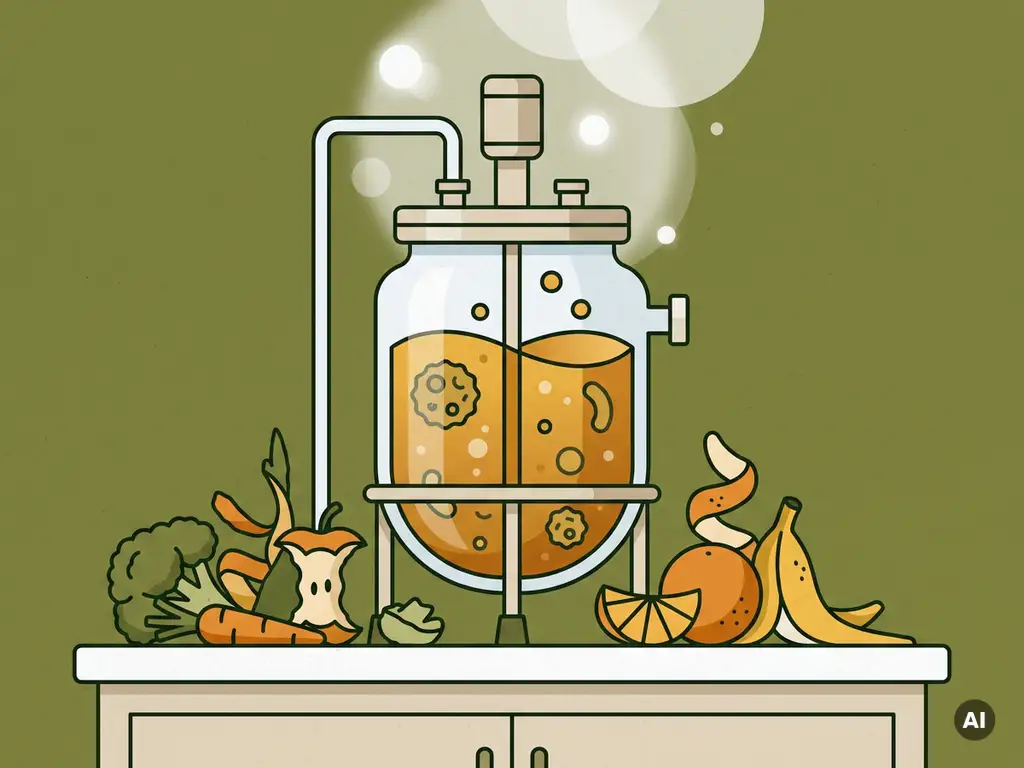
Microbial protein from food processing side streams is produced by cultivating microorganisms, bacteria, yeasts, or fungi, on nutrient-rich waste streams generated during food manufacturing. These microorganisms consume organic compounds in the side stream, grow rapidly, and accumulate protein-rich biomass that can be harvested and used as a feed or food ingredient. The process is a form of single-cell protein production, and it turns what would otherwise be a disposal problem into a valuable, sustainable protein source. The sections below address the most common technical questions about how this works in practice.
What types of food processing side streams can be converted into microbial protein?
A wide range of food processing side streams can serve as feedstocks for microbial protein production, provided they contain sufficient organic carbon, nitrogen, and moisture to support microbial growth. The most suitable streams are those with high concentrations of sugars, starches, proteins, or organic acids, nutrients that microorganisms can readily metabolize and convert into biomass.
Common examples include:
- Dairy processing effluents – whey permeate and cheese production wastewater contain lactose and soluble proteins that many microorganisms ferment efficiently
- Brewery and distillery waste – spent grain, yeast slurry, and stillage are rich in fermentable sugars and nitrogen compounds
- Vegetable and fruit processing water – washing and blanching effluents carry dissolved sugars, starch fragments, and organic acids
- Starch industry side streams – potato steam water and corn steep liquor are particularly nutrient-dense and widely studied as fermentation substrates
- Slaughterhouse and fish processing water – high in soluble proteins and amino acids, these streams can support rapid microbial growth when properly conditioned
The suitability of a specific stream depends on its chemical composition, the presence of inhibitory compounds such as sanitizers or preservatives, and the consistency of supply. Variability in stream composition is one of the most common challenges in side-stream valorisation, because microbial communities need to be robust enough to handle fluctuations in substrate quality without a significant drop in biomass yield or protein content.
Which microorganisms are used to produce protein from waste streams?
The microorganisms most commonly used for single-cell protein production from food processing side streams are yeasts, filamentous fungi, and bacteria, selected based on their ability to grow rapidly on the available substrates, accumulate high protein content, and produce biomass that is safe and digestible for the intended application.
Yeasts and fungi
Yeasts such as Candida utilis (Torula yeast) and Kluyveromyces marxianus are well established for growing on lactose-rich dairy streams. Filamentous fungi, including species of Aspergillus and Rhizopus, are valued for their ability to degrade more complex substrates and for producing biomass with a fibrous texture that improves palatability in animal feed. Fungal protein also tends to have a favorable amino acid profile and low nucleic acid content compared to bacterial biomass.
Bacteria and mixed microbial cultures
Certain bacteria, particularly those in the Methylobacterium or lactic acid bacteria groups, are used where rapid growth rate and high protein yield are priorities. However, an increasingly relevant approach, particularly for complex or variable side streams, is the use of mixed microbial cultures. Rather than relying on a single genetically defined strain, a mixed culture is a community of microorganisms that self-regulates and adapts to substrate variation. This makes it inherently more robust for industrial conditions where feedstock composition is not perfectly consistent. Avecom’s expertise in biomass fermentation is specifically built around this principle: steering mixed microbial communities toward high-protein biomass production without the regulatory and operational complexity of genetically modified organisms.
Get in Touch
Let’s Talk Microbial Solutions
Book a conversation with Stijn, our CEO, or send us your request.
| Book an Appointment | Request Information |
How does the fermentation process convert side streams into protein biomass?
The fermentation process works by providing microorganisms with a controlled environment, temperature, pH, oxygen availability, and nutrient balance, in which they consume organic compounds from the side stream and convert them into new cellular biomass. Because microbial cells are themselves rich in protein, this biomass accumulation is equivalent to protein production.
The process typically follows these stages:
- Feedstock conditioning: The side stream is screened, pH-adjusted, and, if necessary, diluted or supplemented with trace minerals to create an environment that supports microbial growth without inhibition
- Inoculation and fermentation: The selected microorganism or microbial community is introduced into a bioreactor. Aerobic fermentation, where oxygen is actively supplied, generally produces higher protein yields and faster growth rates than anaerobic processes
- Process monitoring and control: Parameters such as dissolved oxygen, pH, temperature, and substrate concentration are monitored continuously. In mixed-culture systems, molecular tools like amplicon sequencing are used to track community composition and detect shifts that could affect product quality
- Biomass harvesting: Once sufficient biomass has accumulated, it is separated from the liquid phase by centrifugation or filtration
- Downstream processing: The wet biomass is dried, pasteurized, and, where required, further processed to reduce nucleic acid content or improve digestibility
The efficiency of conversion, how much protein is produced per kilogram of organic input, depends on the microbial system used, the composition of the feedstock, and the precision of process control. This is where the distinction between lab-scale results and pilot-scale reality becomes critical: many processes that work well in small reactors lose efficiency at larger volumes due to mixing limitations, oxygen transfer constraints, or substrate gradients.
What is the nutritional quality of microbial protein from food side streams?
Microbial protein produced from food processing side streams can achieve crude protein contents of 40 to 70 percent of dry matter, depending on the microorganism and process conditions. The amino acid profile is generally favorable, often comparable to conventional feed proteins like soybean meal, with good levels of essential amino acids including lysine and methionine.
Several factors influence the final nutritional quality:
- Microorganism species: Yeasts and fungi typically have lower nucleic acid content than bacteria, which is relevant because high nucleic acid intake can cause metabolic issues in some animals and in human nutrition applications
- Substrate composition: The nitrogen and mineral content of the original side stream directly affects the amino acid profile of the resulting biomass
- Downstream processing: Drying method, pasteurization, and any cell wall disruption treatments affect protein digestibility and the bioavailability of amino acids
- Antinutritional factors: Some fungal or bacterial biomass contains cell wall components such as chitin or beta-glucans that reduce digestibility in certain animal species, and these need to be characterized and managed
In animal feed applications, microbial protein has shown strong performance as a partial replacement for fishmeal and soy in aquaculture and poultry diets. For human food applications, additional safety and digestibility data are required, and the regulatory pathway is more demanding.
What regulations apply to microbial protein produced from food processing waste?
The regulatory framework for microbial protein depends on the intended use, animal feed or human food, and on the jurisdiction in which the product is placed on the market. In the European Union, microbial protein for animal feed is governed primarily by Regulation (EC) No 767/2009 on the placing on the market of feed, along with the catalogue of authorised feed materials. Products derived from certain microorganisms or from specific substrate types may require a novel feed ingredient authorisation before they can be commercially sold.
For human food applications, microbial protein falls under the EU Novel Food Regulation (EU) 2015/2283, which requires a pre-market safety assessment and authorisation by the European Food Safety Authority (EFSA) before a new microbial protein source can be sold as food or food ingredient in Europe.
Beyond product authorisation, producers must also comply with:
- Hygiene and safety requirements under general food and feed law
- Labelling obligations that accurately describe the product’s origin and composition
- Quality management systems appropriate to the scale and type of production, for animal feed, certifications such as Feed Chain Alliance (FCA) provide a recognized framework for demonstrating process control and product safety
The regulatory situation is evolving, and several microbial protein sources that were not previously authorised are now moving through approval processes as the sector grows. Companies developing new products should map the regulatory pathway early, as authorization timelines can significantly affect time-to-market planning.
When does it make sense to outsource microbial protein production to a contract partner?
Outsourcing microbial protein production to a contract fermentation partner makes sense when a company has a validated concept or a promising side stream but lacks the bioreactor infrastructure, process expertise, or analytical capability to scale the process reliably on its own. Building dedicated fermentation infrastructure is capital-intensive and takes time, a contract partner allows development to proceed in parallel with business planning rather than waiting for facilities to be commissioned.
Specific situations where contract fermentation adds clear value include:
- Proof of concept under investor pressure: When a company needs to demonstrate pilot-scale feasibility within a defined timeframe, a partner with ready-to-use bioreactors and established protocols can compress the development timeline significantly
- Process scale-up from lab to pilot: Many fermentation processes behave differently at larger volumes. A partner experienced in scale-up can identify and resolve these issues systematically rather than through trial and error
- Microbiome characterization and optimization: If the process relies on a mixed microbial culture, molecular monitoring tools, amplicon sequencing, qPCR, are needed to understand and steer community dynamics. These capabilities are rarely available in-house at early-stage companies
- Small-scale commercial production: Before a company is ready to justify its own production facility, a contract partner can supply product at volumes sufficient for market testing, customer trials, or regulatory sample submissions
The decision to outsource is also influenced by IP considerations. A well-structured contract with a partner that operates under confidentiality agreements and has a track record of working with proprietary processes reduces the risk of knowledge leakage. For companies developing novel food waste valorisation processes, the combination of scientific credibility and discretion is often as important as the technical capability itself. Avecom’s work in this area, spanning single-cell protein production from food industry side streams, reflects exactly this kind of partnership model, where the external partner functions as an extension of the client’s R&D team rather than as a generic service provider.
Related Articles
- What is the difference between fermentation consulting and contract R&D?
- What are the legal obligations when contamination is found on a site?
- How do you use molecular monitoring to diagnose sludge problems?
- How do you reduce the cost of a long-term remediation project?
- How do you know if biological soil remediation will work?