

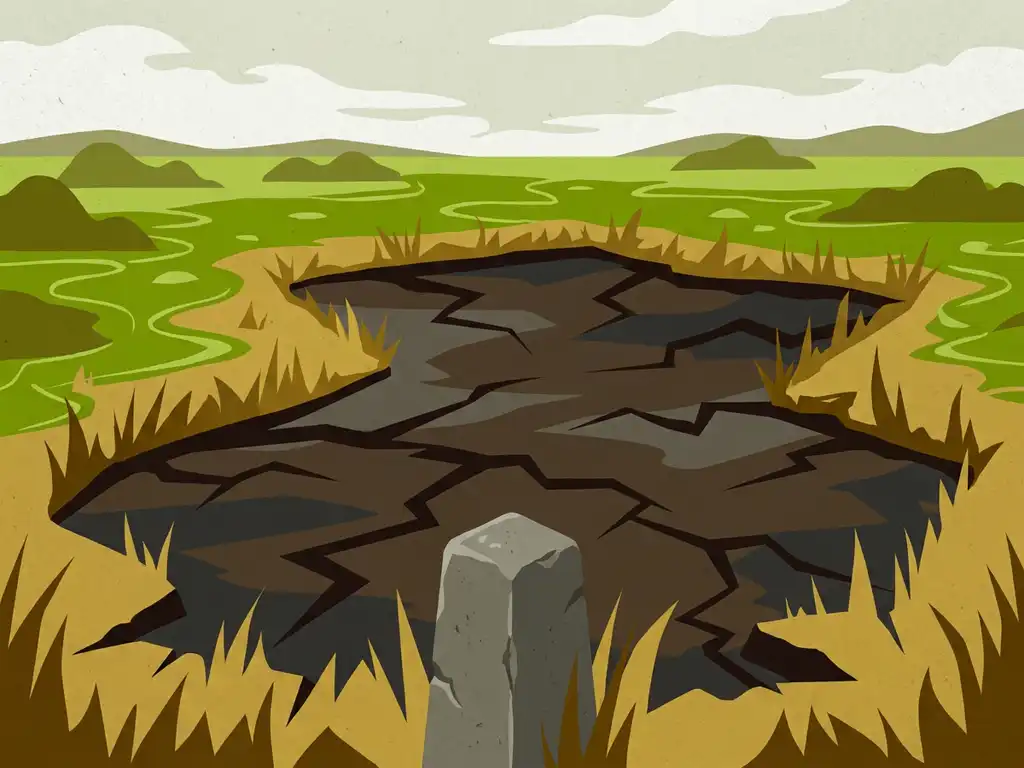
Ignoring soil contamination on your property carries serious legal, financial, and environmental consequences. In most jurisdictions, property owners have a legal obligation to report and address known contamination — failing to do so can result in regulatory enforcement, liability for cleanup costs, and blocked development permits. The sections below address the most common questions property managers and project leaders face when contamination is discovered on a site.
What are the legal consequences of leaving soil contamination untreated?
Leaving soil contamination untreated exposes property owners to significant legal liability. Under Belgian environmental law, including VLAREBO regulations enforced by OVAM, owners and users of contaminated land are required to investigate and remediate pollution that poses a risk to human health or the environment. Non-compliance can result in enforcement orders, administrative fines, and, in serious cases, criminal liability.
Beyond regulatory penalties, untreated contamination creates long-term legal exposure. If contamination migrates to neighboring parcels or affects groundwater used by third parties, the original polluter or current landowner may be held liable for damages. Transactions involving contaminated land also carry disclosure obligations — selling a property without declaring known contamination is a legal risk that can invalidate contracts or trigger post-sale claims. For project leaders managing brownfield redevelopment or municipal land portfolios, regulatory compliance with OVAM is not optional, and delays in addressing contamination rarely reduce the eventual cost.
Get in Touch
Let’s Talk Microbial Solutions
Book a conversation with Stijn, our CEO, or send us your request.
| Book an Appointment | Request Information |
How does soil contamination affect property value and development plans?
Soil contamination directly reduces property value and can halt development plans entirely. Lenders, investors, and buyers routinely conduct environmental due diligence before committing to a transaction, and a contaminated site will either be discounted heavily or excluded from consideration until remediation is complete. Planning authorities in Belgium will not grant building permits on land where contamination poses unacceptable risks.
The practical impact on development timelines can be severe. A brownfield site with unresolved contamination cannot be rezoned, subdivided, or built upon until OVAM has accepted a soil remediation project and progress meets defined milestones. This creates a direct bottleneck for real estate developers and municipalities working to unlock land for housing or commercial use. Addressing contamination proactively — rather than waiting for a transaction or permit application to force the issue — typically results in better cost control and a shorter overall timeline.
Can soil contamination spread if left untreated?
Yes, soil contamination can and does spread over time when left untreated. The rate and direction of migration depend on the type of contaminant, soil permeability, groundwater flow, and precipitation patterns. Chlorinated solvents, for example, are denser than water and sink through the soil profile, eventually reaching the groundwater table and forming persistent plumes that can travel considerable distances from the original source.
Once contamination reaches groundwater, the problem becomes substantially more complex and expensive to address. A localized source zone that might have been manageable with targeted intervention becomes a diffuse plume affecting a wider area. Monitoring groundwater is one of the key methods used to assess whether a contamination plume is stable, shrinking, or expanding — this is directly relevant to understanding how you know if groundwater is affected by soil contamination. Regular sampling from a network of monitoring wells, combined with molecular analysis of the microbial community in the subsurface, provides the clearest picture of plume dynamics and natural attenuation capacity.
What are the health and environmental risks of unaddressed soil pollution?
Unaddressed soil pollution poses direct risks to human health and ecological systems. Volatile compounds such as chlorinated solvents can migrate from soil into indoor air through a process called vapor intrusion, creating inhalation exposure for occupants of buildings on or near contaminated sites. Contaminated groundwater used for irrigation or drinking water supply represents another direct pathway to human exposure.
Ecologically, persistent contaminants disrupt soil microbiology, reduce biodiversity in affected zones, and can accumulate in the food chain through uptake by plants and soil organisms. Industrial sites contaminated with chlorinated compounds, heavy metals, or petroleum hydrocarbons often show measurable suppression of natural microbial activity — the very microorganisms that would otherwise contribute to natural attenuation. This ecological damage compounds over time when contamination is left untreated, making eventual remediation more difficult and more costly.
When is biological soil remediation a viable alternative to excavation?
Biological soil remediation is a viable alternative to excavation when contamination is too deep, too widespread, or located beneath existing structures that make physical removal impractical or disproportionately expensive. It is particularly well-suited to sites contaminated with biodegradable compounds such as chlorinated solvents, petroleum hydrocarbons, and certain pesticides, where specialized microorganisms can break down the pollutants in place.
The critical first step is determining whether biodegradation is actually feasible for the specific contaminant profile and soil conditions on a given site. This is done through a microcosm test — a laboratory-scale experiment using actual soil and groundwater from the site to assess whether the right microbial populations are present and active, and whether they can be stimulated or augmented to achieve meaningful degradation. This feasibility screening is relatively fast and inexpensive compared to committing to a full remediation approach that may not perform as expected.
Avecom specializes in this type of assessment and in-situ bioaugmentation for volatile organochlorine compounds (VOCl) — one of the most persistent and technically challenging contamination categories encountered on industrial and brownfield sites. Where classical excavation has failed to resolve deep or diffuse chlorinated solvent contamination, a targeted biological approach guided by site-specific data offers a credible and cost-efficient path forward. You can learn more about this approach on the biological soil remediation service page.
How do you prove that soil remediation is actually working?
Proving that soil remediation is working requires systematic monitoring that tracks measurable indicators of progress over time. For biological remediation, this means combining traditional chemical analysis of contaminant concentrations with molecular biological tools that quantify the presence and activity of the specific microorganisms responsible for degradation.
Chemical monitoring
Regular groundwater sampling from a defined network of monitoring wells tracks changes in contaminant concentrations across the site. Declining concentrations at source zones and downgradient points, combined with the appearance of degradation intermediates, indicate that active breakdown is occurring. This data forms the basis of regulatory reporting to OVAM and demonstrates compliance with remediation milestones under VLAREBO.
Molecular biological monitoring
Techniques such as quantitative PCR (qPCR) and amplicon sequencing allow direct measurement of the microorganisms driving degradation — their abundance, diversity, and metabolic activity. This level of diagnostic detail is particularly valuable for chlorinated solvent remediation, where specific bacterial strains are responsible for complete dechlorination. Molecular monitoring answers the question of why concentrations are or are not changing, not just whether they are. Avecom’s team integrates these tools into remediation projects to provide continuous, evidence-based insight into process performance.
Together, chemical and molecular monitoring provide the concrete data points that project leaders, regulators, and investors need to confirm that a remediation strategy is delivering results — and to make informed decisions if adjustments are needed along the way.
If you are managing a contaminated site where standard approaches have not resolved the problem, or where excavation is not technically or financially feasible, a science-based biological approach may offer a more effective route. Avecom works with project leaders and environmental coordinators from initial feasibility assessment through to field-scale remediation and regulatory reporting. For a no-obligation screening of your site, contact the team to discuss your specific situation.
Related Articles
- How serious is contamination found on an industrial site?
- What is the difference between soil contamination and groundwater contamination?
- What does a soil remediation plan typically include?
- When should you switch from aerobic to anaerobic wastewater treatment?
- Can high nitrogen loads cause sludge problems in wastewater treatment?