

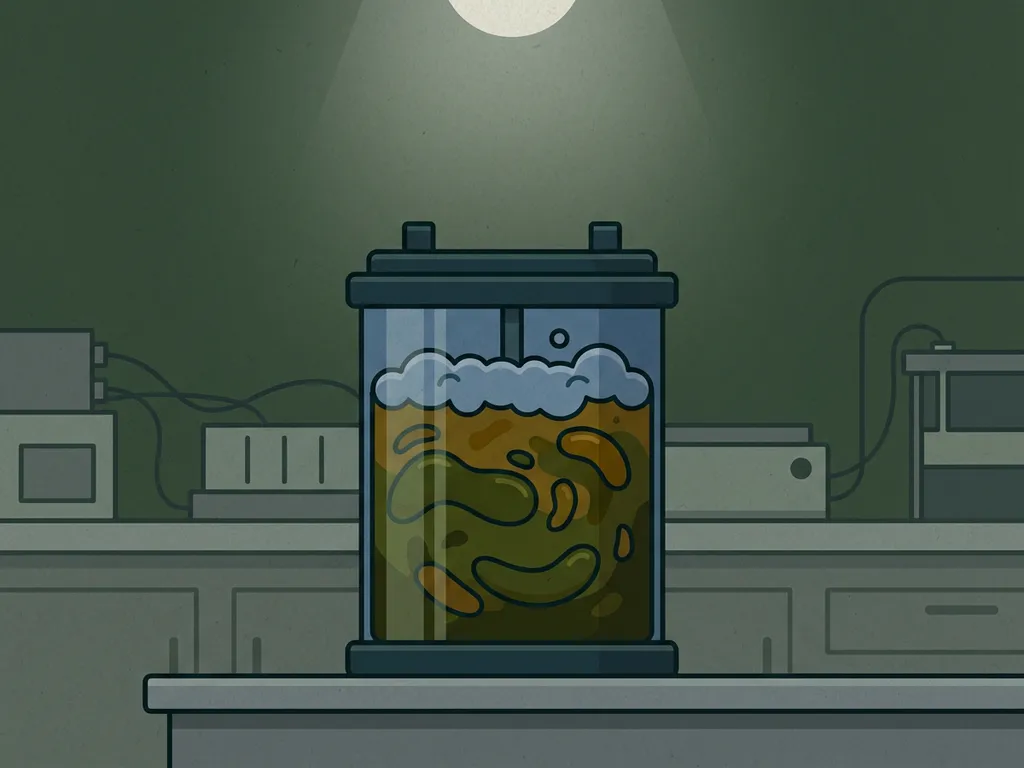
Yes, high nitrogen loads can cause serious sludge problems in wastewater treatment. When nitrogen concentrations exceed what the active microbial community can process, the biological balance in the system shifts, leading to bulking, foaming, and reduced settling. These effects are most pronounced in industrial facilities where nitrogen loads fluctuate sharply, such as food processing plants operating on seasonal production cycles.
The following sections unpack the specific mechanisms behind nitrogen-related sludge failure, which operational conditions make it worse, and what treatment approaches can stabilize performance without resorting to chemical overdosing.
What actually happens to sludge when nitrogen levels spike?
When nitrogen levels spike suddenly, the microbial community in a biological treatment system comes under stress. The organisms responsible for nitrification, which convert ammonium to nitrate, are slow-growing and sensitive to load changes. A sudden increase in ammonia-nitrogen can overwhelm their capacity, causing a buildup of free ammonia in the system. Free ammonia at elevated concentrations inhibits both nitrifying bacteria and other key organisms in the sludge.
The practical result is a disruption in the ecological balance of the mixed microbial community. When nitrification falters, oxygen demand patterns shift. Zones of the reactor that were previously aerobic may become locally anoxic, promoting the growth of filamentous bacteria. These organisms thrive in low-oxygen, nutrient-imbalanced conditions, and their proliferation directly degrades sludge structure and settleability.
At the same time, incomplete denitrification can lead to nitrogen gas formation within the sludge flocs during secondary settling. Gas bubbles attach to sludge particles, causing them to float rather than settle, a phenomenon known as rising sludge. This is a distinct failure mode from bulking but equally disruptive to effluent quality.
Get in Touch
Let’s Talk Microbial Solutions
Book a conversation with Stijn, our CEO, or send us your request.
| Book an Appointment | Request Information |
What types of sludge problems are linked to high nitrogen loads?
High nitrogen loads are associated with three main categories of sludge problems: filamentous bulking, rising sludge, and excessive foaming. Each has a different root cause, but all are connected to nitrogen imbalance in the biological treatment stage.
- Filamentous bulking: Overgrowth of filamentous microorganisms causes the sludge to expand and resist compaction. The sludge volume index rises sharply, and solids carry over into the effluent. This is one of the most common sludge problems in wastewater treatment linked to nutrient imbalance.
- Rising sludge: Nitrogen gas produced during denitrification in the secondary clarifier attaches to sludge flocs, lifting them to the surface. This typically occurs when nitrate loads entering the settler are high and retention time is long enough for denitrification to occur there rather than in a controlled anoxic zone.
- Biological foaming: Certain filamentous bacteria, particularly those in the Mycolata group, produce stable foam under conditions of high organic nitrogen or slowly biodegradable substrates. Nitrogen-rich industrial effluents, such as those from protein processing, are particularly prone to this.
Understanding which type of sludge problem is occurring is critical before any corrective action is taken. Applying the wrong intervention, for example increasing aeration to address what appears to be an oxygen deficit, can accelerate filamentous growth rather than suppress it.
Why do seasonal nitrogen peaks cause the most damage?
Seasonal nitrogen peaks cause the most damage because biological treatment systems are tuned to operate within a relatively stable load range. The microbial communities that perform nitrification and denitrification are slow to adapt. When nitrogen loads increase sharply over a short period, the biomass does not have time to grow to the required capacity, and the system is overwhelmed before any corrective adjustment can take effect.
This is a well-recognized challenge in food and beverage processing, where production is tied to harvest cycles or seasonal demand. A vegetable processor running at full capacity in autumn may discharge nitrogen loads three to five times higher than during off-season periods. A treatment system sized for average annual loads will routinely fail during these peaks.
The damage compounds because recovery is slow. Nitrifying bacteria have doubling times measured in days rather than hours. Once their population collapses under a nitrogen shock, rebuilding the community to effective operational levels can take weeks. During that window, the facility risks regulatory non-compliance, which in the context of frameworks like VLAREM and the EU Water Framework Directive carries real financial and legal consequences.
Facilities with known seasonal patterns benefit from proactive strategies rather than reactive ones. This includes maintaining a larger active biomass buffer during low-load periods, adjusting sludge retention time ahead of peak season, and monitoring microbial community composition to detect early warning signs of stress. biological wastewater treatment specialists who work with mixed microbial cultures can help design systems that are more resilient to these load variations from the outset.
How does nitrogen load affect sludge volume index (SVI)?
Nitrogen load affects sludge volume index by promoting the conditions under which filamentous bacteria outcompete floc-forming organisms. SVI is a standard measure of sludge settleability: a well-settling sludge typically has an SVI below 120 mL/g, while values above 150 mL/g indicate bulking. High nitrogen loads, particularly when combined with low dissolved oxygen or fluctuating organic loading, consistently drive SVI upward.
The mechanism is indirect but well established. Nitrogen imbalance disrupts the carbon-to-nitrogen ratio that floc-forming bacteria need to maintain healthy cell metabolism. When nitrogen is in excess relative to available carbon, the system selects for organisms that can exploit low-nutrient gradients, which are precisely the conditions that favor filamentous growth.
Elevated free ammonia concentrations also directly inhibit the activity of Nitrosomonas and Nitrobacter, the key nitrifying genera. As nitrification efficiency drops, dissolved oxygen is consumed less predictably, creating micro-aerobic zones that further favor filamentous bacteria. The result is a self-reinforcing cycle where nitrogen stress leads to poor settling, which leads to biomass washout, which further reduces treatment capacity.
Tracking SVI trends alongside nitrogen load data gives operators an early warning of deteriorating conditions before they reach the point of effluent non-compliance. Molecular monitoring of the microbial community can provide even earlier detection by identifying shifts in community composition before they manifest as measurable changes in SVI.
Can biological treatment handle high nitrogen loads without chemical dosing?
Yes, biological treatment can handle high nitrogen loads without chemical dosing, but only if the system is correctly designed and the microbial community is properly managed. Biological nitrogen removal through nitrification and denitrification is a well-proven process. The challenge is not the chemistry, it is ensuring the right organisms are present in sufficient numbers and that process conditions support their activity.
Chemical dosing, typically in the form of metal salts for phosphorus precipitation or external carbon sources to drive denitrification, is often added as a workaround for an undersized or poorly balanced biological system. In many cases, optimizing the biological process reduces or eliminates the need for these inputs.
The key parameters that determine whether a biological system can handle high nitrogen loads without chemical support include:
- Sludge retention time (SRT): Nitrifying bacteria require longer SRTs than heterotrophs. Systems with insufficient SRT will wash out nitrifiers before they can establish a stable population.
- Carbon-to-nitrogen ratio: Denitrification requires an organic carbon source. If the wastewater is nitrogen-rich but carbon-poor, denitrification will be incomplete unless the system is designed to recycle internal carbon or the process configuration provides an endogenous carbon source.
- Dissolved oxygen management: Nitrification is aerobic; denitrification is anoxic. A well-designed system alternates or zones these conditions to allow both processes to occur without interfering with each other.
- Microbial community composition: The diversity and stability of the mixed microbial community directly determines process resilience. A community that has been selected and adapted to the specific wastewater composition will outperform a generic activated sludge inoculum under challenging load conditions.
Avecom’s applied microbiology team focuses specifically on engineering and steering mixed microbial communities for industrial wastewater streams, working from lab-scale feasibility through to full operational implementation without defaulting to chemical intervention.
What can be done to prevent nitrogen-related sludge failure?
Preventing nitrogen-related sludge failure requires a combination of process design, load management, and ongoing microbial monitoring. No single intervention is sufficient on its own, but together these measures significantly reduce the risk of operational failure during high-load periods.
Adjust process conditions before peak loads arrive
For facilities with predictable seasonal patterns, the most effective strategy is to prepare the biological system in advance. This means increasing sludge retention time several weeks before peak production begins, allowing the nitrifying population to grow to a higher density before the load arrives. Reducing waste sludge discharge rates during this period builds up the active biomass buffer that will absorb the incoming nitrogen shock.
Monitor microbial community composition, not just effluent parameters
Effluent quality is a lagging indicator. By the time nitrogen appears in the discharge above permitted limits, the biological system has already failed. Molecular monitoring tools, such as quantitative PCR and next-generation sequencing of the microbial community, can detect early shifts in the relative abundance of key functional groups. A declining proportion of nitrifying bacteria in the community is a warning signal that can be acted on before effluent quality deteriorates.
Use targeted inoculation to reinforce key functional groups
When a nitrifying population has been damaged by a nitrogen shock or a period of low-load operation, recovery through natural regrowth is slow. Targeted inoculation with a well-characterized mixed microbial culture enriched in nitrifying organisms can accelerate recovery significantly. This approach is more controlled and reproducible than relying on spontaneous regrowth from the residual community.
Facilities looking to move beyond reactive management can benefit from a structured audit of their existing installation, followed by a tailored optimization plan. industrial water treatment solutions that are built around the specific wastewater composition and load profile of a facility consistently outperform generic configurations when it comes to handling nitrogen variability.
For operations where nitrogen recovery adds a further dimension to the business case, integrating nutrient recovery into the treatment process can convert what is currently a compliance burden into a recoverable resource. Avecom works with industrial producers to evaluate exactly this kind of transition, from initial feasibility testing through to operational scale, with the goal of making biological treatment both more reliable and more economically defensible.