

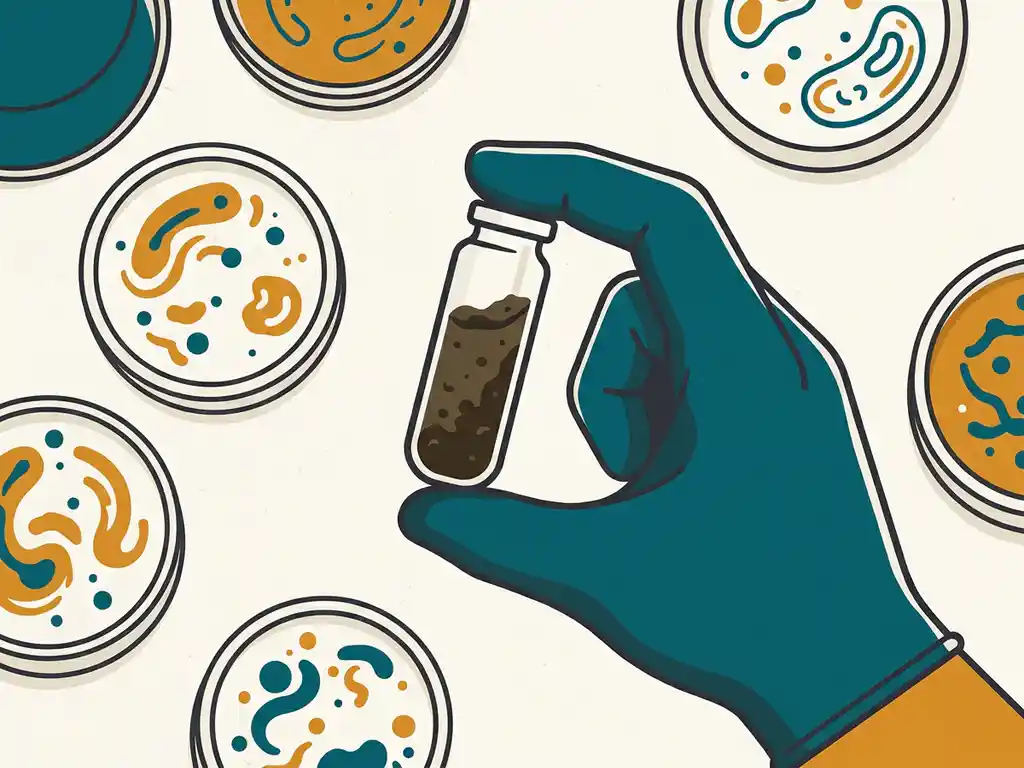
Molecular monitoring diagnoses sludge problems by analyzing the DNA or RNA of the microbial community living in your activated sludge. Instead of waiting for visible symptoms like foaming, poor settling, or effluent quality failures, you can identify the specific organisms responsible for the problem and understand why they are dominating the process. This article walks through what molecular monitoring measures, what problems it detects, and when it makes practical sense for an industrial wastewater plant to invest in it.
What does molecular monitoring actually measure in sludge?
Molecular monitoring measures the composition and relative abundance of microbial populations within a sludge sample. By extracting and sequencing genetic material directly from the sludge, it produces a detailed profile of which organisms are present, in what proportions, and in some methods, how metabolically active they are. This profile is the biological fingerprint of your treatment process at a given moment.
The most widely used approach targets the 16S rRNA gene, a marker sequence present in all bacteria and archaea. Because this gene varies between species but is conserved enough to be reliably sequenced, it allows researchers to identify hundreds of different microbial groups from a single sludge sample without culturing them in a lab. This matters because the vast majority of organisms in activated sludge cannot be grown in isolation on a petri dish.
Beyond community composition, more advanced molecular tools can measure gene expression, indicating which metabolic pathways are active under current process conditions. For industrial operators managing nutrient removal or anaerobic digestion, this distinction between who is there and what they are doing is often the difference between a useful diagnosis and a vague observation.
Get in Touch
Let’s Talk Microbial Solutions
Book a conversation with Stijn, our CEO, or send us your request.
| Book an Appointment | Request Information |
What sludge problems can molecular monitoring detect?
Molecular monitoring can detect a wide range of sludge problems in wastewater treatment, including bulking sludge, foaming, poor nitrification, incomplete denitrification, and instability in anaerobic digesters. Each of these problems is driven by a shift in microbial community structure, and molecular methods identify that shift before it becomes a full operational crisis.
Common sludge problems that molecular monitoring helps diagnose include:
- Filamentous bulking: Overgrowth of filamentous bacteria that impairs sludge settling and increases the sludge volume index
- Viscous or zoogloeal bulking: Excess production of extracellular polymers by certain bacterial groups, causing a gel-like sludge that is difficult to dewater
- Biological foaming: Proliferation of hydrophobic filamentous organisms that generate stable foam on aeration tanks
- Nitrification failure: Decline in ammonia-oxidizing bacteria or nitrite-oxidizing bacteria, leading to ammonia breakthrough in the effluent
- Digester souring: Imbalance between acidogenic and methanogenic communities in anaerobic treatment, resulting in volatile fatty acid accumulation and a pH drop
For industrial producers dealing with seasonal load variations, such as nitrogen and phosphorus peaks after production campaigns, molecular monitoring provides a way to track how the microbial community responds to those shifts and whether corrective action is needed before discharge limits are breached.
How does 16S rRNA sequencing diagnose the cause of bulking sludge?
16S rRNA sequencing diagnoses bulking sludge by identifying the specific filamentous or floc-forming organisms that have increased in relative abundance. Different filamentous bacteria thrive under different conditions, so knowing which genus or species is dominant points directly to the process parameter that is out of balance, whether that is low dissolved oxygen, low sludge age, nutrient deficiency, or high readily biodegradable substrate loading.
For example, certain Microthrix species are associated with low-temperature, lipid-rich wastewater streams, while Thiothrix and related sulfur-oxidizing bacteria tend to proliferate when sulfide is present or when the selector zone is not functioning correctly. Without molecular identification, both problems look similar under a microscope and both cause poor settling, but the corrective actions are entirely different.
This is why fixing bulking sludge in biological treatment without knowing the causative organism is essentially guesswork. Operators may adjust aeration, increase wasting, or add chemicals, but if the root cause is not addressed, the problem returns. Sequencing removes that ambiguity by linking the microbial observation to a specific process condition that can be corrected.
Avecom integrates molecular community profiling into its biological wastewater treatment services, using sequencing data to guide process adjustments rather than relying on trial-and-error interventions.
How early can molecular monitoring detect a microbial imbalance?
Molecular monitoring can detect a microbial imbalance days to weeks before it manifests as a measurable performance problem. Changes in community composition, such as the early growth of a problematic filamentous organism or a decline in nitrifying bacteria, appear in sequencing data well before they translate into elevated effluent concentrations or visible sludge behavior changes.
This early detection window is the primary operational advantage of molecular monitoring over conventional process analytics. By the time a standard parameter like sludge volume index or effluent ammonia signals a problem, the microbial shift causing it has already been underway for some time. At that point, recovery requires more disruptive intervention.
The practical value depends on monitoring frequency. A single snapshot is useful for diagnosis after a problem has occurred, but regular sampling at defined intervals, weekly or biweekly during critical production periods, creates a trend line. That trend line is what enables early intervention. For industries with seasonal loading patterns or variable influent composition, this kind of structured monitoring program turns reactive problem-solving into proactive process management.
What’s the difference between molecular monitoring and microscopy for sludge diagnosis?
Microscopy identifies what organisms look like; molecular monitoring identifies what organisms are. Microscopy is faster and cheaper for detecting filamentous overgrowth or protozoan community changes, but it cannot distinguish between closely related bacterial species that behave differently under different conditions. Molecular monitoring provides taxonomic precision and detects organisms that have no distinctive morphology under a microscope.
The two methods are complementary rather than competing. Microscopy gives an experienced operator a rapid qualitative read on sludge health, floc structure, and the presence of indicator organisms. It remains a valuable daily or weekly tool. Molecular monitoring adds depth when microscopy raises a question it cannot answer, or when a problem recurs without an obvious cause.
For excess sludge issues at a wastewater plant, microscopy might confirm that filamentous bacteria are present and that they represent a significant fraction of the floc. Molecular sequencing then identifies which filamentous organisms they are, enabling a targeted response. For nitrification problems, microscopy offers almost no diagnostic value because nitrifying bacteria are morphologically indistinguishable from many other small rods. Molecular methods are the only reliable way to quantify their presence and track their decline.
When should a wastewater plant invest in molecular sludge monitoring?
A wastewater plant should invest in molecular sludge monitoring when recurring performance problems cannot be explained by process parameters alone, when effluent quality is approaching regulatory limits without a clear cause, or when a biological system is being started up or significantly modified. It is also justified when a plant handles variable or complex industrial influent where microbial community shifts are frequent.
Molecular monitoring is not always necessary as a continuous service. For many industrial operators, a targeted microbiological audit at a specific moment of concern, followed by periodic check-ups, delivers more value than an open-ended monitoring contract. The key question is whether the information gained will lead to a decision that reduces cost, reduces compliance risk, or improves process stability.
Plants that are likely to benefit most include:
- Food and beverage producers with seasonal production cycles that create variable organic and nitrogen loads
- Chemical and pharmaceutical manufacturers with complex or inhibitory wastewater streams
- Any facility where biological treatment has failed repeatedly and the root cause remains unresolved
- Plants considering a transition from chemical to biological treatment and needing to validate that the microbial community is established and functioning
Avecom offers microbiological audits of existing treatment installations as part of its broader water treatment services, combining molecular community analysis with process engineering expertise to translate sequencing data into actionable recommendations. For industrial operators who lack in-house microbiology knowledge, this kind of end-to-end support, from sampling and sequencing to process adjustment, is typically more useful than standalone lab results.
If your plant is experiencing sludge problems that standard diagnostics have not resolved, a structured molecular assessment is a logical next step. The Avecom team has more than 30 years of applied experience in microbial process management and can help determine whether molecular monitoring is the right tool for your specific situation, and what to do with the results once you have them. You can find out more about Avecom’s approach to industrial biotechnology and wastewater solutions on their website.
Related Articles
- What is molecular soil monitoring and why does it matter?
- How do you restart a biological wastewater plant after sludge failure?
- What is the difference between sludge bulking and sludge foaming?
- What are the main causes of sludge problems in wastewater treatment?
- What is the difference between excavation and biological soil remediation?