

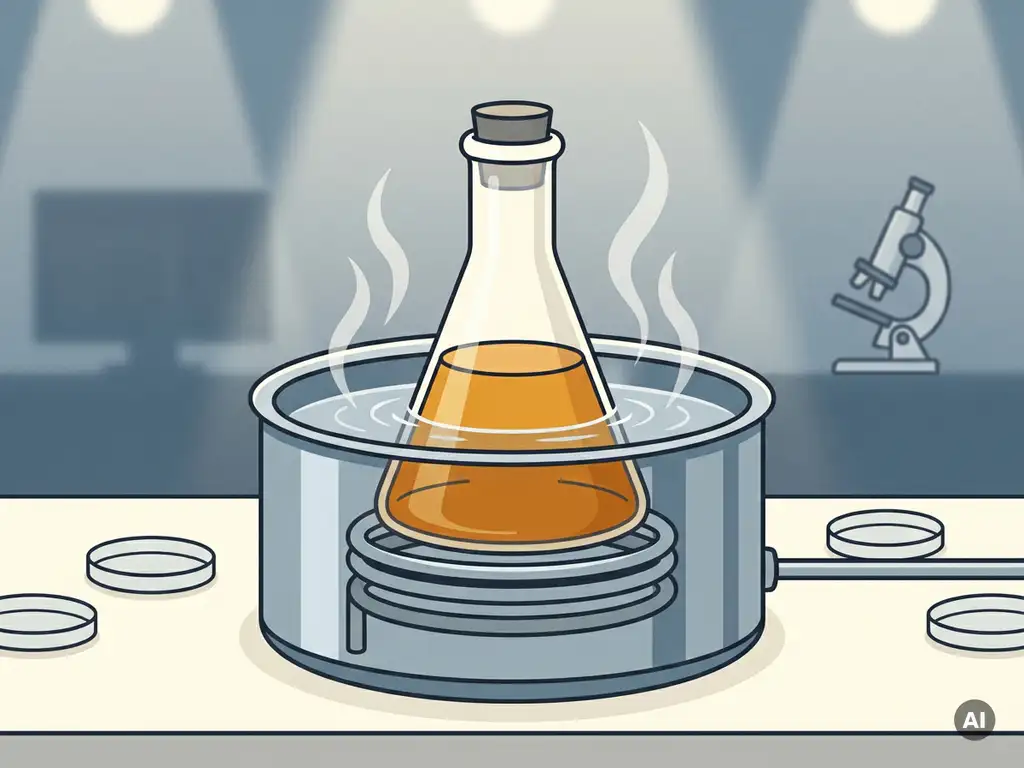
Pasteurization in fermentation is used to inactivate unwanted microorganisms and pathogens in the finished product without destroying its core functional properties. It is a controlled heat treatment step applied after the fermentation process itself is complete, forming a critical part of downstream processing. The sections below address the most common technical questions about how and when pasteurization fits into a fermentation finishing workflow.
How does pasteurization work in a fermentation downstream process?
Pasteurization works by exposing the fermented product to a defined combination of temperature and time sufficient to reduce the microbial load to a safe level. In fermentation downstream processing, this heat treatment is applied after primary separation steps, bringing the product to a target temperature, holding it there for a specified duration, and then cooling it rapidly to arrest further thermal effects.
The specific temperature-time combinations used depend on the product matrix and the target organisms. For liquid fermentation broths, common approaches include high-temperature short-time (HTST) treatment, where the product passes through a heat exchanger at elevated temperatures for seconds, or low-temperature long-time (LTLT) treatment at more moderate temperatures held for longer periods. The choice between these approaches is driven by the heat sensitivity of the product’s functional components, such as enzymes, proteins, or live microbial cells that need to remain intact.
In a typical fermentation finishing sequence, pasteurization sits downstream of centrifugation or filtration and upstream of final packaging or drying. This positioning matters because a cleaner, more concentrated product entering the pasteurization step requires less thermal energy to achieve the desired microbial reduction, and the risk of recontamination before packaging is minimized.
What does pasteurization actually eliminate in a fermented product?
Pasteurization eliminates vegetative pathogenic bacteria, most non-spore-forming spoilage organisms, yeasts, and molds present in the fermented product. It does not achieve complete sterility. Bacterial endospores, particularly from heat-resistant genera, can survive standard pasteurization conditions and remain viable in the finished product.
In the context of microbial fermentation products, the organisms targeted by pasteurization are typically contaminants introduced during the fermentation process or from the raw feedstock, rather than the production organisms themselves. The goal is to reduce the total viable count and eliminate any organisms capable of causing harm to the end user or destabilizing the product during storage.
For fermented feed or food ingredients, the regulatory focus is on specific indicator organisms and pathogens such as Salmonella, Enterobacteriaceae, and coliforms. Pasteurization conditions are validated against these target organisms rather than against the full spectrum of potential contaminants. This is why process validation is not a one-size-fits-all exercise: the thermal death kinetics differ between organisms and product matrices, and conditions must be demonstrated to be effective for the specific application.
Get in Touch
Let’s Talk Microbial Solutions
Book a conversation with Stijn, our CEO, or send us your request.
| Book an Appointment | Request Information |
How is pasteurization different from sterilization for fermentation products?
Pasteurization reduces the microbial load to a safe level while preserving the product’s functional properties. Sterilization eliminates all viable microorganisms, including heat-resistant spores, typically requiring much more severe conditions such as autoclaving at 121 degrees Celsius under pressure. For most fermentation products, sterilization is neither necessary nor desirable because the extreme heat degrades proteins, enzymes, and other bioactive components.
The distinction matters practically for fermentation product finishing. A microbial biomass product destined for use as animal feed does not require the absence of all living organisms. It requires the absence of pathogens and a controlled, stable microbial profile. Applying sterilization conditions to achieve this would compromise the protein quality and digestibility of the product, defeating the purpose of the fermentation process.
Sterilization is appropriate in fermentation workflows primarily at the input stage, where growth media and fermenters must be free of all contamination before inoculation. At the output stage, pasteurization is the standard finishing tool because it balances safety with product integrity. The boundary between the two approaches is defined by the intended use, the regulatory framework, and the heat tolerance of the product’s key functional components.
When should pasteurization be applied in a fermentation finishing workflow?
Pasteurization should be applied after primary biomass separation and before final packaging or further processing steps such as spray drying. Applying it too early in the process, before centrifugation or filtration, wastes thermal energy on dilute material and risks recontamination from downstream equipment. Applying it after packaging is generally impractical for most fermentation product formats.
The timing decision also depends on whether the product contains live organisms that are part of its function. If the end product is intended to deliver viable microbial cells, such as a probiotic or a live fermentation inoculant, pasteurization is not appropriate at all, and alternative preservation strategies must be used. Pasteurization is the right tool when the product’s value lies in its chemical composition, protein content, or enzymatic activity rather than in the viability of its microbial cells.
For products that undergo a drying step, pasteurization is typically applied to the liquid concentrate before drying. The drying process itself provides some additional microbial reduction, but it cannot substitute for pasteurization because the thermal conditions during drying are not controlled in the same validated, time-temperature-specific way that regulators require for pathogen reduction.
What are the quality and safety standards pasteurization must meet for fermented feed products?
For fermented products used as animal feed, pasteurization must meet the microbiological standards set by feed safety regulations, which in the European Union are governed primarily by Regulation (EC) No 183/2005 on feed hygiene. These standards specify maximum allowable counts for indicator organisms such as Enterobacteriaceae and require the absence of Salmonella in defined sample sizes. The pasteurization process must be validated to demonstrate that it consistently achieves these outcomes.
Beyond regulatory minimums, industry certification schemes impose additional process controls. Feed Chain Alliance (FCA) certification, for example, requires documented process parameters, equipment calibration records, and traceability throughout the production chain. Facilities producing fermented feed ingredients under FCA certification must demonstrate that their pasteurization step is part of a controlled, auditable quality system rather than an ad hoc heat treatment.
Validation of a pasteurization process involves challenging the process with the target organisms under worst-case conditions and demonstrating the required log reduction. This is not a one-time exercise: it must be repeated when process parameters change, when new feedstocks are introduced, or when equipment is modified. For companies without in-house fermentation infrastructure, working with a contract partner that already holds the relevant certifications significantly reduces the time and cost of bringing a fermented feed product to market.
How does pasteurization interact with centrifugation in biomass finishing?
Centrifugation and pasteurization are complementary steps in biomass finishing that are most effective when applied in the correct sequence. Centrifugation first concentrates the biomass by removing the bulk of the fermentation liquid, increasing the dry matter content of the product. Pasteurization then treats this concentrated material, which requires less energy and achieves more uniform heat distribution than treating the full fermentation broth.
The interaction between the two steps also affects product quality. Centrifugation subjects the biomass to mechanical shear forces, which can disrupt cell membranes and release intracellular contents. If pasteurization follows centrifugation, the heat treatment acts on this partially disrupted material, which may behave differently from intact cells in terms of heat transfer and microbial inactivation kinetics. Understanding this interaction is important for setting validated pasteurization parameters that reflect the actual state of the product entering the heat treatment step.
In practice, the sequence of centrifugation followed by pasteurization is standard for liquid or paste-form biomass products. For facilities handling both steps within the same production run, the thermal load applied during pasteurization must account for the residual heat from centrifugation and any intermediate holding time, both of which affect the incoming microbial load and the temperature profile achieved during heat treatment. Avecom’s biomass fermentation capabilities include both centrifugation and pasteurization within an integrated downstream processing setup, which allows these parameters to be optimized together rather than in isolation.
Related Articles
- How do you steer a mixed microbial community toward a target product?
- How do you reduce downtime when fixing sludge problems in a plant?
- How do you assess whether biological remediation is feasible?
- Can bioaugmentation help solve sludge bulking problems?
- Why is VOCl contamination so difficult to clean up?