

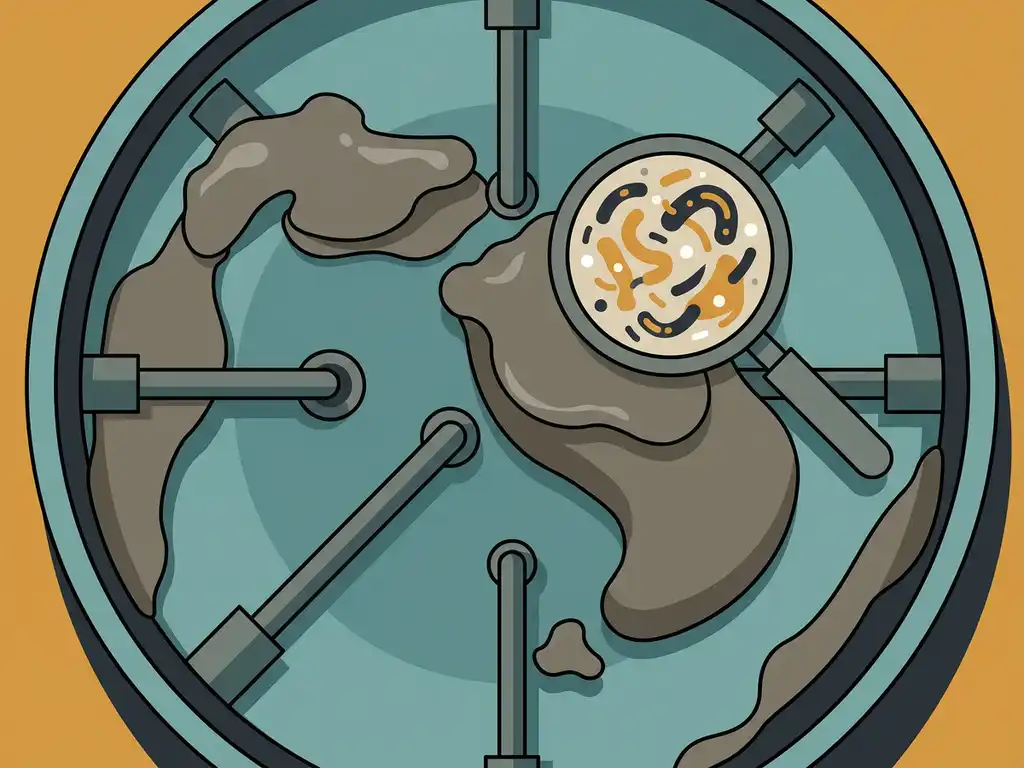
The root cause of recurring sludge problems in wastewater treatment is almost always a mismatch between the microbial community in your activated sludge and the conditions you are asking it to work under. Whether the trigger is a sudden load increase, a shift in influent composition, or inconsistent aeration, the sludge responds by changing its settling behavior, its volume, or its microbial balance. Identifying the specific cause requires a structured diagnostic approach rather than reactive adjustments. The sections below work through the most common causes, key distinctions, and a step-by-step diagnostic process.
What are the most common causes of recurring sludge problems?
Recurring sludge problems in wastewater treatment most commonly stem from nutrient imbalances, fluctuating organic loads, poor aeration control, or an unstable microbial community. These are not isolated incidents but systemic conditions that create the same failure pattern repeatedly if the underlying driver is not addressed.
In industrial settings, particularly in food processing, chemical production, and pharmaceutical manufacturing, influent composition rarely stays constant. Seasonal production cycles, cleaning-in-place discharges, and batch processing can introduce sudden spikes in nitrogen, phosphorus, or chemical oxygen demand. When the biological system is not designed or managed to absorb these peaks, the microbial community is disrupted, and sludge quality deteriorates.
Other frequent contributors include:
- Insufficient sludge retention time (SRT): If sludge is wasted too quickly, slow-growing nitrifying bacteria are washed out before they can establish a stable population.
- Oxygen deficiency or excess: Both under- and over-aeration destabilize floc structure and select for unwanted filamentous organisms.
- Toxic influent peaks: Disinfectants, solvents, or pH extremes entering the biological stage can kill off key microbial groups, leaving the system vulnerable to filament overgrowth.
- Inadequate mixing: Dead zones in the reactor allow anaerobic pockets to form, promoting the growth of organisms that produce poorly settling sludge.
The reason these causes recur is that they are often treated symptomatically. Operators increase polymer dosing or manually remove excess sludge without investigating what is driving the problem at a microbial level. A microbiological audit of your treatment system can reveal which organisms are dominant and whether the process conditions are selecting for the wrong ones.
Get in Touch
Let’s Talk Microbial Solutions
Book a conversation with Stijn, our CEO, or send us your request.
| Book an Appointment | Request Information |
What is the difference between sludge bulking and sludge foaming?
Sludge bulking and sludge foaming are both symptoms of a disrupted microbial community in biological wastewater treatment, but they have different causes and require different interventions. Sludge bulking is a settling problem caused by filamentous bacteria that prevent sludge from compacting in the clarifier. Sludge foaming is a surface accumulation problem caused by hydrophobic, foam-producing organisms, most often Microthrix parvicella or nocardioforms.
Sludge bulking: a settling failure
In bulking, filamentous organisms grow out of the floc matrix and create a loose, open structure. The sludge volume index (SVI) rises well above normal, the clarifier fills with poorly settled sludge, and effluent quality drops. Bulking is typically triggered by low dissolved oxygen, low food-to-microorganism (F/M) ratios, or nutrient deficiencies. It is one of the most common sludge problems in wastewater treatment plants handling variable industrial loads.
Sludge foaming: a surface accumulation failure
Foaming presents differently. A stable, viscous brown foam accumulates on the surface of aeration tanks and secondary clarifiers. The organisms responsible, particularly Microthrix parvicella, thrive in low-temperature, low-load conditions and have a strong affinity for long-chain fatty acids. Foaming is common in systems treating dairy or food processing wastewater and tends to worsen in the winter months when temperatures drop.
Distinguishing between the two matters because the corrective actions differ. Bulking often responds to aeration optimization and sludge age management. Foaming requires targeted changes in SRT, fat and oil loading control, and sometimes selective wasting of the foam layer itself. Treating one as the other wastes time and resources.
How do you diagnose the root cause of a sludge problem step by step?
Diagnosing the root cause of a sludge problem requires moving from observation to data collection to microbial analysis, in that order. Jumping to a solution before completing this sequence is the most common reason problems recur.
A structured diagnostic process typically follows these steps:
- Document the symptom pattern: When did the problem start, how does it manifest, and does it correlate with any operational change, seasonal shift, or upstream production event?
- Review process parameters: Examine trends in dissolved oxygen, SVI, mixed liquor suspended solids (MLSS), SRT, pH, and nutrient ratios over the period leading up to the problem.
- Analyze the influent: Take composite samples during problem periods and compare them with baseline data. Look specifically at nitrogen and phosphorus loads, fat and oil content, and any potential inhibitory compounds.
- Perform a microscopic examination: Light microscopy of the activated sludge reveals floc structure and identifies dominant filamentous organisms. This is a critical step that is often skipped in operational troubleshooting.
- Apply molecular microbial analysis: For persistent or complex problems, DNA-based community profiling provides a far more detailed picture of which organisms are present, in what proportions, and how the community has shifted over time.
- Correlate findings with process conditions: Match the microbial profile with the operational data to identify the specific conditions that are selecting for problematic organisms.
This last step is where genuine expertise becomes decisive. Knowing that Microthrix parvicella is dominant tells you something, but understanding which operational levers to pull to reduce its competitive advantage requires experience with mixed microbial cultures under real industrial conditions.
Why do sludge problems keep coming back after treatment?
Sludge problems recur after treatment because most corrective actions address the symptom rather than the condition that created it. If the underlying process imbalance, whether that is inconsistent loading, poor nutrient dosing, or inadequate sludge age control, remains unchanged, the same microbial dynamics will reassert themselves.
There is also a biological dimension to recurrence. Activated sludge is a living system with ecological memory. Organisms that cause bulking or foaming do not disappear when conditions temporarily improve. They persist at low levels and recover rapidly when favorable conditions return. A single high-load event, a temperature drop, or a reduction in dissolved oxygen can allow them to regain dominance within days.
Another factor is the absence of baseline monitoring. Many industrial operators only measure sludge performance when something goes wrong. Without continuous or regular tracking of SVI, MLSS, and microbial community composition, early warning signals are missed, and problems are only addressed once they have already become visible.
Effective long-term control requires building the conditions that favor stable, well-settling floc-forming communities and maintaining those conditions consistently. This is not a one-time fix but an ongoing process of microbial management, which is precisely the kind of work that Avecom supports through operational guidance and molecular monitoring.
When should you bring in external expertise for sludge diagnostics?
You should bring in external expertise for sludge diagnostics when the problem has recurred more than once despite operational adjustments, when in-house troubleshooting has not identified a clear cause, or when the cost of continued non-compliance outweighs the cost of a professional assessment. Waiting too long typically increases both remediation costs and regulatory exposure.
There are specific situations where external support is particularly valuable:
- The sludge problem correlates with a change in production, but the exact mechanism is unclear.
- Microscopy has been performed, but the results cannot be linked to a corrective action.
- Discharge limits are being exceeded, and the timeline for resolution is under regulatory scrutiny.
- A process change, such as adding a new product line or expanding capacity, is planned, and the impact on the biological system is unknown.
- Internal knowledge of biological wastewater treatment is limited, and the team lacks confidence in interpreting process data.
External diagnostics are not just about identifying what is wrong. A qualified partner can also assess whether the existing installation is fundamentally suited to the load it is handling, and whether targeted interventions, such as inoculating with specific microbial consortia or adjusting the biological process design, would stabilize performance more reliably than continued operational tweaking.
Avecom provides microbiological audits and biological treatment optimization for industrial wastewater systems, working from lab-scale feasibility testing through to operational implementation. The approach is grounded in over 30 years of applied microbiology and is designed for production environments where downtime and compliance risk are real constraints. If recurring sludge problems in your wastewater treatment plant have reached the point where operational adjustments are no longer sufficient, a structured diagnostic process with external support is the most direct path to a durable solution. You can learn more about Avecom’s approach on the Avecom about page.
Related Articles
- What does a contract fermentation manufacturer actually do?
- What are the risks of leaving contaminated soil untreated?
- What are the regulations for sludge disposal in industrial wastewater?
- What does microbial community analysis reveal about sludge health?
- How do you know if a remediation approach is working?