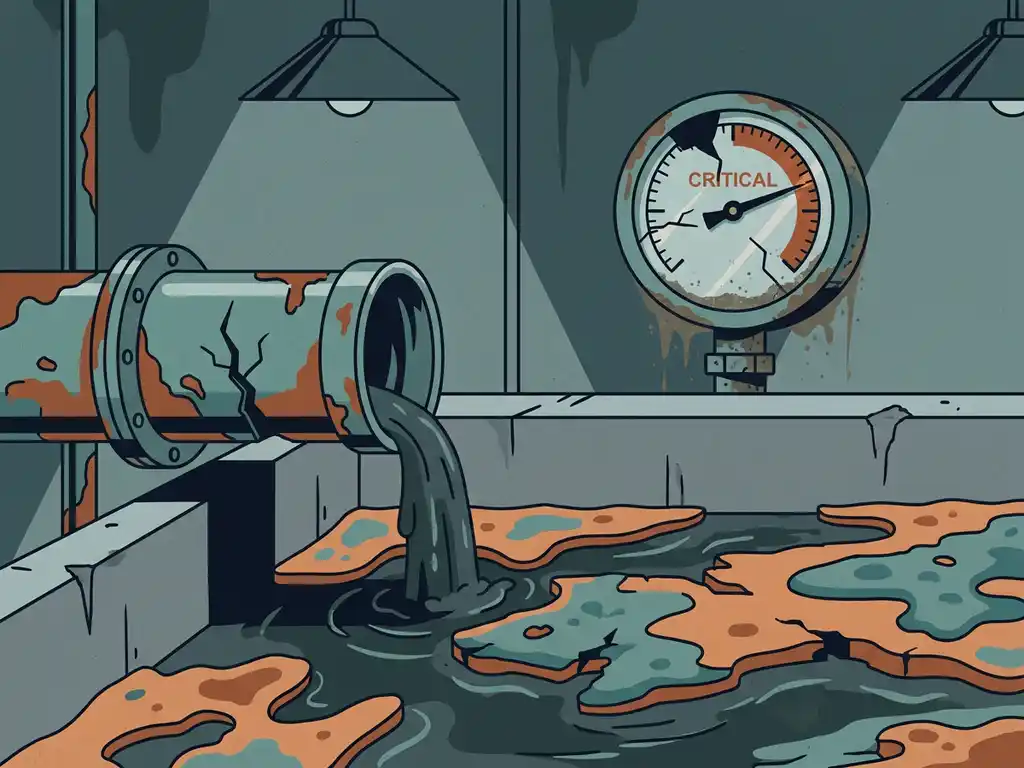
Industrial wastewater treatment is one of those systems that tends to go unnoticed until something goes wrong. When biological performance drops, the consequences arrive quickly: discharge limits are breached, regulators take notice, and costs climb. For environmental and production managers in the food, chemical, and pharmaceutical sectors, a failing treatment system is not just an operational headache. It is a compliance risk, a financial liability, and often a signal that something more fundamental needs to change. Understanding what causes treatment systems to fail, and what it takes to restore and even improve them, is the first step toward regaining control.
Warning signs your system is losing biological performance
A biological treatment system rarely fails overnight. The decline is usually gradual, and the early warning signs are easy to overlook or misattribute. Effluent quality is the most visible indicator: rising chemical oxygen demand (COD), elevated ammonia, or increasing phosphorus concentrations in the discharge stream all suggest that the microbial community is no longer performing as it should. If these values are trending in the wrong direction over several weeks, the system is telling you something important.
Sludge problems in wastewater treatment are another reliable early signal. Bulking sludge, poor settleability, or excessive foaming in aeration tanks point to a shift in the microbial population, often toward filamentous organisms that outcompete the bacteria responsible for effective breakdown. Changes in sludge volume index (SVI), unusual coloration, or a persistent drop in dissolved oxygen despite normal aeration input all deserve immediate attention. These are not isolated anomalies. They are symptoms of a system under stress.
Common root causes behind treatment system failures
When wastewater treatment stops working effectively, the cause is almost always traceable to one of a handful of recurring problems. Identifying the root cause matters because the wrong corrective action can make things significantly worse.
Organic and nutrient load fluctuations
Seasonal production cycles are a major driver of treatment instability in the food and beverage sector. A sudden increase in nitrogen or phosphorus loading after a production peak can overwhelm a biological system that was designed for average conditions. The microbial community needs time to adapt, and if the load spike is sharp enough, the system may not recover on its own before a discharge violation occurs.
Toxic influent and inhibitory compounds
Chemical and pharmaceutical producers face a different challenge: inhibitory compounds entering the treatment system can suppress microbial activity rapidly. Disinfectants, solvents, or cleaning agents that enter the wastewater stream, even in small concentrations, can destabilize the biological community. The result is a sharp drop in treatment performance that can look, at first glance, like a mechanical or operational problem.
Process control and sludge age issues
Incorrect sludge retention time, poor pH control, and inadequate temperature management are operational factors that quietly erode biological performance over time. A system running with too short a sludge age will wash out the slow-growing nitrifying bacteria responsible for ammonia removal. Once lost, these populations take weeks to re-establish under normal operating conditions.
Regulatory and financial consequences of non-compliance
Industrial wastewater compliance failure carries consequences that extend well beyond a fine. In the Benelux region, tightening frameworks such as VLAREM and the EU Water Framework Directive are raising discharge standards across sectors, and enforcement is becoming more consistent. A single exceedance may trigger a formal notice; repeated violations can result in operating restrictions or mandatory investment requirements with short deadlines.
The financial picture is equally sobering. Discharge to the municipal sewer network is priced per unit of pollutant load, so a system that is underperforming does not just risk fines. It drives up ongoing operational costs through higher discharge tariffs. Chemical dosing as a compensatory measure adds further expense and introduces its own environmental footprint. For managers thinking in terms of cost per cubic metre, a failing biological system is expensive in multiple directions simultaneously.
Beyond direct costs, there is the reputational dimension. Regulators, customers, and investors are paying closer attention to environmental performance than they were even five years ago. A pattern of compliance failures can affect supplier relationships and licensing conditions in ways that are difficult to reverse quickly.
How biological treatment can be stabilized and restored
Restoring a struggling biological treatment system requires a structured approach rather than reactive adjustments. The starting point is always a thorough microbiological audit of the existing installation to understand which organisms are present, which are absent, and why the community has shifted. Molecular monitoring techniques can now provide a detailed picture of microbial population dynamics that was simply not available with conventional analytical methods.
Once the root cause is understood, targeted interventions become possible. biological water treatment solutions developed by Avecom include the use of ABIL technology, which allows existing biofilters to be restarted or rebalanced without a full system shutdown. This matters enormously for production facilities where downtime is not a realistic option. Rather than replacing a system, the focus is on steering the existing microbial community back toward stable, high-performance operation.
Lab-scale and pilot-scale feasibility testing plays a central role in this process. Testing the response of the microbial community to adjusted operating conditions, alternative inocula, or modified nutrient dosing before implementing changes at full scale significantly reduces the risk of making an already difficult situation worse. This kind of evidence-based approach is what separates a genuine restoration from a trial-and-error intervention. Avecom’s applied microbiology team brings more than 30 years of experience in exactly this type of process optimization, working across aerobic, anaerobic, and combined treatment configurations.
Turning wastewater from a liability into a resource
A stabilized treatment system is valuable. But there is a growing argument for thinking beyond compliance and asking what the wastewater stream could contribute rather than simply cost. This shift in perspective is not idealistic. It is increasingly practical, and it changes the financial logic of the entire operation.
Nitrogen-rich reject water, for example, is typically seen as a problem to be managed. Through microbial fermentation processes, that same nitrogen can serve as a feedstock for the production of single cell protein, a high-value ingredient for animal feed. Avecom’s ProMic platform makes this conversion technically and commercially feasible for industrial producers, linking nutrient recovery from wastewater to a revenue-generating output rather than a disposal cost. The business case shifts from pure cost reduction to partial valorization, which strengthens the investment argument for upgrading biological treatment infrastructure.
This is not a distant prospect. The regulatory pressure driving investment in better treatment systems is already present in 2026, and the technology to convert that investment into something productive is available now. Producers who approach wastewater as a process input rather than a waste stream are finding that the economics of compliance look considerably more attractive when recovery is part of the equation.
For facilities dealing with underperforming systems, the practical next step is a structured assessment of what the current installation is actually doing, what it should be doing, and where the gap lies. Avecom offers intake consultations that translate that assessment into a concrete action plan, covering everything from microbiological audit to pilot-scale validation and operational implementation. The goal is not to sell a product but to take on the problem as a partner and deliver measurable results.