

The biotechnology industry is plagued by a fundamental delusion. For decades, companies have burned through capital engineering fragile, single-strain microbes in sterile laboratories, feeding them pristine glucose, and expecting these systems to survive the brutal realities of industrial scale-up. They fail. They fail because industrial environments are hostile, feedstocks are dirty and inconsistent, scaling up fundamentally alters process physics, and technical success is entirely irrelevant if the economics and regulatory frameworks do not align.
Avecom does not build lab toys. For over 30 years, we have operated at the vanguard of applied microbial ecology, turning the most intractable environmental and industrial challenges into commercially viable solutions. As a spin-out from Ghent University , built on the foundational Microbial Resource Management (MRM) principles of Prof. Willy Verstraete , we engineer systems that survive, scale, and generate revenue.
Here is why industrial leaders, from waste management to food processing, abandon the status quo and partner with Avecom.
1. We Engineer Resilient Microbial Ecosystems, Not Fragile Monocultures
The standard industry approach relies on isolating and heavily modifying a single microbial strain. This is a fatal strategic error. In a real-world industrial bioreactor or a contaminated soil plume, single strains are rapidly outcompeted, poisoned, or destroyed by fluctuating conditions.
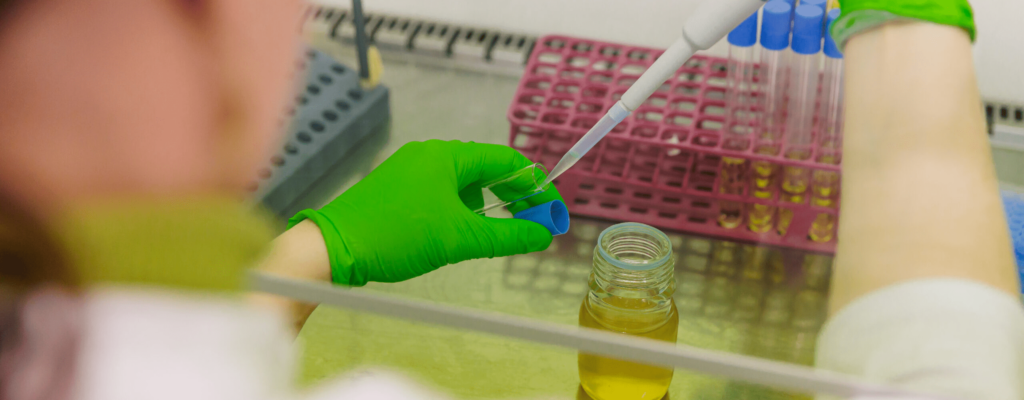
Avecom leverages the inexorable power of microbial consortia. We do not rely on a single organism; we engineer complex, interdependent microbial ecosystems. By applying our deep expertise in Microbial Resource Management, we steer entire biological communities to perform highly targeted tasks—whether that is maximizing specific methanogenic activity in anaerobic wastewater treatment, or optimizing in-situ CVOC degradation in soils. A consortium is dynamic, self-regulating, and infinitely more resilient to shocks, toxicity, and load fluctuations than any genetically modified isolate. When your process faces a sudden spike in organic load or a drop in dissolved oxygen, our engineered consortia adapt and survive.
2. We Valorize Difficult, Heterogeneous Feedstocks
Anyone can ferment pure laboratory-grade sugars. It is also an excellent way to bankrupt your operation. The bio-based economy is creating immense competition for primary agricultural feedstocks, pitting industrial production against the global food supply.
Avecom excels precisely where the competition retreats: dirty, complex, and highly variable waste streams. We do not require clean substrates. We design fermentation and degradation platforms that process heterogeneous biowaste, municipal sludge, agricultural harvest residues, and toxic industrial effluents.
- Through initiatives like the CAFIPLA project, we optimize pre-treatment cascades to convert mixed, fluctuating biowaste into short chain carboxylic acids and high-quality bio-based intermediates.
- With our ProMic platform, we transform undervalued, erratic co-products from the food processing industry into premium, sustainable microbial protein (Single Cell Protein).
- In environmental remediation, our consortia dismantle highly complex contaminants ranging from BTEX chemicals to heavy mineral oils.
We take your most expensive liability—your waste stream—and engineer the biological pathway to monetize it.

3. End-to-End Execution: From Biology to Pilot to Commercial Product
The valley of death in biotechnology lies between the laboratory bench and the pilot plant. Biological reactions that look brilliant in a 2-liter flask routinely collapse in a 2,000-liter reactor due to mass transfer limitations, shear stress, and thermodynamic constraints.
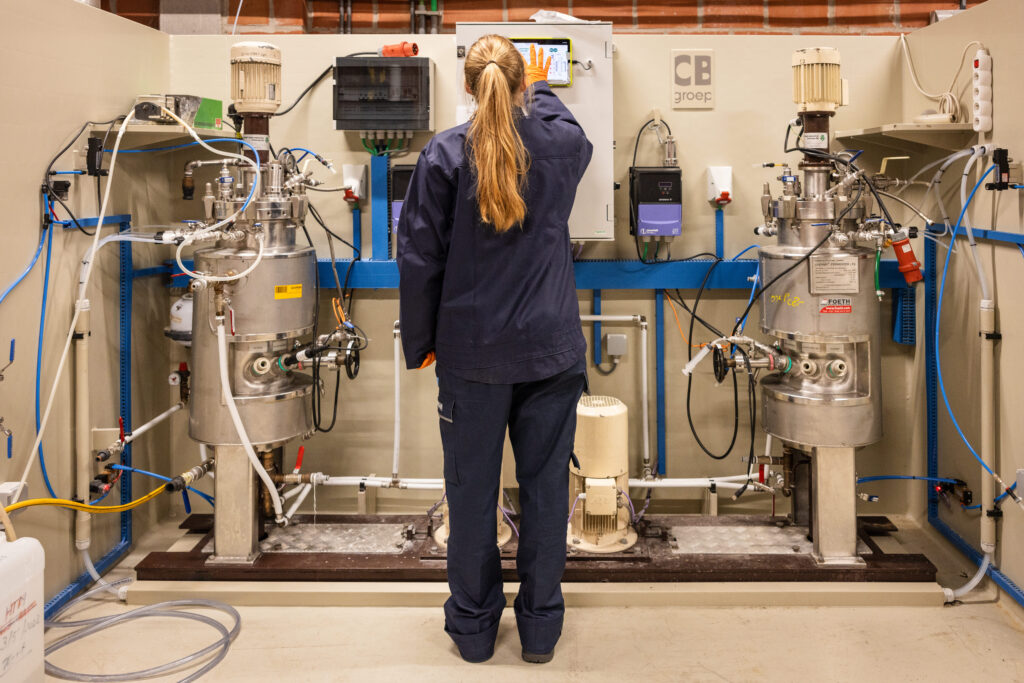
Avecom is not a theoretical consultancy; we are an end-to-end process engineering powerhouse. We manage the entire pipeline: from molecular biological monitoring and lab-scale feasibility testing to process design, pilot-scale operation, and small-scale contract manufacturing. We prove the physics and the engineering alongside the biology. Our state-of-the-art pilot facilities are designed to brutally stress-test processes before you commit heavy capital expenditure.
We have successfully scaled some of the most advanced bioprocesses in the world, including our Power to Protein gas fermentation platform, which utilizes green hydrogen to convert greenhouse gas (CO2) directly into food-grade protein. We do not hand you a research paper; we deliver an operational process.
4. Uncompromising Commercial Viability: Technical, Economic, and Regulatory
A biological process is useless if it cannot be legally deployed or if it decimates your profit margins. We recognize that sustainability is an economic metric, not a moral one. If it doesn’t make money, it isn’t truly sustainable.
Avecom conducts holistic, aggressive audits that evaluate your projects across three non-negotiable axes:
- Technical Feasibility: Can the biology and the engineering actually perform the required conversion at scale?
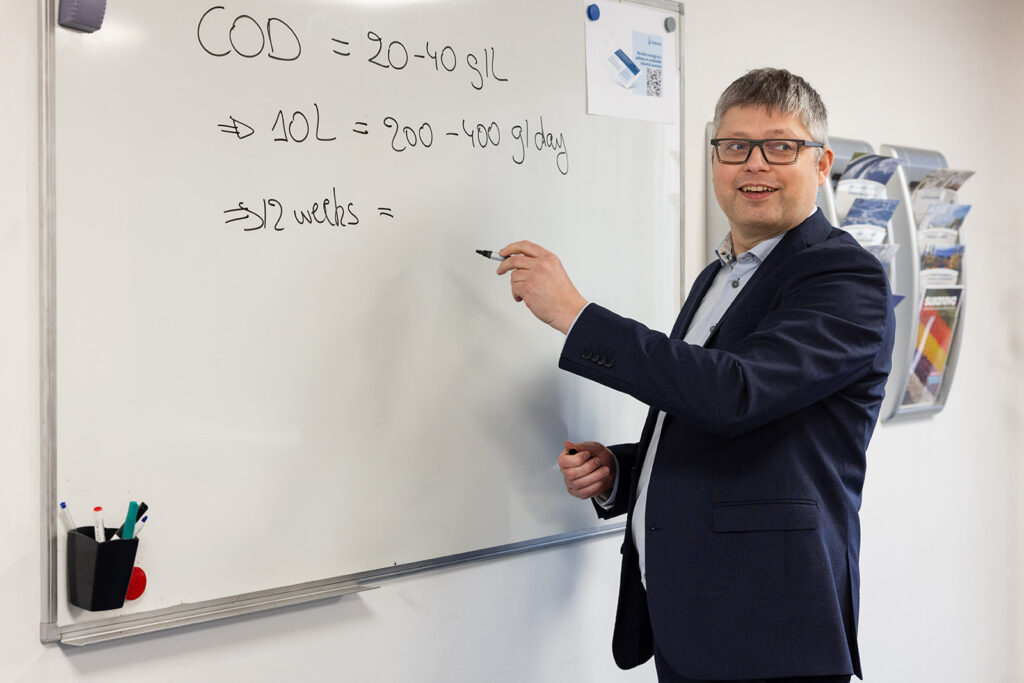
- Economic Viability: We run the brutal math. Our Side-Stream Monetization Audits evaluate operational costs against potential revenue streams, ensuring that upgrading your residual flows offers a superior return on investment compared to standard disposal fees.
- Regulatory Compliance: The regulatory landscape for biotechnology and waste valorization is a minefield. We navigate it for you. Whether it involves securing Feed Chain Alliance certification for animal feed products, navigating the EU Circular Economy strategy for food packaging, or ensuring strict adherence to environmental legislation, we ensure your process is legally bulletproof before it goes to market.
Stop paying to dispose of your assets. Stop investing in fragile laboratory science. Partner with the experts who engineer microbial processes to survive, scale, and dominate the industrial reality.