

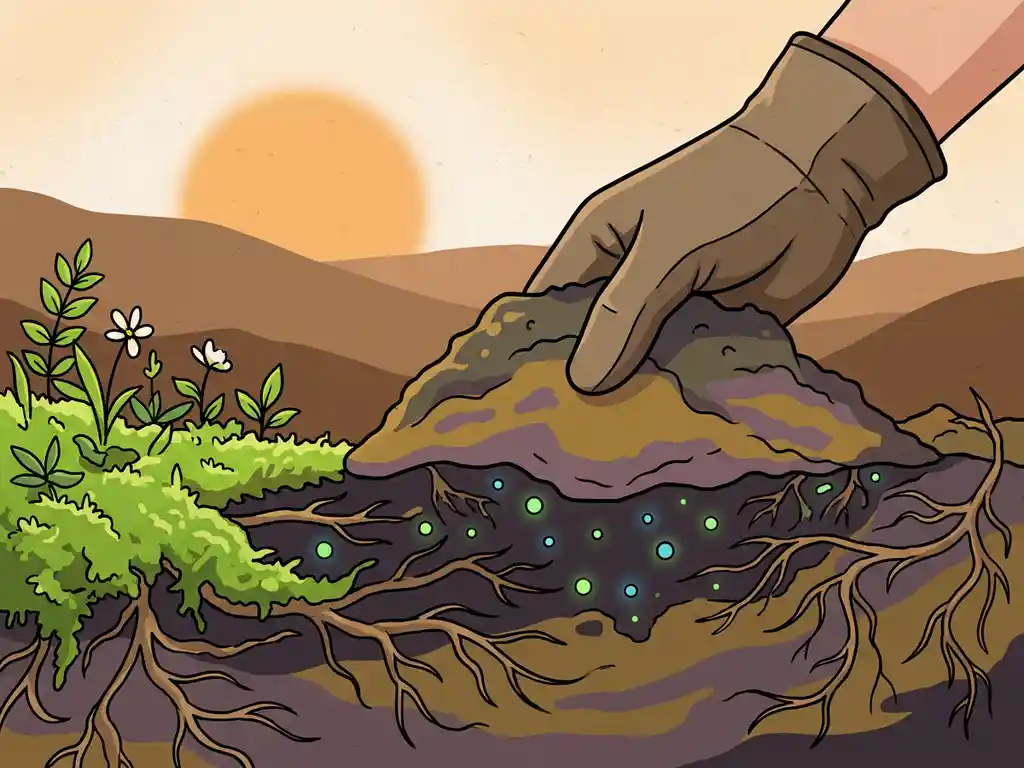
Soil contamination is the presence of harmful chemicals, heavy metals, or biological agents in the ground at concentrations high enough to pose a risk to human health, ecosystems, or groundwater. It matters because contaminated land can block development, trigger legal obligations, and cause long-term environmental damage that spreads far beyond the original source. The sections below address the most common questions that arise when contamination is discovered on a site.
What are the most common causes of soil contamination?
The most common causes of soil contamination are industrial activities, improper waste disposal, fuel storage leaks, and the historical use of pesticides or solvents. Many contaminated sites today reflect decades-old practices that were standard at the time but left persistent chemical residues in the ground that remain problematic long after the original activity has stopped.
Industrial sites are among the most frequently affected. Metalworking, chemical manufacturing, dry cleaning, and printing operations have historically used chlorinated solvents and other hazardous compounds that leach into the soil and groundwater. Underground storage tanks at petrol stations and industrial facilities are another major source, particularly when tanks corrode or connections fail over time.
Agricultural land can also carry contamination from pesticide and fertilizer overuse, as well as from the application of sewage sludge containing heavy metals. Landfill sites and illegal dumping grounds introduce a wide range of mixed contaminants. In urban and brownfield contexts, contamination often results from multiple overlapping historical uses, which makes assessment and remediation more complex.
Get in Touch
Let’s Talk Microbial Solutions
Book a conversation with Stijn, our CEO, or send us your request.
| Book an Appointment | Request Information |
What types of pollutants are most often found in contaminated soil?
The pollutants most often found in contaminated soil are heavy metals, petroleum hydrocarbons, chlorinated solvents, polycyclic aromatic hydrocarbons (PAHs), and pesticides. The specific profile depends on the site’s history, but chlorinated solvents and heavy metals are among the most persistent and technically challenging to address.
Chlorinated solvents, also called volatile organochlorine compounds (VOCl), deserve particular attention. Compounds such as trichloroethylene (TCE) and perchloroethylene (PCE) were widely used as degreasers and dry-cleaning agents. They are dense, mobile in groundwater, and resistant to natural breakdown, which makes them some of the most stubborn contamination problems encountered on industrial and commercial sites.
Heavy metals such as lead, cadmium, arsenic, and chromium are common on former industrial sites and do not degrade over time. Petroleum hydrocarbons from fuel spills and PAHs from combustion residues are widespread on brownfield sites. Each pollutant type requires a different assessment and remediation approach, which is why accurate identification of the contaminant profile is the essential first step after contamination is discovered.
Why is soil contamination harmful to human health and ecosystems?
Soil contamination is harmful because toxic substances can migrate into groundwater, enter the food chain through crops and soil organisms, and be inhaled as vapors or ingested through direct contact. The harm is not always immediate or visible, which is precisely what makes contaminated land a serious long-term liability for site owners and surrounding communities.
Human health risks depend on the type of contaminant, its concentration, and the exposure pathway. Chlorinated solvents, for instance, can volatilize from soil into buildings through a process called vapor intrusion, creating indoor air quality problems that are difficult to trace without targeted investigation. Heavy metals accumulate in the body over time and are linked to neurological damage, kidney disease, and developmental disorders in children.
Ecosystems are affected at multiple levels. Contamination disrupts soil microbiology, reducing the biological activity that drives nutrient cycling and plant growth. It can kill or impair invertebrates, birds, and mammals that feed in contaminated areas. When pollutants reach surface water or groundwater, the impact extends well beyond the original site boundary, affecting drinking water sources and aquatic habitats.
What legal obligations apply to contaminated land owners in Belgium?
In Belgium, contaminated land is governed primarily by the VLAREBO decree in Flanders, which requires site owners, operators, or responsible parties to report contamination, conduct a soil investigation, and carry out remediation if risk thresholds are exceeded. Non-compliance can block property transactions, permits, and development approvals.
OVAM, the Public Waste Agency of Flanders, oversees the process and sets the standards for soil investigation reports, risk assessments, and remediation plans. When contamination is discovered, a preliminary investigation (oriënterend bodemonderzoek) is typically required first. If contamination is confirmed above intervention values, a descriptive investigation (beschrijvend bodemonderzoek) follows, and from there a remediation plan must be developed and approved.
Obligations can fall on different parties depending on the circumstances: the historical polluter, the current landowner, or a developer taking on a brownfield site. In practice, many project managers and environmental coordinators find themselves responsible for sites where the original polluter is no longer identifiable or solvent. Understanding which obligations apply to a specific situation requires early engagement with a qualified soil remediation specialist, and all remediation reporting must conform to OVAM and VLAREBO requirements.
How is contaminated soil cleaned up?
Contaminated soil is cleaned up through several methods, including excavation and off-site disposal, pump-and-treat systems for groundwater, soil vapor extraction, chemical treatment, and biological remediation. The right approach depends on the contaminant type, its depth and distribution, the site conditions, and the intended future use of the land.
Physical and chemical methods
Excavation remains the most familiar approach. It involves physically removing contaminated soil and transporting it to a licensed treatment or disposal facility. It is fast and conclusive when the contamination is shallow and well-defined, but it becomes impractical and costly when contamination is deep, widespread, or located beneath existing structures. Pump-and-treat systems extract contaminated groundwater for above-ground treatment, while soil vapor extraction draws volatile compounds out of the unsaturated zone using applied vacuum.
Biological methods
Biological remediation uses microorganisms to break down contaminants in place. In-situ bioremediation can be passive, relying on naturally occurring microbial communities, or active, introducing specialized microbial consortia to accelerate degradation. This approach is particularly well suited to chlorinated solvents, where specific bacteria carry out a process called reductive dechlorination, progressively breaking down the compounds into harmless end products. Biological soil remediation requires careful site assessment to confirm that the conditions for microbial activity are present, but when feasible, it offers a cost-effective and minimally disruptive alternative to excavation.
When should biological remediation be considered over excavation?
Biological remediation should be considered over excavation when contamination is deep, diffuse, or located beneath buildings and infrastructure where physical removal is not practical. It is also the more appropriate choice when contamination has spread into groundwater in a way that excavation alone cannot address, and when the contaminant type is amenable to microbial degradation.
For chlorinated solvent contamination specifically, biological degradation by specialized microbial consortia is one of the most scientifically supported in-situ approaches available. The key question is whether the site conditions support effective microbial activity. This is where a microcosm test adds significant value: it uses actual soil and groundwater samples from the site to determine, under controlled laboratory conditions, whether biological degradation is feasible before any large-scale intervention is committed to.
Avecom’s approach to biological decontamination is built around exactly this kind of evidence-based feasibility screening. Rather than recommending a solution before the data support it, the process starts with microcosm testing to confirm degradation potential, followed by molecular monitoring tools that track microbial activity throughout the remediation. This gives project managers concrete, reportable data at every stage, which is valuable both for internal decision-making and for OVAM compliance reporting.
Biological remediation is not always the answer. On sites with very high contaminant concentrations, extremely poor soil permeability, or a combination of contaminants that inhibit microbial activity, other methods may need to be applied first or in combination. The decision should always be based on site-specific data, not on a preference for one technology over another.
If you are managing a site where classical remediation has underperformed or excavation is not feasible, Avecom’s soil remediation specialists can conduct a rapid feasibility screening to assess whether a biological approach is viable for your specific contamination profile. With over 30 years of experience in microbial process management, Avecom works from preliminary lab testing through to full field-scale remediation, with reporting aligned to OVAM and VLAREBO requirements. For a no-obligation discussion of your site, contact the team directly.