

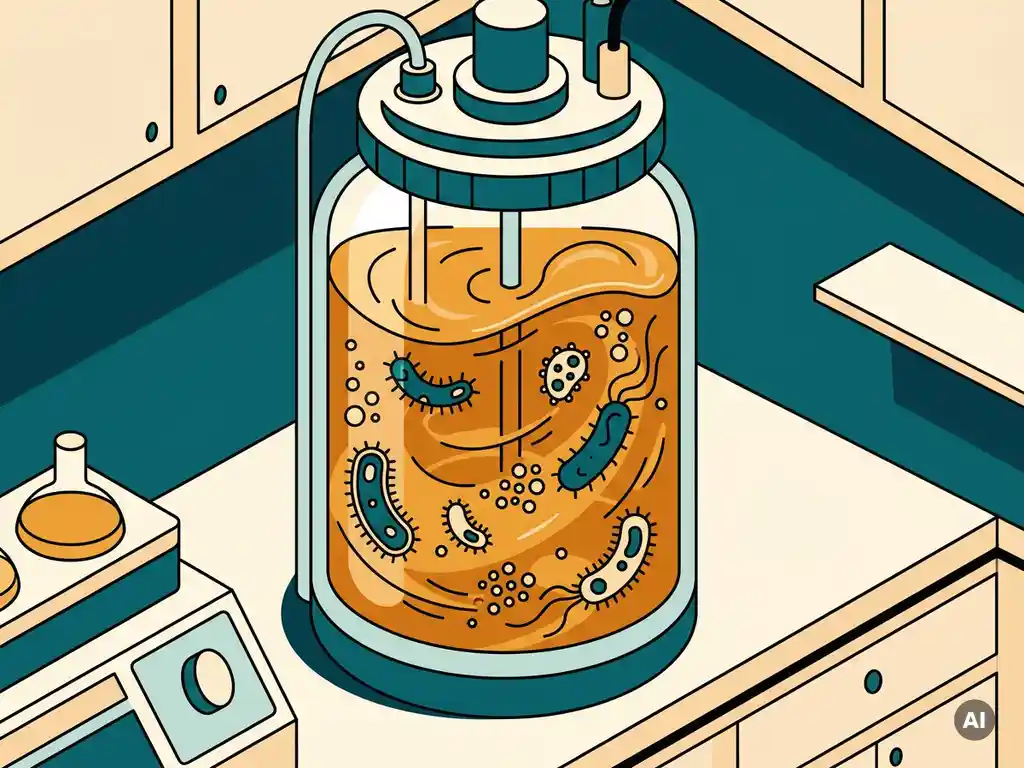
Single cell protein (SCP) is protein derived from the dried biomass of microorganisms, including bacteria, yeasts, fungi, and microalgae, grown through controlled fermentation. The term refers to the protein-rich cellular material that accumulates when these microbes multiply rapidly on a carbon or nitrogen source. SCP production is gaining serious attention as a scalable, land-efficient alternative to conventional plant and animal protein sources, particularly for feed and food applications. The sections below walk through the key questions: what goes in, what grows, how the process works, and where the end product ends up.
What raw materials can be used to produce single cell protein?
Single cell protein can be produced from a wide range of carbon-containing substrates, including agricultural residues, food processing side streams, industrial gases, and even wastewater. The substrate choice depends on which microorganism is being cultivated, the target cost structure, and the regulatory context of the intended application. Cheap or waste-derived feedstocks are particularly attractive because they simultaneously reduce input costs and valorise streams that would otherwise require disposal.
Common feedstocks fall into several broad categories:
- Lignocellulosic biomass: crop residues, straw, and wood hydrolysates that supply sugars after pre-treatment
- Food and beverage processing streams: whey permeate, molasses, spent grain liquors, and fruit processing water
- Gaseous substrates: methane, carbon dioxide, and hydrogen, which specialised bacteria convert directly into biomass
- Municipal and industrial wastewater: organic-rich effluents that feed heterotrophic microbial growth while simultaneously being treated
- Syngas and CO-rich off-gases: emerging feedstocks for gas fermentation platforms
The flexibility of substrate choice is one of the practical strengths of microbial protein production. Avecom, for instance, has developed and patented a biotechnological process specifically for producing microbial protein from food processing water, turning a problematic side stream into a protein-rich product. This kind of side stream valorisation is a growing focus in biomass fermentation, where the economics of SCP production improve significantly when the feedstock carries a negative or near-zero cost.
Which microorganisms are used in single cell protein production?
The four main microbial groups used in single cell protein production are bacteria, yeasts, filamentous fungi, and microalgae. Each group has distinct growth characteristics, substrate preferences, and protein profiles that make it more or less suitable depending on the application and the production system.
Bacteria and yeasts
Bacteria grow extremely fast and can reach high protein content, sometimes exceeding 70% of dry weight. Species from genera such as Methylococcus (methane-oxidising) and various heterotrophic strains are used industrially. Yeasts, including Saccharomyces cerevisiae and Candida species, are well-established in food-grade applications because of their long regulatory history and favourable amino acid profiles. They grow readily on sugars and are relatively easy to harvest.
Fungi and microalgae
Filamentous fungi such as Fusarium venenatum (the basis of mycoprotein) produce a fibrous biomass with a texture that can mimic meat, which gives them particular appeal in food applications. Microalgae, including Chlorella and Spirulina, are photosynthetic and can fix CO2, but they require light and large surface areas, which makes scale-up more capital-intensive than fermentation-based routes.
In practice, many robust industrial processes do not rely on a single pure culture but on mixed microbial communities that are more resilient to process fluctuations and contamination. This is an area where experience with complex microbiome engineering becomes a genuine technical differentiator.
Get in Touch
Let’s Talk Microbial Solutions
Book a conversation with Stijn, our CEO, or send us your request.
| Book an Appointment | Request Information |
How does the fermentation process turn microbes into protein?
Fermentation for single cell protein production works by providing microorganisms with a controlled environment, the right substrate, temperature, pH, dissolved oxygen level, and nutrient supply, so they multiply rapidly and accumulate protein-rich biomass. The process typically runs in bioreactors where these parameters are monitored and adjusted continuously. Once the culture reaches the target biomass concentration, the cells are harvested, separated from the liquid, and dried to produce the final protein-rich product.
The core steps in a standard SCP fermentation process are:
- Substrate preparation: The feedstock is pre-treated if necessary (hydrolysis, sterilisation, pH adjustment) to make it accessible and safe for the target microorganism.
- Inoculation and growth: A starter culture is introduced into the bioreactor, where it multiplies under controlled aerobic or anaerobic conditions depending on the organism.
- Process monitoring: Parameters such as dissolved oxygen, pH, temperature, and nutrient concentrations are tracked and adjusted to maintain optimal growth rates.
- Biomass harvest: The culture broth is processed, typically by centrifugation, to separate the microbial cells from the liquid phase.
- Downstream processing: The wet biomass is further treated, often by pasteurisation, to ensure safety and stability, then dried to the final powder or pellet form.
Scaling this process from laboratory to pilot and then to production scale requires careful understanding of how process parameters interact. What works in a 2-litre flask often behaves differently in a 500-litre fermenter because of changes in mixing dynamics, oxygen transfer rates, and heat management.
What is the nutritional profile of single cell protein?
Single cell protein is characterised by a high crude protein content, typically ranging from 40% to over 70% of dry weight depending on the microorganism, and a reasonably complete amino acid profile that often includes all essential amino acids. It also contains nucleic acids, lipids, vitamins, and minerals, which collectively contribute to its nutritional value but also introduce some considerations for processing and formulation.
The protein digestibility of SCP varies by organism and processing method. Yeast-derived SCP tends to have good digestibility and is well tolerated by monogastric animals and humans. Bacterial SCP can be highly nutritious but may require nucleic acid reduction before use in human food, since high nucleic acid intake is associated with elevated uric acid levels. Fungal SCP, particularly mycoprotein, has demonstrated protein quality comparable to conventional animal protein in controlled dietary studies.
The lipid fraction of microbial biomass can also be nutritionally relevant, some microalgae accumulate omega-3 fatty acids, adding a functional dimension beyond the protein content alone. For feed applications, the overall energy density, fibre content (in fungal biomass), and mineral composition round out the nutritional picture that formulators need to evaluate.
Where is single cell protein used as an ingredient?
Single cell protein is used primarily as a protein ingredient in animal feed, aquaculture diets, and, in specific approved forms, human food products. Its main function is as a partial or full replacement for conventional protein sources such as fishmeal, soy protein concentrate, or dairy-derived proteins, particularly where supply security, sustainability, or cost are driving factors.
In aquaculture, SCP has attracted significant interest as a fishmeal replacement because fish are efficient converters of microbial protein and the amino acid profiles of many SCP products align well with aquaculture species requirements. In poultry and swine nutrition, yeast-based SCP products are already commercially established. In pet food, microbial protein is increasingly accepted both by formulators and consumers as an alternative protein source.
Human food applications are more regulated but growing. Mycoprotein has been approved and consumed in Europe for decades. Yeast extracts and yeast-derived proteins are widely used in food flavouring and protein fortification. Bacterial SCP for direct human consumption faces a higher regulatory bar but is an active area of product development, particularly for high-protein functional foods and meat alternatives.
What are the main challenges in scaling up SCP fermentation?
The main challenges in scaling up single cell protein fermentation are maintaining process consistency across larger reactor volumes, managing the economics of substrate and energy costs, ensuring product safety and regulatory compliance, and achieving the downstream processing quality needed for food or feed applications. Each of these becomes more complex at pilot and production scale than it appears in laboratory conditions.
Key technical and commercial hurdles include:
- Oxygen transfer and mixing: Aerobic fermentation at scale requires efficient oxygen delivery throughout large volumes, poor mixing leads to gradients that reduce yield and consistency.
- Contamination control: Open or semi-open systems processing complex feedstocks are vulnerable to unwanted microbial competition, particularly when using mixed cultures or non-sterile substrates.
- Nucleic acid management: For human food applications, the nucleic acid content of the biomass may need to be reduced, which adds a processing step and cost.
- Regulatory pathways: Novel protein sources require approval in most markets, and the evidence dossier needed, particularly for food use, demands well-documented, reproducible production data.
- Downstream processing costs: Centrifugation, pasteurisation, and drying represent significant capital and operating expenditure that must be justified by the end product value.
For companies developing an SCP concept without dedicated fermentation infrastructure, these scale-up risks are best addressed by working with a partner who has the equipment and process knowledge to run controlled experiments at intermediate scale before committing to full production investment. Validating process parameters at pilot scale, with proper monitoring of microbiome dynamics, yield, and product quality, is the step that most often determines whether a concept translates into a viable product. Avecom’s fermentation R&D and contract manufacturing services are structured precisely for this stage: lab-scale feasibility through to pilot-scale validation, with the analytical depth needed to understand what is actually happening in the fermenter.
Related Articles
- What is fermentation R&D and how does it work?
- What is the most cost-effective way to manage excess sludge in 2026?
- What happens when soil contamination is discovered on your site?
- How does soil contamination affect a building permit?
- What is viscous bulking and how is it different from filamentous bulking?