

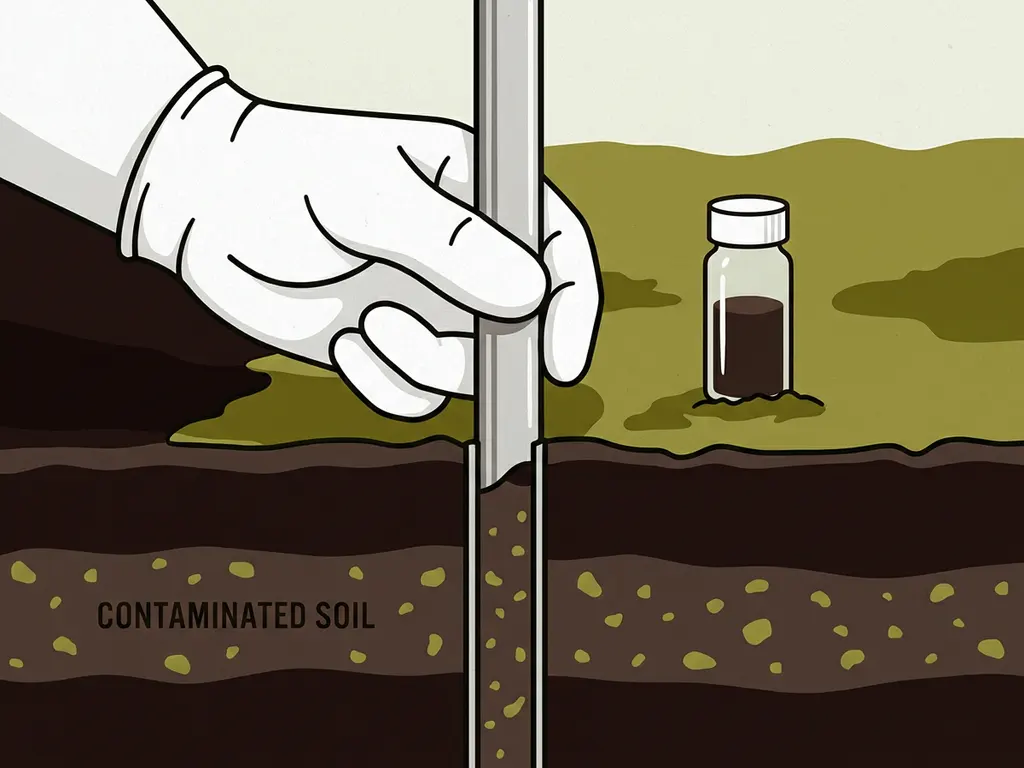
Soil contamination tests vary significantly in accuracy depending on the sampling method, laboratory analysis technique, and the type of contaminant being measured. A well-executed test using representative samples and validated analytical methods can reliably detect contamination levels relevant to regulatory thresholds. However, no single test captures the full picture of a contaminated site, and accuracy depends as much on field practice as it does on laboratory precision. The questions below address the most common concerns site managers and environmental project leads face when interpreting soil test results.
What factors affect the accuracy of soil contamination tests?
The accuracy of soil contamination tests is affected by sampling strategy, sample handling, laboratory method selection, and the heterogeneous nature of soil itself. Even a technically precise laboratory analysis becomes unreliable if the sample it receives was collected from an unrepresentative location or contaminated during handling. Soil is not uniform, and contamination rarely distributes evenly across a site.
The key factors that influence test accuracy include:
- Sampling location and depth: Contaminants like chlorinated solvents (VOCl) tend to migrate downward and accumulate in specific zones. Sampling at the wrong depth or outside the contamination plume can produce false negatives.
- Sample preservation: Volatile compounds degrade rapidly if samples are not sealed, chilled, and transported correctly. Delays between collection and analysis introduce measurement error.
- Number of samples: A single composite sample averaged across a large area can mask hotspots. Statistical sampling design is essential for meaningful results.
- Soil matrix complexity: Clay-rich or organic-rich soils bind contaminants differently than sandy soils, affecting extraction efficiency during laboratory analysis.
- Laboratory method selection: Different analytical standards have different detection limits and extraction protocols. Choosing the wrong method for the target compound leads to inaccurate quantification.
For sites where contamination is suspected but not yet confirmed, understanding these variables helps project managers avoid the common mistake of relying on too few samples taken from convenient rather than strategic locations.
Get in Touch
Let’s Talk Microbial Solutions
Book a conversation with Stijn, our CEO, or send us your request.
| Book an Appointment | Request Information |
What’s the difference between soil sampling and soil analysis?
Soil sampling is the physical collection of material from the ground, while soil analysis is the laboratory process of measuring what that material contains. They are two distinct steps in a soil contamination assessment, and errors in either step can independently undermine the reliability of the final result. A precise laboratory analysis cannot compensate for a poorly collected sample.
Soil sampling involves decisions about where to collect, how deep to go, how many samples to take, and how to store and transport them. These decisions are guided by site history, suspected contaminant types, and regulatory requirements. For industrial sites with a history of solvent use, for example, sampling grids are typically denser and targeted toward drainage paths and subsurface geology.
Soil analysis, by contrast, happens in the laboratory. Technicians extract contaminants from the soil matrix using chemical or physical methods, then quantify them using instruments such as gas chromatography or mass spectrometry. The choice of extraction method and analytical standard must match the target contaminants. For volatile organochlorine compounds specifically, headspace analysis or purge-and-trap methods are standard because these compounds evaporate easily and require careful handling to prevent loss before measurement.
When evaluating a soil contamination report, it is worth checking both the sampling protocol and the analytical methods used. A result is only as trustworthy as the weakest link between these two steps.
How do you know if a soil test result is reliable?
A soil test result is reliable when it is based on a documented sampling plan, uses certified laboratory methods, includes quality control samples, and reports detection limits appropriate for the contaminants of concern. Reliable results also include field blanks and duplicate samples that allow you to assess contamination introduced during sampling and the reproducibility of measurements.
When reviewing a soil contamination report, look for the following indicators of reliability:
- A clearly defined sampling plan with rationale for sample locations and depths
- Chain-of-custody documentation from field to laboratory
- Laboratory accreditation for the specific analytical methods used
- Reported method detection limits (MDLs) that are below the regulatory threshold for each contaminant
- Quality control data including blank samples, matrix spikes, and duplicate analyses
- Uncertainty or confidence intervals where applicable
If a report lacks quality control data or does not specify the analytical methods used, its conclusions should be treated with caution. For sites subject to OVAM reporting obligations, these documentation requirements are not optional.
Can standard soil tests detect all types of contamination?
No, standard soil tests cannot detect all types of contamination. Most standard packages are designed to screen for common inorganic contaminants such as heavy metals and a defined set of organic compounds. Emerging contaminants, specific industrial chemicals, or degradation products of volatile organochlorine compounds may not be included in a standard panel and require targeted analytical methods.
This limitation is particularly relevant for sites with a history of chlorinated solvent use. Compounds like trichloroethylene (TCE) or perchloroethylene (PCE) can partially degrade in the subsurface into intermediate products such as vinyl chloride, which is more mobile and more toxic than the parent compound. A standard soil test focused only on the original contaminant will miss these breakdown products entirely.
Similarly, standard chemical analysis tells you what is present but not whether natural degradation is actively occurring. For sites where biological soil remediation is being considered, understanding the microbial activity in the soil is as important as knowing the contaminant concentration. Chemical data alone cannot answer that question.
When selecting an analytical package, the site’s industrial history, the suspected contaminant classes, and the intended use of the results should all inform which tests are included.
When should a microcosm test be used alongside soil testing?
A microcosm test should be used alongside standard soil testing when biological remediation is being evaluated as a treatment option, particularly for persistent organic contaminants like chlorinated solvents. While chemical soil testing tells you what contamination is present, a microcosm test tells you whether the native microbial community in that specific soil can degrade it, under what conditions, and at what rate.
Microcosm tests are small-scale laboratory experiments that replicate the conditions of the actual contaminated soil. They are used to screen for the feasibility of biological degradation before committing to a full-scale remediation approach. This is especially relevant for VOCl contamination, where complete reductive dechlorination depends on the presence and activity of specific microorganisms that are not uniformly distributed across all sites.
The practical value of combining chemical soil testing with a microcosm test is that it reduces the risk of investing in a biological remediation approach that will not perform in that specific soil matrix. It also provides a scientifically defensible basis for the remediation design. Avecom uses microcosm tests as a standard feasibility screening step before designing any biological decontamination strategy, ensuring the approach is matched to the actual conditions on site rather than based on general assumptions.
Microcosm testing is particularly worth considering when:
- Standard chemical analysis confirms VOCl contamination but excavation is not feasible
- Previous remediation attempts have not achieved target concentrations
- The site has a complex geology that makes physical treatment methods difficult
- Regulatory pressure requires a documented feasibility assessment before proceeding
How accurate do soil tests need to be for OVAM compliance?
For OVAM compliance under VLAREBO, soil tests must meet defined analytical quality requirements that include minimum detection limits, accredited laboratory methods, and standardized sampling protocols. The required accuracy is not a single fixed number but is defined in relation to the applicable soil remediation standards for each contaminant, which means detection limits must be low enough to confirm whether concentrations are above or below the relevant intervention values.
In practice, this means that the analytical method chosen must be capable of detecting the contaminant at concentrations well below the VLAREBO intervention values. If a method’s detection limit is higher than the threshold that triggers a remediation obligation, the result is meaningless for compliance purposes. This is a common oversight when project managers select a laboratory based on cost rather than method suitability.
OVAM also requires that soil investigations follow the Code of Good Practice for Soil Investigation, which specifies sampling density, sample handling, and reporting formats. Deviating from these protocols, even if the laboratory analysis itself is technically sound, can result in a report that is not accepted for regulatory purposes.
For sites involving biological remediation, OVAM increasingly recognizes molecular monitoring data as a complement to chemical analysis. Quantitative PCR (qPCR) methods that measure the presence and activity of specific degrading microorganisms provide evidence of active remediation progress that chemical concentration data alone cannot supply. This is an area where working with a specialist in microbial soil assessment adds regulatory value beyond what a standard environmental laboratory provides.
If you are managing a site with persistent contamination and need to understand whether your current testing approach meets OVAM requirements, or whether biological remediation is a viable path forward, the team at Avecom brings over 30 years of experience in microbial process management and environmental remediation to that assessment.
Related Articles
- How do you choose the right microbial system for your fermentation process?
- How serious is contamination found on an industrial site?
- How do microorganisms break down soil contaminants?
- How do stricter discharge limits affect sludge management decisions?
- What methods are used to assess soil contamination?