

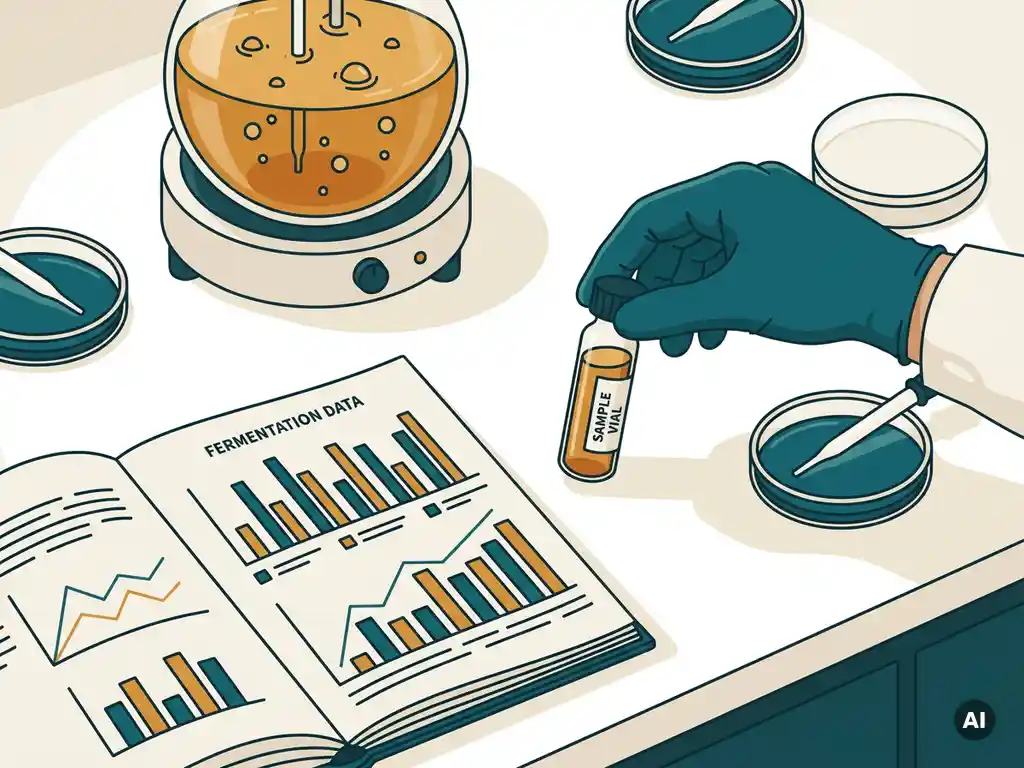
Fermentation R&D results can directly support a subsidy application by providing the technical evidence that grant reviewers require to assess feasibility, innovation, and commercial potential. Documented process data, reproducible yields, and scalability indicators transform an early-stage concept into a fundable proposition. The sections below unpack the specific questions that R&D teams and CTOs encounter when building a grant case around fermentation work.
What types of subsidy programs fund fermentation R&D projects?
Fermentation R&D projects can be funded through several categories of public support: European framework programs such as Horizon Europe, national innovation grants, regional development funds, and R&D tax incentive schemes. The most relevant programs typically target biotechnology, circular economy, sustainable food systems, and industrial decarbonization, all areas where fermentation-based processes are increasingly central.
At the European level, Horizon Europe funds collaborative research projects that involve academic and industrial partners. For smaller companies, the European Innovation Council (EIC) Accelerator provides grants and equity to high-potential innovators. At the national level in Belgium, for example, programs through VLAIO (the Flemish Agency for Innovation and Entrepreneurship) cover feasibility studies, strategic basic research, and applied R&D projects. Similar agencies exist across EU member states.
Beyond direct grants, R&D tax incentives are often overlooked but highly accessible. In Belgium, companies can apply for partial exemption of withholding tax on researcher salaries, and investment deductions may apply to fermentation infrastructure. These fiscal instruments do not require a competitive application and can be claimed alongside grant funding.
The key to identifying the right program is matching your project’s technology readiness level (TRL) to the program’s scope. Early-stage feasibility work typically fits TRL 2 to 4 programs, while pilot validation aligns with TRL 5 to 7 funding calls.
{div style=”box-sizing: border-box !important; margin: 32px 0 !important; padding: 28px 32px !important; background-color: #004070 !important; background-image: linear-gradient(135deg, #004070 0%, #003057 100%) !important; border: none !important; border-left: 4px solid #36a9e1 !important; font-family: ‘Exo’, sans-serif !important; text-align: center !important; line-height: normal !important;”}
{p style=”margin: 0 0 6px 0 !important; padding: 0 !important; font-family: ‘Exo’, sans-serif !important; font-size: 12px !important; font-weight: 500 !important; color: #36a9e1 !important; text-transform: uppercase !important; letter-spacing: 1.5px !important; line-height: 16px !important;”}Get in Touch{/p}
{p style=”margin: 0 0 8px 0 !important; padding: 0 !important; font-family: ‘Exo’, sans-serif !important; font-size: 20px !important; font-weight: 500 !important; color: #ffffff !important; line-height: 26px !important;”}Let’s Talk Microbial Solutions{/p}
{p style=”margin: 0 0 20px 0 !important; padding: 0 !important; font-family: ‘Exo’, sans-serif !important; font-size: 14px !important; font-weight: 300 !important; color: #ffffff !important; line-height: 20px !important;”}Book a conversation with Stijn, our CEO, or send us your request.{/p}
{table style=”border-collapse: collapse !important; border-spacing: 0 !important; margin: 0 auto !important; padding: 0 !important; width: auto !important;” cellpadding=”0″ cellspacing=”0″ role=”presentation”}
{tr style=”margin: 0 !important; padding: 0 !important;”}
{td style=”margin: 0 !important; padding: 0 6px 0 0 !important; white-space: nowrap !important;”}
{a href=”https://avecom.be/contact-2/” style=”display: inline-block !important; box-sizing: border-box !important; margin: 0 !important; padding: 11px 24px !important; background-color: #95c11f !important; color: #ffffff !important; font-family: ‘Exo’, sans-serif !important; font-size: 14px !important; font-weight: 500 !important; text-transform: uppercase !important; text-decoration: none !important; border: none !important; line-height: 18px !important; letter-spacing: 0.3px !important; white-space: nowrap !important;”}Book an Appointment{/a}
{/td}
{td style=”margin: 0 !important; padding: 0 !important; white-space: nowrap !important;”}
{a href=”https://avecom.callista.be/contactus” style=”display: inline-block !important; box-sizing: border-box !important; margin: 0 !important; padding: 9px 24px !important; background-color: transparent !important; color: #ffffff !important; font-family: ‘Exo’, sans-serif !important; font-size: 14px !important; font-weight: 500 !important; text-transform: uppercase !important; text-decoration: none !important; border: 2px solid #ffffff !important; line-height: 18px !important; letter-spacing: 0.3px !important; white-space: nowrap !important;”}Request Information{/a}
{/td}
{/tr}
{/table}
{/div}
What R&D evidence do grant reviewers actually look for?
Grant reviewers evaluating fermentation R&D projects look for documented proof of technical progress, clear articulation of the innovation gap, and a credible path to scale. Raw ideas without supporting data rarely succeed. Reviewers want to see that the team understands the process, has tested it under controlled conditions, and can explain what remains uncertain and why further funding is needed to resolve it.
In practical terms, the evidence most valued in a grant dossier includes:
- Reproducible lab-scale results showing that the biological process performs consistently across multiple runs
- Mass balance and yield data demonstrating the efficiency of the conversion process
- Characterization of the microbial system used, including stability and robustness indicators
- Identification of key process parameters and how they were controlled or optimized
- A clear description of the innovation relative to existing technologies or processes
- Risk analysis covering technical uncertainties and how the proposed work will address them
Reviewers also assess the competence of the team executing the work. If the R&D is conducted in collaboration with or contracted to a recognized scientific partner, this strengthens credibility. A partner with a track record of peer-reviewed publications, patents, or technology transfer adds weight to the dossier in a way that internal claims alone cannot.
{div style=”box-sizing: border-box !important; margin: 32px 0 !important; padding: 28px 32px !important; background-color: #004070 !important; background-image: linear-gradient(135deg, #004070 0%, #003057 100%) !important; border: none !important; border-left: 4px solid #36a9e1 !important; font-family: ‘Exo’, sans-serif !important; text-align: center !important; line-height: normal !important;”}
{p style=”margin: 0 0 6px 0 !important; padding: 0 !important; font-family: ‘Exo’, sans-serif !important; font-size: 12px !important; font-weight: 500 !important; color: #36a9e1 !important; text-transform: uppercase !important; letter-spacing: 1.5px !important; line-height: 16px !important;”}Get in Touch{/p}
{p style=”margin: 0 0 8px 0 !important; padding: 0 !important; font-family: ‘Exo’, sans-serif !important; font-size: 20px !important; font-weight: 500 !important; color: #ffffff !important; line-height: 26px !important;”}Let’s Talk Microbial Solutions{/p}
{p style=”margin: 0 0 20px 0 !important; padding: 0 !important; font-family: ‘Exo’, sans-serif !important; font-size: 14px !important; font-weight: 300 !important; color: #ffffff !important; line-height: 20px !important;”}Book a conversation with Stijn, our CEO, or send us your request.{/p}
{table style=”border-collapse: collapse !important; border-spacing: 0 !important; margin: 0 auto !important; padding: 0 !important; width: auto !important;” cellpadding=”0″ cellspacing=”0″ role=”presentation”}
{tr style=”margin: 0 !important; padding: 0 !important;”}
{td style=”margin: 0 !important; padding: 0 6px 0 0 !important; white-space: nowrap !important;”}
{a href=”https://avecom.be/contact-2/” style=”display: inline-block !important; box-sizing: border-box !important; margin: 0 !important; padding: 11px 24px !important; background-color: #95c11f !important; color: #ffffff !important; font-family: ‘Exo’, sans-serif !important; font-size: 14px !important; font-weight: 500 !important; text-transform: uppercase !important; text-decoration: none !important; border: none !important; line-height: 18px !important; letter-spacing: 0.3px !important; white-space: nowrap !important;”}Book an Appointment{/a}
{/td}
{td style=”margin: 0 !important; padding: 0 !important; white-space: nowrap !important;”}
{a href=”https://avecom.callista.be/contactus” style=”display: inline-block !important; box-sizing: border-box !important; margin: 0 !important; padding: 9px 24px !important; background-color: transparent !important; color: #ffffff !important; font-family: ‘Exo’, sans-serif !important; font-size: 14px !important; font-weight: 500 !important; text-transform: uppercase !important; text-decoration: none !important; border: 2px solid #ffffff !important; line-height: 18px !important; letter-spacing: 0.3px !important; white-space: nowrap !important;”}Request Information{/a}
{/td}
{/tr}
{/table}
{/div}
How does pilot-scale fermentation data strengthen a funding case?
Pilot-scale fermentation data strengthens a funding case by demonstrating that a process works beyond the controlled conditions of a laboratory. Moving from lab to pilot scale is where most fermentation concepts encounter real-world complexity, and evidence that a team has navigated this transition successfully signals both technical maturity and reduced investment risk to reviewers.
At lab scale, it is relatively straightforward to optimize conditions for a small volume. At pilot scale, factors such as mixing dynamics, heat transfer, oxygen transfer rates, and microbial community stability behave differently. Data collected at this scale reveals whether the process is genuinely scalable or whether it depends on conditions that cannot be reproduced at larger volumes.
For a subsidy application, pilot-scale results serve several functions:
- They move the project up the TRL ladder, making it eligible for higher-value funding instruments
- They provide a quantitative basis for projecting production costs and yields at commercial scale
- They demonstrate that the applicant has the infrastructure and expertise to execute the proposed work
- They reduce the perceived technical risk, which is one of the primary reasons applications are rejected
Companies that lack their own fermentation pilot infrastructure often partner with specialized contract R&D providers to generate this data before or during the grant application process. This approach avoids capital expenditure while producing the evidence base that reviewers expect.
Which fermentation outputs are most useful in a subsidy application?
The most useful fermentation outputs for a subsidy application are those that directly demonstrate technical progress and support the project’s innovation claims. Quantitative process data, analytical characterization of the product or biomass, and documented process optimization steps are consistently more persuasive than qualitative descriptions of what a process is intended to do.
Specific outputs that carry weight in grant dossiers include:
- Yield and productivity metrics expressed per unit of substrate, time, or reactor volume
- Product quality data such as protein content, purity, or relevant compositional analysis
- Microbial community profiles generated through techniques such as amplicon sequencing or qPCR, which demonstrate that the biological system is understood and controlled
- Process stability data showing performance over time or across repeated batches
- Techno-economic estimates derived from actual process data rather than assumptions
- Scientific reports structured in a format that can be referenced in the application narrative
Documentation quality matters as much as the data itself. Reviewers cannot evaluate what is not clearly presented. Well-structured technical reports, with methodology, results, and interpretation separated clearly, make it straightforward for non-specialist reviewers to assess the merit of the work.
When should fermentation R&D begin to align with a grant timeline?
Fermentation R&D should ideally begin at least six to twelve months before a grant application deadline to allow sufficient time to generate meaningful data. Most funding programs require evidence of prior work rather than funding the very first experiments. Starting R&D after identifying a relevant call is almost always too late to produce the quality of evidence that competitive applications require.
Grant timelines have several stages that affect planning: the call publication, the application deadline, the evaluation period, and the project start date. Between the call publication and the deadline, applicants typically have two to four months. This is enough time to write the application but not enough to conduct and document meaningful fermentation experiments from scratch.
A more effective approach is to treat early-stage fermentation R&D as a continuous activity that builds an evidence base over time. When a relevant funding call opens, the team already has lab-scale or pilot-scale results to reference. The application then becomes a matter of framing existing work within the call’s priorities rather than generating new data under time pressure.
For companies without internal fermentation capacity, engaging a contract R&D partner early in the process means that feasibility studies and initial optimization runs can proceed in parallel with business development, well ahead of any specific grant deadline.
Can contract fermentation R&D generate subsidy-eligible evidence?
Yes, contract fermentation R&D can generate subsidy-eligible evidence, provided the work is properly documented and the contractual arrangement is structured to retain the applicant’s rights to the resulting data and intellectual property. Most grant programs accept evidence generated by subcontractors or specialized research partners, as long as the applicant company is the primary beneficiary and the work is conducted within the project scope.
There are practical advantages to generating grant evidence through a contract R&D partner rather than internally. A partner with established scientific credibility, peer-reviewed publications, and a history of technology transfer can strengthen the application’s technical narrative. Reviewers assess not just the data but the source of that data and the competence of those who produced it.
Key considerations when using contract fermentation R&D to support a grant application include:
- IP ownership: Ensure the contract clearly assigns data rights and any resulting IP to the applicant company
- Confidentiality: A robust NDA protects sensitive process concepts during and after the R&D engagement
- Reporting format: Agree upfront that deliverables will be structured as scientific reports suitable for inclusion in a grant dossier
- Eligibility of costs: In some programs, subcontracting costs are eligible expenditure within defined limits; confirm this with the funding body before committing
Avecom operates as an external fermentation expertise center for companies at exactly this stage, offering lab-scale feasibility work, pilot-scale validation, and scientific reporting structured for use in subsidy and investor dossiers. As a spin-off of Ghent University with a publication track record and active patents, the scientific credibility of the partnership itself becomes part of the application’s strength.