

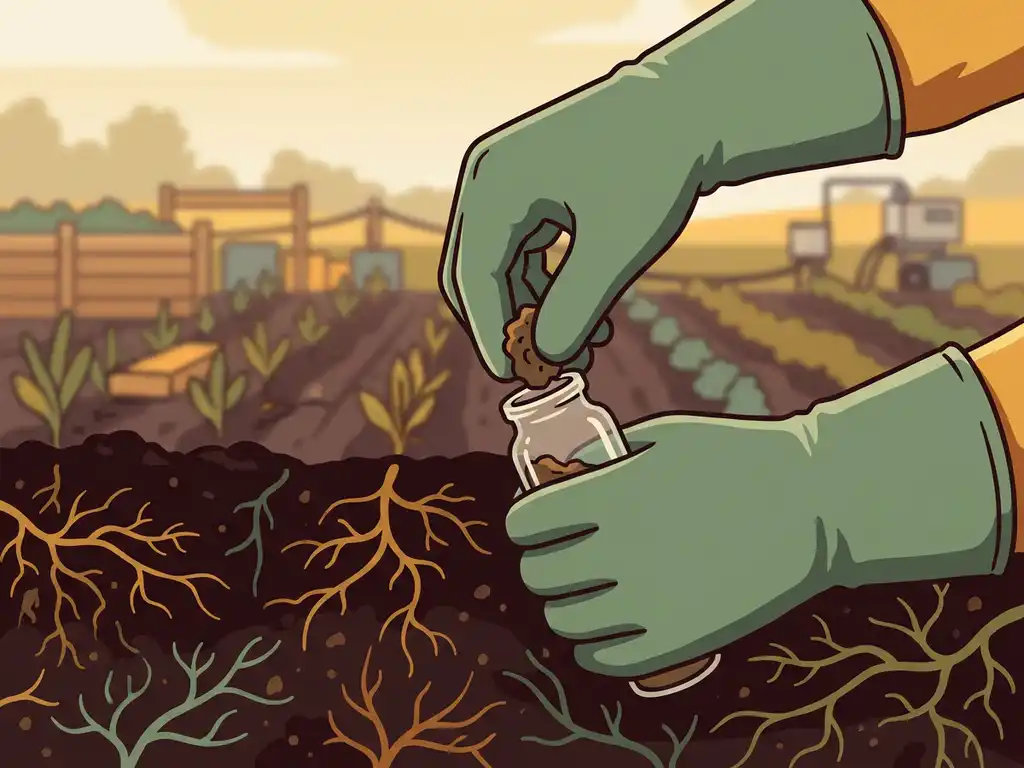
Soil remediation timelines range from a few months to more than a decade, depending on the type of contamination, the chosen remediation method, and site-specific conditions. A shallow, well-defined petroleum spill treated with excavation can be resolved in weeks, while a deep chlorinated solvent plume treated in situ may require years of active treatment followed by long-term monitoring. Understanding what drives these differences is the first step toward realistic planning and budget control.
The sections below address the most common questions project managers and site owners ask when facing a contaminated parcel, from the variables that set the baseline timeline to whether a feasibility test can provide a reliable forecast before committing to a full remediation program.
What factors determine how long soil remediation takes?
The duration of soil remediation is determined by four core variables: the type and concentration of the contaminant, how deep and how far it has spread, the geology of the site, and the remediation method selected. No two contaminated sites are identical, and each of these factors can independently extend or shorten the timeline by years.
Contaminant type matters enormously. Petroleum hydrocarbons are generally biodegradable under a range of conditions and respond relatively quickly to treatment. Volatile organochlorine compounds (VOCl) such as chlorinated solvents like tetrachloroethylene (PCE) and trichloroethylene (TCE) are far more persistent. They can migrate deep into the saturated zone, sorb onto soil particles, and form dense non-aqueous phase liquids (DNAPLs) that act as long-term secondary sources of contamination.
Geology plays a critical supporting role. Sandy, permeable soils allow treatment fluids and microorganisms to distribute more evenly. Clay-rich or heterogeneous formations slow down mass transfer, meaning contaminants trapped in low-permeability zones continue to leach into cleaner areas long after active treatment has begun. This phenomenon, known as back-diffusion, is one of the main reasons chlorinated solvent sites take longer to remediate than initial models suggest.
Plume size and depth add further complexity. A contaminant that has migrated 50 meters laterally and 15 meters below ground level requires a fundamentally different approach than a surface-level spill. The more volume that needs to be treated, the longer the process takes, regardless of the method used.
How long does excavation take compared to in situ methods?
Get in Touch
Let’s Talk Microbial Solutions
Book a conversation with Stijn, our CEO, or send us your request.
| Book an Appointment | Request Information |
Excavation is typically the fastest method for removing contaminated soil, often completed within days to a few weeks for a well-defined source zone. However, it only addresses the soil that can physically be dug up. In situ methods, which treat contamination in place, take longer but can reach depths and areas where excavation is not feasible.
For shallow, accessible contamination with no structures overhead, excavation and off-site disposal can resolve a source zone quickly. The contaminated material is removed, clean fill is brought in, and the site is verified by sampling. Total project duration, including regulatory approval and post-excavation confirmation sampling, typically runs from one to six months.
In situ methods such as pump-and-treat, soil vapor extraction, chemical oxidation, or bioremediation operate on a different timescale. They do not remove the contaminant physically but instead destroy, immobilize, or extract it while it remains in the ground. Depending on the method and site conditions, active treatment phases for in situ approaches commonly run from one to five years, with monitoring periods extending further.
The practical limitation of excavation is that it becomes technically or economically unviable when contamination is deep, located beneath buildings or infrastructure, or when the water table makes large-scale digging unsafe. In those situations, in situ treatment is not a slower alternative but often the only realistic option. Biological soil remediation is particularly relevant in these constrained scenarios, where conventional excavation has already failed or was never feasible.
How long does bioremediation take for VOCl-contaminated soil?
Bioremediation of VOCl-contaminated soil typically takes between two and seven years of active treatment, depending on contaminant concentrations, aquifer conditions, and whether natural attenuation is sufficient or bioaugmentation is required. VOCl compounds like PCE and TCE are among the most challenging contaminants to remediate biologically because complete degradation requires a specific sequence of anaerobic microbial reactions.
The biological degradation pathway for chlorinated solvents proceeds through a process called reductive dechlorination. Specialized microorganisms, most notably from the genus Dehalococcoides, strip chlorine atoms from the molecule step by step, converting PCE to TCE, then to dichloroethylene (DCE), then to vinyl chloride, and finally to harmless ethylene. Each step requires the right microbial community, sufficient electron donor, and appropriate geochemical conditions. If any link in this chain is missing or slow, the process stalls and can temporarily accumulate intermediate compounds like vinyl chloride, which is more toxic than the parent compound.
When the native microbial population lacks the capacity to complete this degradation pathway, bioaugmentation introduces specialized microbial consortia to fill that gap. This targeted intervention can accelerate the process significantly compared to relying on natural attenuation alone, but it still requires time for the introduced organisms to establish, distribute through the aquifer, and drive concentrations down to target levels.
Monitoring is an integral part of the process. Molecular tools such as quantitative PCR (qPCR) allow project managers to track the abundance and activity of key degrading organisms in real time, providing data that supports regulatory reporting and confirms whether the process is progressing as expected. This kind of evidence-based monitoring is central to the approach used in Avecom’s biological decontamination services, which are specifically designed for persistent VOCl contamination in soil and groundwater.
What causes soil remediation projects to take longer than expected?
Soil remediation projects most commonly run over schedule because of underestimated source zone complexity, back-diffusion from low-permeability zones, regulatory review delays, or a mismatch between the chosen method and the actual site conditions. Each of these factors is manageable, but only if it is identified early.
Back-diffusion is a particularly common cause of extended timelines on chlorinated solvent sites. When contaminants have been present for decades, they penetrate into clay lenses and low-permeability sediments. Even after the main plume is treated, these zones slowly release contaminants back into the groundwater, sustaining concentrations above cleanup targets long after active treatment appears to have succeeded. This effect is often not adequately captured in initial site assessments, leading to optimistic timelines that are later revised.
Regulatory processes also add time that is easy to underestimate. Permit applications, authority review periods, and required confirmation sampling rounds all have their own lead times. In Belgium, compliance with OVAM and VLAREBO requirements means that documentation, monitoring reports, and milestone confirmations must meet specific standards before a project can advance to the next phase.
A third common cause of delay is choosing a remediation strategy without first confirming its feasibility for the specific site conditions. Deploying a biological approach on a site where the necessary microbial community is absent, or where geochemical conditions prevent the process from working, wastes time and budget. This is precisely why feasibility screening before committing to a full remediation design is not optional for complex sites.
Can a feasibility test predict the remediation timeline before starting?
A well-designed feasibility test cannot produce a guaranteed timeline, but it can define the boundaries of what is realistic and identify the conditions that will most influence duration. For biological remediation of VOCl contamination specifically, a microcosm test is the standard tool for determining whether the site has the microbial and geochemical prerequisites for successful treatment before any field investment is made.
A microcosm test takes actual soil and groundwater samples from the site and recreates subsurface conditions in a controlled laboratory environment. Researchers introduce electron donors, track degradation intermediates, and use molecular analysis to identify which organisms are present and whether complete reductive dechlorination is occurring. The results indicate whether natural attenuation is sufficient, whether biostimulation can accelerate the process, or whether bioaugmentation with specialized consortia is necessary.
This information directly informs timeline expectations. If the native microbial community can drive complete degradation under stimulated conditions, the field timeline is shorter and more predictable. If key organisms are absent and bioaugmentation is required, the project design changes accordingly, and the timeline is adjusted to reflect the establishment phase of the introduced consortia.
Beyond timeline prediction, a microcosm test reduces financial risk. Investing in a relatively low-cost laboratory screening before committing to years of field treatment is standard practice for complex contamination scenarios. It provides the data needed to justify the chosen approach to regulators, investors, and internal stakeholders who need more than a theoretical argument before approving a multi-year remediation budget.
Avecom, a Belgian environmental biotechnology company with more than 30 years of experience in microbial process optimization, offers microcosm testing as the entry point for its biological soil remediation services. For project managers dealing with VOCl contamination where classical techniques have underperformed or are not applicable, this kind of early diagnostic work is often the most cost-effective step available. If you are managing a contaminated parcel where excavation is not viable or has already been tried, a feasibility screening for biological remediation is a practical starting point before committing to a full remediation design.